Love, friendship and relationships v456

Love, friendship and relationships v456

Love, friendship and relationships

Introduction

Love, friendship and relationships

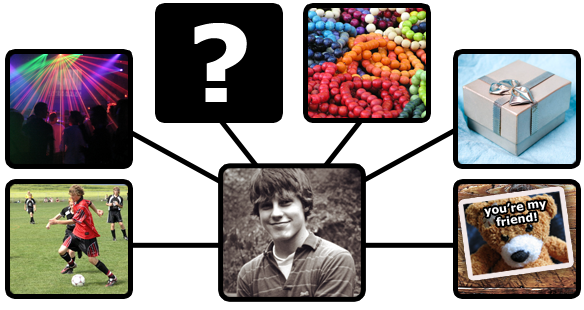
In this theme you will focus on friendship and love: what is a friend, who are your friends, and are people the same or different on social media?

What are you going to do?

You will read texts, listen to sound clips, watch a video and do exercises that all to do with love, friendship and relationships.

You will think about image and how that can affect your friendship circles – do you look at people and judge them according to what they wear and how they look?
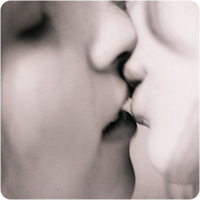
We look at the idea of showing your affection in public – is it OK to kiss your boyfriend or girlfriend in the supermarket? If not, why not? Do you think it’s OK to shock older people? Then we look at the topic of teenage parents – how young is young?

What about you?

What do you think about teenage parents?
How important are our relationships with our family and friends?
Do they influence everything we do?

Some of the most important relationships are with our family – so why is Christmas,
or any other big family occasion, so stressful?
Or in lockdown because of Covid-19. None of us have ever faced a lockdown situation with our loved ones, so we don’t quite know what to expect. A couple of weeks with just your immediate family members. Is it a problem or can this time with your family be a happy experience?

Do you or anyone in your family suffer from hypercopresence?


Have fun!

Need to know

What do you need to know?

  • Read the questions.
  • Form groups of three or four.
  • In your group, select as many questions as there are members of your group.
  • Discuss these questions.
  • Select one question you all think is interesting.
  • Present, as a group, the results of your discussion to your class mates.
  • Answer, as good as you can, questions of your class mates.

When listening to other presentations, listen carefully and think of questions or things you did not understand.

Choose from the following questions.

  1. Do you believe in love at first sight? Explain.
  2. Have you ever had a crush on someone? What was it like?
  3. Do you have or had a boyfriend/girlfriend?
    If so, where did you meet your him/her? If so, what does he/she look like? Give details.
  4. Is there a such thing as a perfect relationship for you? Explain.
  5. What characteristics do you look for in a girlfriend or boyfriend?
  6. What are some popular places to go on a date? What is the best one? Why?
  7. How do you know when a relationship is over? What are the signs?
    Why do you think some people fall out of love?
  8. Do you think it's OK for a man to have two wives or do you think it's OK for a wife to have two husbands? Explain.
  9. What do you think of romantic relationships between people from different countries?
    Can you fall in love with someone from a totally different country and culture?
    What is it like to be in a relationship when you are living in two different countries?
  10. What do you think of same-sex marriages? Explain.
    Do you think same gender relationships are accepted in our country? Explain.

Can do

In this theme you will focus on the following 'can do' statements.

Listening (B1-B2):

  • I can catch the main points in a video about 'unfriend day'.
  • I can listen to a news report about kissing in public and answer detailed questions.
  • I can watch and listen to the beginning of the film Love Actually and fill in the gaps of the text I hear.
  • I can understand a conversation in a radio show 'Help on the line' and answer questions.

Reading (B2)

  • I can rapidly grasp the content and the significance of an article about Unfriend day. I can decide if a closer reading is worthwhile or needed.
  • I can read and understand the Calamities of beauty article in which the writers express specific attitudes and points of view in detail.
  • I can explain the differences between skimming and scanning a text.
  • I can understand in detail texts about a couple arrested for kissing in public and teenage parents.
  • I can read a text with statistics about teen pregnancies.  
  • I can read texts about 'hypercopresence' and grasp the most important points.

Speaking (B1-B2)

  • I can start, maintain and close simple face to face conversation on the theme friends'.
  • I can recognize the pronunciation of the third person 's' in different ways and I can pronounce words with the vowel sound Schwa.  
  • I can take an active part in a conversation and discussion about friendship accounting for my views.
  • I can express and respond to feelings about a conversation about how you feel about 'kissing in public'.
  • I can give a short presentation and present descriptions of positive and negative results of being a teenage parent.


Writing (B1-B2)

  • I can write about advantages and disadvantages of activities for School Friend day.
  • I can write down my thoughts about friends and friendships.
  • I can write and design a class survey to find out how my classmates feel about their image.
  • I can write simple texts about ideas of how to discuss issues like public displays of affection.
  • I can give or seek personal views and opinions about teenage moms.
  • I can write a personal letter to a friend and express feelings and experiences about how Corona affects my life.
  • I can convey short simple information about Christmas panning.

To do

This theme Love contains an introduction, five lessens and a finishing touch.

In the schedule below you can see the titles of the sections and an estimate of the time required for each part.

Lesson

Title

Activities

Time (hours)*

Introduction


0,5 hour

Lesson 1

To friend or unfriend?

Read and speak about friends on social media.

Write about your thoughts about friends and friendships.

Grammar: Simple present

3 - 4 hours

Lesson 2

Your image

Discuss how important the way we look is.

Make a poster about tips to improve body shapes.

Write a survey to find out how your classmates think about their image.

Grammar: Present continuous (progressive) or simple present

3 - 4 hours

Lesson 3

Kissing in public

Speak and read about kissing in public.

Listening to a news report about a lesbian couple kissing in public.

Discuss establishing rules about displays of affection at your school.

2 - 3 hours

Lesson 4

Teenage parents

Discuss a number of theses about teenage parents.

Read an article written by a 'teenage mum'.

Give a presentation about results of being a teenage parent.


2 - 3 hours

Lesson 5

Love Actually

Speak about romantic places with a classmate.

Read about 'hypercopresence'.

Grammar: superlatives or adjectives.

2 - 3 hours

Finishing touch

Projects


Oefenprogramma


Evaluation

You are going to write a short story about a relationship, friendship or family.

You are going to listen to a radioshow 'Help on the line'.


You are going to practise with the 'Oefenprogramma Engels'.


You will answer evaluation questions, what did you learn?

3 hours


Total

± 20 hours


*hour = lesuur. Eén lesuur komt ongeveer overeen met 2 SLU.

Lessons

To friend or unfriend

To friend or unfriend?

Introduction

The subject of this lesson is 'to friend or unfriend'.

  • Form groups of three or four pupils.

Discuss the following questions in your group:

  • Have you got lots of friends?
  • Are they ‘real’ friends, or ‘friends’ that you have on your social media accounts?
  • How many social media friends do you have?
  • Did you become ‘friends’ with them because they requested your friendship?
  • Are you really friends with them?

In this lesson you are going to think about who your friends really are.
You will learn some ‘friends’ vocabulary, and you will think about the qualities of a good friend.
Then you will look at some criteria to reduce your friend list on social media.

This lesson contains 10 steps and an evaluation. Work them through step by step.

Step Activity  
  Introduction Find out what you already know.
Step 1

Speaking

Read the statements. Tick the right ones.
Discuss with a classmate, give three reasons.
Step 2

Words

Pronounce the words. Divide them in two categories.
Fill the words in in two exercises.
Step 3 Writing Write down thoughts about friends & friendship.
Step 4

Reading

Read the text. Tick the reasons. Do a true/false exercise.
Check with a classmate.
Step 5 Speaking (and writing) You can answer questions using the Past Perfect tense.
Step 6 Listening (and viewing) Tick annoying posts. Watch the video and answer the question.
Step 7 Words Example of prefixes. Two exercises about prefixes.
Step 8 Grammar Grammar desk and exercises: Simple Present.
Step 9 Pronunciation Pronunciations of third person 's'.
Listen to the pronunciation and watch the video.
Step 10 Task Look at activities for celebration friends day.
Discuss advantages and disadvantages.
  Evaluation Reflecting on what you have learned.


Step 1 - Speaking

Speaking
Read these statements and write down the ones that are true for you.

  • It’s important to have friends.
  • I know all my friends on social media.
  • I add a new friend at least every week.
  • The number of friends on social media is important.
  • I talk to my real time friends regularly.
  • It’s important to do things together with your friends.
  • A friend on social media is not a true friend.

Compare your answers with those of your classmate.
Both choose a different statement and discuss in English why that statement is true for you.
Both mention 3 reasons.

Step 2 - Words

Words
Look at the following words and expressions. They all have something to do with friendship.

get on well with

a good friend

can't stand

easy-going

the jealous type

a fun friend

best friend

friend

easy/difficult to get on with

spend time with

share an interest

a good laugh

a close friend

mate

be laid back

count on

hang out with


They can be divided into two categories:

  • type of friend (nouns)
  • feelings of friendship (verbs)

Do the exercise.

Now take a look at the following words and expressions.

best friend

enemy

mates

acquaintances

get's on well

can't stand

spending time with

having a horrible time

easy-going

the jealous type

a good laugh

easy to get on with

count on

hang out with


Use these words in the following exercise.
Choose the correct words in the sentences. Click here to do the exercise.


Step 3 - Writing

Thoughts about friends and friendships

What are the qualities of your friends?
Do you have a best friend?
Do you have lots of close friends?
Would you like to have more friends?

Write down your thoughts about friends and friendships.

  1. Think of three of your friends.
    Write down five qualities for each of them.
  1. Now, think about your #1 top best friend.
    Why is he or she your best friend?
    Write about 150 words describing this friend saying what qualities
    he or she has and describe what makes him or her so special.

Step 4 - Reading

To 'unfriend' a friend

Reading strategies provides you with tools needed to analyse text in the most effective way.
Read the information about reading strategies skimming and scanning:

Skimming and scanning


You are going to read a text (in two parts) quickly to look for certain information.
The title of the article is: The Faze Guide To National Unfriend Day.

The article lists some reasons to ‘unfriend’ a friend. Which reasons? Read the text quickly (skimming).

So it’s National Unfriend Day and let’s be honest, we all have a few questionable “friends” on Facebook.

You may not think about it when you log on, but today is the day to really get you thinking, who should stay and who should go? If you’re unsure about where to start, we’re here to help you narrow down who you should cut from your friends list:

1. Do you dislike them?
If running into them in real life or seeing them on your feed is an unenjoyable experience, it’s time to bite the bullet and hit unfriend. There’s no reason why you should keep seeing someone that you heavily dislike.

2. Do they post too much?
Facebook is not a place for a lot of sharing. No one wants to know what you had for breakfast or when your roommate left the dishes in the sink. It is also not the place to live-feed award shows or sports. If you see a fellow Facebook “friend” doing any of the above and share no interest in
either, click unfriend.

3. Are they an ex-girlfriend/boyfriend?
This goes without saying, sometimes it’s better to avoid any contact with ex-lovers. Unfriending them will
make it better for you to move on and avoid any future Facebook stalking sessions. Unless, of course, you
both managed to remain friends in light of the break up then good for you both.

4. When did you see them last?
If you met them once in biology class 4 years ago and haven’t talked to them since, it’s time to hit unfriend.
If you can barely consider them an acquaintance, there is no point in keeping them as a Facebook “friend.”
There should be a two-year limit to consider because beyond that you’ll probably never see them again.


5. Have you talked to them at all?

This may sound needless to say, but if you have never interacted with this person in real life or online, you need to hit “unfriend.” For all you know it could be your online stalker. Besides, there is no reason why you should have to deal with mindless life updates of a person you’ve never met.

6. Do they like to ruin your favourite shows before you watch them?
If they are the type of people that like to post spoilers of your favourite TV shows, consider unfriending them or avoid Facebook by all means. After all, they may be posting spoilers, but you can always count on them for sharing a similar interest as you.

7. If they do any of the following:

  • Fill out online quizzes daily and post the results on your feed.

  • Regularly invite you to play games like Farmville.

If their entire feed is made up the above posts, and if you have no interest in any of the above, it’s time to reconsider hitting the unfriend button. It’s not like you’ll miss seeing their activity spam. So feel free to consider our guide when you participate in this year’s National Unfriend Day
and say adieu to all the people that used to clutter your Facebook feed.


Do the first exercise.

Read the questions below.
Now read the whole text and do the second exercise: answer the questions.

Step 5 - Speaking

Speaking
Read these questions and take notes. Then compare your ideas with your classmate.
Talk to each other about the questions. Do you have the same ideas or different? How different are your opinions?

  1. Which friend have you known longest? Where did you meet and what did you have in common?
  2. What qualities do you appreciate in your friends? What are some things you like about your best friend?
  3. How important is it to have friends? How important are your Facebook friends?
  4. Some people have lots of friends, and other people prefer to have less.
    Why do you think this is?
  5. There are people who stay friends all their lives.
    How do you think they do that? What kind of things are important to do to maintain friendships?
  6. There is a saying "To have a good friend, you need to be a good friend." Do you think that is true?
    How can you be a good friend?
  7. A popular saying is ‘two’s company, three’s a crowd’. Do you agree?
    Why /Why not?

Step 6 - Listening

What types of posts annoy you on social media?

Write down the ones that annoy you the most.
Why do you find them annoying?

  • Your food
  • Your feet on holiday
  • Funny cat videos
  • Tagging your friends
  • Invitation to games
  • Your new outfit for a party
  • ................
  • ................

You’re going to watch a video.

Answer the question.

Step 7 - Words

Word formation: prefixes
You can make new words by adding a prefix.
Look at these prefixes and their meanings:

dis from, away disappear
il not illogical
im not, without impolite
in not, without inexpensive
mis bad, wrong misplace
un against, not, opposite unbelievable


In this exercise you drag the prefixes to the root word.

In this exercise you fill in the correct prefix of the word to complete the sentences.

Step 8 - Grammar

Grammar
If you want to be able to do the assignments correctly you will need to know more about some grammar items.

Simple Present


Fill in the correct form of the verb in Simple Present.

Do the following exercises.

Step 9 - Pronunciation

Pronunciation

  • The third person ‘s’ can be pronounced in different ways.

​​

After you've watched the video, try to decide if you hear: /s/, /z/ or /iz/.

  1. thinks
  2. catches
  3. makes
  4. knows
  5. teaches
  6. says
  7. plays
  8. enjoys


Answers

Step 10 - Task

Task
A friend of yours, Bobby, has asked you to help him set up a School Friend Day at your school – a day to celebrate friends.
Look at the following activities. Note down the advantages and disadvantages of each.
Then talk together with your classmate about the advantages and disadvantages.
Then, try to agree on two activities together.
 

Evaluation

Fill in the schedule and answer the questions below.

Activity easy difficult known​ new
Step 1 - Speaking        
Step 2 - Words        
Step 3 - Writing        
Step 4 - Reading        
Step 5 - Speaking        
Step 6 - Listening        
Step 7 - Words        
Step 8 - Grammar        
Step 9 - Pronunciation        
Step 10 - Task        


What have you learnt in this period? What do you have to ask your teacher?

Your image

Your image

Introduction

The subject of this lesson is 'Your image'.

There’s a huge pressure on young people these days to look ‘cool’ and that’s not just girls, either. Guys also need to be wearing the right trainers, have the right hoodie. So what happens if you don’t think you are cool?
What happens if your parents don’t think you are cool?

Discuss the following questions with a classmate:

  • Do you think you look 'cool'?
  • What about your friends? Do they look 'cool'?
  • What is ‘beautiful’?
  • Which is more important – what you look like or what you are?

In this next section we’ll look at these issues.

This lesson contains 7 steps and an evaluation. Work them through step by step.

Step Activity  
  Introduction Find out what you already know.
Step 1

Speaking

Discuss with classmate: how important is the way we look.
Step 2

Words

Pronounce the words. Exercise about adjectives.
Step 3 Reading Read the text. Tick the calamities. Do the exercise.
Step 4

Writing

Make do & don'ts list about wrong body shape.
Step 5 Words Suffixes and their meanings. Complete sentences.
Step 6 Grammar Grammar desk and exercises about Present Continuous.
Step 7 Task Class survey about image. Share results.
  Evaluation Reflecting on what you have learned.


Difficult words? Search these on Cambridge Dictionaries


Step 1 - Speaking

Speaking
How important is the way we look?
Some people say that first impressions are based on appearances.
Is that true? Does it matter what we wear?
Does it matter what we look like?
What do you think? 


Watch the video about first impressions and discuss with a classmate:

  • Watch up to 0.56. What do you think will happen?
  • Watch the end. What did you think about the ending?
    Did you like it? Why (not)?
  • What has the movie got to do with First Impressions?
  • How important are first impressions?
  • Think of an example when the first impression was not the right impression.

Step 2 - Words

Words
Think about words to describe people. Write down two appearance descriptions and two character descriptions to describe yourself.

Appearance Character
.................... ....................
.................... ....................


Take a look at these words:

beautiful big
elegant fat
fit pretty
skinny short
tall ugly


In the first exercise you will decide if these adjectives are generally positive or negative, or it depends.


Also do the second exercise.

Step 3 - Reading

The Calamities of Beauty
You are going to read a text written by a teenager.
The title of her article is The calamities of beauty.

What do you think calamity means? Read the text quickly and choose the best definition:

a) something you can do to make yourself more attractive.

b) an unlucky thing that can happen to you.

c) bad or difficult things that can cause damage or suffering.

The Calamities of Beauty

“Look at your cousin. She’s so skinny and so pretty. Look at her; she’s so beautiful now but not before when she was fat. You should ask her for her dieting tips.” My mother cruelly says to me after we had just finished a conversation with my older cousin. I roll my eyes at her and pretend that I didn’t hear her. Although my mother thinks that she is actually helping me to a fit and healthy life, she does not realize that she is mentally bullying me with her sharp words and even sharper tongue. She does not realize that although I ignore her, those words still echo through my head as I consciously choose a salad instead of a pizza, or as I walk around in shorts in public.

However, I am not the only one affected by this, this dissatisfaction with my body, this doubt about whether I’m skinny enough, whether I’m pretty enough. Everyday millions of girls look into the mirror and are revolted by their reflections. Everyday millions of girls see fat on their skinny bodies and can’t think of food. Everyday millions of girls are constantly criticizing themselves about their weight, approximately 15 million girls to be exact, about five percent of the population in the United States . 15 million girls have anorexia and bulimia, 15 million girls.

With this in mind, think about why do so many girls have these mental illnesses? We are taught at a very young age that beauty is what is valued in society. I’m sure that in the fairy tales that we have heard always involved a beautiful princess, a handsome prince, and the ugly witch. We learn that beauty is good and ugliness is evil. And from that we learn that fat people are ugly, after all, we never see a fat princess do we? We are made to think that skinny is the only way to be beautiful. We see that the “Most Beautiful Woman of The Year,” is always skinny. And from the media we always see that the girls that are the most beautiful are slim and they are the famous ones, they are the ones that people like the most. We trick ourselves into thinking that maybe if we are skinny, we can be one step closer to what that celebrity is, what she represents. Fame. Fortune. Beauty. Many girls starve themselves; throw up after every meal to try to be beautiful.

Every day millions of girls search the media looking for the latest trends and style tips from celebrities. We consciously observe in magazines that for every picture of a “plus size” model, there are about forty “normal” size models. We watch “America’s Next Top Model” on television and notice how the plus size model is a size six and is always eliminated after the third round. The most curious thing is that the average American woman is a size fourteen and six is already “plus size” in the fashion industry. Actresses and singers are being defined as curvy when their thighs are not even the size of a celery stick. Is it no wonder that girls are having trouble defining what is “healthy?”

Although we see the “skinny” life as glamorous and fabulous, eating disorders are not the right way to achieve this. These eating disorders are mental illnesses that can cause more damage than good. You might look skinny and fit, but your teeth are eroding away from all the stomach acids you just hurled up, the walls of your stomach and oesophagus are tearing apart, you start fainting, you have an inability to concentrate, you start having blood pressure problems, and you can even develop depression.

The idea of beautiful doesn’t seem to be that appealing anymore does it? Even with this knowledge, it still doesn’t stop many from doing this anyway. What we know doesn’t change us; it’s what we do to ourselves that changes us. So next time instead of running to the bathroom to throw up all those calories you just ate, head for the gym instead. Participate in some sports; even doing some squats in your free time is healthier. This is the road to what is beautiful.

By Peggy Z., Brooklyn, NY


Read the text again and answer the questions.

Step 4 - Writing

Writing
Your school has decided to address the problem of young people feeling that they have the wrong body shape.
You have been asked to make a do's and don’ts poster with some tips for young boys and girls.

e.g.:

  1. Do some physical exercise.
  2. Don't listen to people who talk about their weight.
  • Think about 3 do's and 3 don’ts to add to the poster.
  • Compare your list with your partners and choose your favourite dos and don’t’s.
  • Read the information below in the toolbox 'Poster maken'.
  • Then think about how you could illustrate your poster.
  • Describe your poster to another pair.

Poster maken

Op een informatieve poster kun je laten zien wat de belangrijkste delen van de lesstof zijn. Ook kun je weergeven hoe bepaalde delen zich tot elkaar verhouden.


Step 5 - Words

Word formation: suffixes
You can make new words by adding a suffix. Look at these suffixes and their meanings:

-able able to, having the quality of avail able
-less without flavour less
-ible forming an adjective terr ible
-ful full of beauti ful
-ness a state or condition kind ness
-al relating to annu al
-ous characterized by adventur ous


Do the exercise.

Step 6 - Grammar

Grammar
If you want to be able to do the assignments correctly you will need to know more about some grammar items.

Simple present or Present progressive?


In the exercises you fill in the correct form of the verb in brackets.
Do the exercises.

Step 7 - Task

Task
Design a class survey to find out how your classmates feel about their image.
Share your results.

  1. Read the toolbox 'Enquête afnemen' below for tips how to design a class survey. 
  2. Write 5 to 7 statements about body.
    Your classmates will give them a score (5 totally agree with /1 totally disagree with).
    e.g.: I am 100% happy with my weight.
  1. Ask your classmates to read and to score your statements.
  1. Look at the results. What can you conclude? What can you not conclude? Why?

Think about some advice that you could give to someone who is not 100% happy with their body image.

Enquête afnemen

Een enquête is een werkvorm waarbij je gerichte vragen stelt, zodat je de informatie krijgt waarnaar je op zoek bent.


Evaluation

Fill in the schedule and answer the questions below.


Activity

Needs improvement

Satisfactory, good

Excellent

Step 1 - Speaking

I can speak with a classmate about image and appearances.  


Step 2 - Words

I understand and can use the words.


Step 3 - Reading

I can read a text 'the calamities of a beauty' and answer the questions.


Step 4 - Writing

I can make a poster and describe the poster to classmates.


Step 5 - Words

I can make new words by adding a suffix.  


Step 6 - Grammar

I can understand and use the grammar: present progressive or simple present.


Step 7 - Task

I can design a class survey to find out how classmates feel about their image.


What have you learnt in this period?
Answer the following questions:

  • What was the easiest part of this lesson?

  • What did you already know?

  • What would you do differently next time?

  • How are you going to remember this learnings?

  • What do you have to ask your teacher?

Kissing in public

Kissing in public

Introduction

The subject of this lesson is 'Kissing in public'.

  • Form groups of three or four pupils.

Discuss the following questions in your group:

  • Have you got a boyfriend or a girlfriend?
  • Do you kiss in public?
  • And what about if you don’t have a boy or girl friend?
    How do you feel when you see couples expressing themselves in public? Is it right?

In some countries there are very strict laws about what you can and can’t do.
In this next section we look at what happened to a lesbian couple in Hawaii.

This lesson contains 5 steps and an evaluation. Work them through step by step.

Step

Activity


Introduction

Find out what you already know.

Step 1

Speaking

Discussion with classmates about affections in public.

Step 2

Words

Pronounce the words. Match them with a definition.
Exercise with these definitions.

Step 3

Reading

Read an article. Put the events in order.

Step 4 

Grammar

Look at the use of the verb 'wish'. 

Step 5

Watching

Watch the video and read the news report.
Share ideas with classmates.

Step 6

Task

Discussion with classmates about public displays of affections. Set up some rules.


Evaluation

Reflecting on what you have learned.


Difficult words? Search these on Cambridge Dictionaries


Step 1 - Speaking

Speaking
Talk to your group about these questions:

  • Everyone loves a great love story – why is this?
  • Why do people love watching films with great love scenes in?
  • Are love and relationships important for young people? Why? Why not?
  • Is there a difference between what boys and girls think, or different cultural backgrounds, or different sexual orientation?


Talk with your classmate
How do you feel about showing signs of affection in public? 

Why do you think couples kiss in public? 
Would you kiss in public? Why or why not?
Talk to your classmate about how you feel about different public displays of affection (e.g. hugs/kisses).
What do you think: 'of course kissing should be allowed in public!' or more  'it makes me feel a little uncomfortable'
Does it make a difference if it’s your friends/parents/you?

Step 2 - Words

Words
In this step, you are going to do some exercises with verbs.
In the first exercise are you looking for the right description at the verbs.
In the second exercise, you will learn to put the proper conjugation of the verb in a sentence.

Step 3 - Reading

Reading
You are going to read an article.
The title is: Lesbian Couple Files Lawsuit after Hawaii Cop Arrested Them For Kissing.

First read the events and then read the article.

  1. The women hugged and kissed.
  2. Wilson and Guerrero were ordered to stay in Hawaii.
  3. Courtney Wilson and Taylor Guerrero visited Hawaii on holiday.
  4. The off duty officer, grabbed Wilson’s wrist and the Guerrero kicked Harrison.
  5. The women went to a grocery store.
  6. The off-duty officer, Bobby Harrison ordered them to stop hugging and kissing.

The Honolulu Police Department opened an internal investigation on Wednesday into allegations that an officer wrongfully arrested a vacationing lesbian couple after seeing them kissing in a grocery store.

Courtney Wilson and Taylor Guerrero, who were visiting Hawaii from Los Angeles in March, said in a federal lawsuit filed Tuesday that they were harassed and arrested because the officer didn't like their public displays of affection in a Foodland store on Oahu's North Shore. They were walking through the aisles holding hands and at one point hugged and kissed, the lawsuit said: Officer Bobby Harrison, who was shopping in uniform, "observed their consensual romantic contact and, in a loud voice, ordered plaintiffs to stop and 'take it somewhere else.'" The women complied and continued shopping, the lawsuit said. When Harrison again saw them being
affectionate with each other, he threatened to have them thrown out of the store. "We're used to people making remarks here and there," Wilson said of their two-year relationship. While the women were in the check-out line, Harrison grabbed Wilson by the wrist, and she started to call 911, she said. "He was bumping his belly against Courtney," Guerrero said. "He said, 'you girls don't know how to act. You don't know the difference between a motel and a grocery store.'" When Guerrero tried to get in between her girlfriend and the officer, he shoved her. She kicked him as she was falling, she said. "The whole situation got physical," Wilson said. "I got punched in the face by him." Because Harrison didn't have any handcuffs on him, store employees helped restrain the women, as customers watched. "You can't really blame them for not getting involved," Wilson said of the bystanders. Police earlier told The Associated Press that they couldn't comment on pending litigation, then later said they had opened the internal probe.
Police department spokeswoman Michelle Yu said she would pass a message seeking comment from Harrison, a 26-year veteran, to his commander. He remains on full active duty. Foodland, which is not part of the lawsuit, apologized to the women, said their Honolulu attorney Eric Seitz. A Foodland spokeswoman didn't respond to requests for comment. The women were arrested and charged with felony assault on an officer. They spent three days in jail and each paid a bail bondsman $1,300 for bail that was set at $12,000 each, they said. They had to remain in Honolulu as a condition of their release. The charges were eventually dismissed, Seitz said. In the meantime, they had to stay with family friends or strangers they befriended. At one point they thought they would have to go to a homeless shelter. They found jobs cleaning vacation rentals. The incident happened on the second day of their vacation, which was their first trip to Hawaii.

Step 4 - Grammar

Grammar
Let's look at wish . You have read about the girls.
What do you think they thought? Write down.

  • I wish we hadn’t come here on holiday.
  • I wish we had more money.
  • I wish we had gone shopping somewhere else.

Read and complete the rule by underlining.
wish is used to express something that you want in the future / a regret
(something that you wish was different)

The verb tense that follows ‘wish’ is a verb tense back to the situation.
e.g. I can’t swim. – I wish I could swim.

Complete these sentences with the correct verb tense.

Think of seven things in your life that you wish were different.
Make a list of how they are now, and how you wish they were different.
e.g.:

  1. I have too much homework ➨ I wish I didn't have lots of homework.

Step 5 - Watching

Watching
Watch this news report about a lesbian couple kissing in public.


Assignment 1

  1. What has disappeared?
  2. How long did the girls have to stay in Hawaii?
  3. Why did the Wilson call the police herself?
  4. What does Wilson want to happen now?

Assignment 2

What do you think? Do you think that it is okay to kiss in public?
Do you think that the girls were targeted because they were lesbians?
How would you feel if you were in the store?
Did the off duty officer act correctly in your opinion?

Share your ideas with your classmates.

Step 6 - Task

Task
Your school wants to discuss public displays of affection, and establish some rules.
Which do you think are good ways? Why?
Write down some good reasons for the ideas below.
Don’t forget to add your own ideas!

  • Talk about the issues in the classroom.
  • Use social media so that people can write their ideas.
  • Have an ‘ideas’ box in the school or classroom.
  • Your own ideas.

Evaluation

Fill in the schedule and answer the questions below.


Activity

Needs improvement

Satisfactory, good

Excellent

Step 1 - Speaking I can have a discussion about affections in public.       
Step 2 - Words I can understand and use the words.      
Step 3 - Reading I can read an article about showing signs of affection in public and put the events in order.       
Step 4 - Grammar I can understand and use the grammar of 'wish'.       
Step 5 - Watching I can watch a video and read a news report and I can discuss how I think about showing affection in public with a classmate.      
Step 6 - Task I can express my ideas about public displays of affection and establish some rules.       


What have you learnt in this period?
Answer the following questions:

  • What are the things that went well?

  • What would you do differently next time?

  • What do you have to ask your teacher?

Teenage parents

Teenage parents

Introduction

The subject of this lesson is 'Teenage parents'.

Discuss the following with your classmate:

  • Well, we all have parents but imagine if you were a parent – now!
    Yes, at the age you are now. What would that be like?
  • Would you be ok with it?
  • What challenges would you face?
  • Would you be able to do it?

In this section we look at issues surrounding this topic.

This lesson contains 6 steps and an evaluation. Work them through step by step.

Step

Activity


Introduction

Find out what you already know.

Step 1

Reading and peaking

Look at and speak about graph relating to Teen Pregnancies. Answer questions.

Step 2

Words

Pronounce words, exercises with words.

Step 3

Reading

Text about mums of age 15. True/false exercise.

Step 4

Grammar

Grammar desk and exercise about Comparatives.

Step 5

Pronunciation

Pronounce words ending on - er.

Step 6

Task

Think of and prepare a short presentation about being a teenage parent. Make a plan.


Evaluation

Reflecting on what you have learned.


Difficult words? Search these on Cambridge Dictionaries


Step 1 - Reading and speaking

Speaking
The next step is a text about teenage parents.
Learn more about teenage parents by following the next few exercises.

First read and answer these questions.

  1. How old were your parents when you were born?
  2. Why do you think some countries have higher teen pregnancy rates than others?
  3. Do you think that teenage mums can make good mothers?
    Give two reasons. Write down your answers.

Read the text.

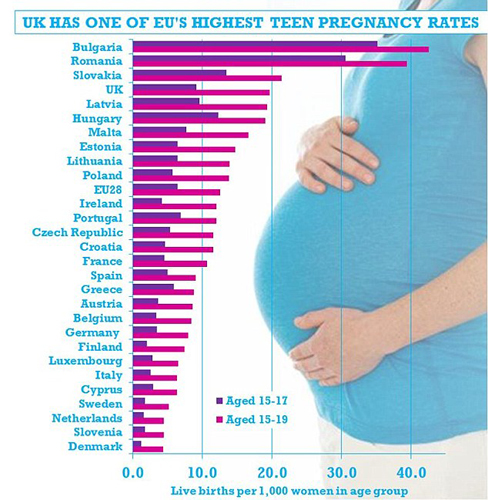
UK still has the highest rate of teen pregnancies in Western Europe despite 25% fall in the last decade

  • 19.7 births per 1,000 women aged 15-19 in the UK in 2012, study shows
  • Figure is much higher than the EU average of only 12.6 births per 1,000
  • Worldwide figures show Switzerland had the lowest rate at 3.4 births
  • The highest teen pregnancy rate was in Azerbaijan at 50.0 births

Britain has the highest teen pregnancy rate in Western Europe, new figures showed today. Only Bulgaria, Romania and Slovakia have a bigger problem with girls aged 15-19 giving birth, the Office for National Statistics said. Tackling high levels of teenage pregnancies is linked to the struggle to break the cycle of ill-health and poverty, the ONS said.
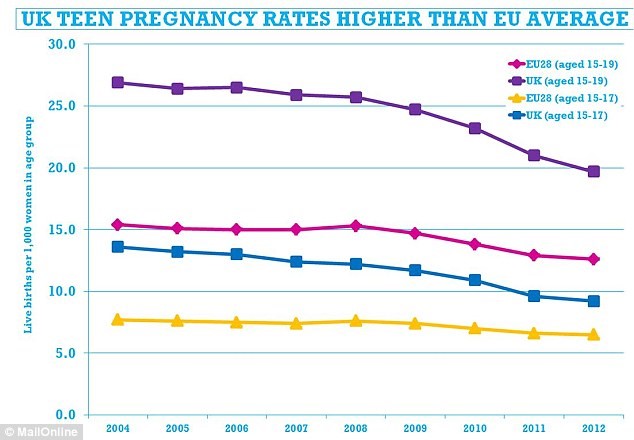

According to the study into how European countries compare, the UK birth rate among women aged 15-19 was higher than the average across the whole of the 28 countries in the European Union. For every 1,000 women in the age bracket in the UK, there were 19.7 births, compared to only 12.6 births across the EU. The UK figure is significantly higher than other major European countries like Germany (8 births per 1,000), France (10.7) and Spain (9.1).

Europe's lowest teenage birth rate was in Denmark (4.4), Slovenia (4.5) and the Netherlands (4.5). The long-term trend shows that teenage pregnancy rates are falling, and faster in countries where it is a bigger problem. The UK teenage birth rate is down by more than a quarter (26.8 per cent) since 2004 compared to a fall of almost one fifth (18.2 per cent) across the EU as a whole.

A Department of Health spokesperson said: 'Teenage pregnancy rates in the UK are now at their lowest level for over 40 years – but we need to keep up the momentum to achieve the levels seen by our Western European counterparts. 'We know that teenage pregnancy is strongly associated with our most deprived and socially excluded young people, and together with the NHS and local authorities we must continue to make progress.'

Among countries outside the EU, Switzerland had the lowest birth rate with 3.4 births per 1,000 women aged 15-19 in 2012. Azerbaijan, which borders Russia and Iran, had the highest rate at 50.0 births per thousand. In 2012, the birth rate among young women was 16.1 per 1,000 women aged 15-19 in Australia, 24.9 in New Zealand and 29.4 in the United States, the ONS said. The ONS said: 'There is a great deal of interest in teenage pregnancy levels in the UK and how these levels compare to other countries within Europe and the world. 'Globally, adolescent pregnancy and childbirth is regarded as a major contributor to maternal and child mortality and to the cycle of ill-health and poverty. 'This is largely as a result of the associated socio-economic factors before and after pregnancy as opposed to the biological effects of young maternal age.'


Look at the graphs. Do the exercise.

Discuss with a classmate (use your answers from the exercises):

  • Why do you think some countries have higher teen pregnancy rates than others?
  • What do you think are the advantages to be a teen parent and mention a few disadvantages?

Step 2 - Words

Words
In this step, you are going to do exercises with words (adjectives) about feelings.

In the first exercise are you looking for the right description at the verbs.
In the second exercise, you will learn to put the correct word in a sentence.

Take a look at these words:

  • ashamed
  • disrespected
  • depressed
  • singlehandedly
  • unintended

In the exercise you choose the correct definition for these words.


Step 3 - Reading

Mum at the age of 15
You are going to read an article written by a girl who became a Mum at the age of 15.
Read the text.

What Pregnant and Parenting Teens Really Need

By Gloria Malone, a contributor to the Seleni Institute, a non-profit mental health and wellness center for women and mothers in New York City.

When I got pregnant and became a mother at 15, I experienced a huge amount of disrespect and shame from family members, friends and perfect strangers.

I was a teenager dealing with an unintended pregnancy, a high school course load, extracurricular activities, ob-gyn appointments and friends and peers talking behind my back, all while trying to plan for my future and that of my unborn child.

More than ever in my life, I needed emotional support. What I got was the complete opposite. Everyone seemed focused on making me feel that I had singlehandedly ruined not only my life, but also the future life of my unborn child.

Society seems to think that pregnant and parenting teens must be punished and used for political prevention campaigns instead of being supported and treated as the full human beings we are.

I felt alone, disrespected and depressed, with no understanding that my mental health was important. I didn't think I had any issues that needed to be addressed. That could not have been further from the truth.

I was depressed before I became pregnant and depressed throughout my pregnancy, in  large part because of how terrible everyone else made me feel about this enormous change in my life. I did not feel like I could reach out to anyone because the very same people I was supposed to be able to count on were causing much of the pain and depression I was experiencing.

When my daughter was born, I added to that emotional burden the pressure to be the "perfect teen mom," along with the stress of needing to succeed at school and continue being the good student I had always been.

In an effort to survive and limit the impact of society's rude comments and actions, I shut down emotionally. This pushed me further into depression and subsequently made me ignore my mental health altogether.

I didn't realize it at the time, but the nightmares, anxiety, migraines and involuntary silent crying I was experiencing, sometimes daily, were directly due to a lack of mental and emotional support. I needed that support before becoming a pregnant teen, and I needed it as a pregnant and parenting teen. And I deserved the same support as all pregnant women and mothers.

I eventually came to understand that. And so I began to unapologetically pursue my goals without feeling ashamed of my personal choices. I believe that taking charge of the narrative of my new family helped some members of my family realize that support and encouragement worked better than shame and stigma. By working hard and getting the support of family, friends and non-profit organizations, I was able to get childcare for my daughter and complete both high school and my undergraduate studies while advocating for other pregnant and parenting teens.

As a grown woman and mother of a 9-year-old, I am now actively working on making my mental health a priority. It's one reason I joined forces with six other women who experienced unintended teenage pregnancies and launched the #NoTeenShame team.

#NoTeenShame

#NoTeenShame is a movement advocating that pregnant and parenting teens have a  right to all the support, services, and encouragement they need to have healthy, happy, and shame-free pregnancies and parenting experiences. This includes mental health.

Addressing the mental health of pregnant and parenting teens -- who face significantly higher rates of postpartum depression -- should be paramount for all mental and maternal health non-profit organizations, programs and anyone who works with teen moms and families.

We need a support system - without shame or stigma -- to help all pregnant and parenting teens have healthy and positive experiences. To ensure that they don't become disenfranchised by society and help them to be confident enough to continue fulfilling their potential as parents, students and members of society.


Do the exercise.

#NoTeenShame
Find out about #NoTeenShame. Click here.
http://noteenshame.tumblr.com

How helpful do you think this site is to teenage moms?
Write a few (at least five) sentences giving your reactions to the site.
You can either post these up around your class or share them on your class site.
Discuss this with your teacher.

  • What about teenage Dads?
  • What support systems to they need?

With your partner, make a list of useful information that teenage Dads would need.

Step 4 - Grammar

Grammar
If you want to be able to do the assignments correctly you will need to know more about some grammar items.
Let's take a look at the comparatives.

Comparatives of adjectives

Do the following exercise.

Step 5 - Pronunciation

Pronunciation
The vowel sound /ə/ appears in many words in English. It is so common that it even got itself a name – Schwa. The Schwa sound is a short and weak vowel sound.

In this step you learn about Schwa. You should practice pronouncing it with words ending with -er.
Watch the video to get an introduction.

You have seen the introduction video about Schwa.
Now watch the video about the pronunciation of words ending with -er.

Now practise the pronunciation of these words with a classmate:

1. happier

2. sadder

3. funnier

4. smoother

5. sweeter

6. easier


Step 6 - Task

Task
Think about the ways that you could make young people aware of the positive and negative results of being a teenage parent.
Would you ...

  • Set up a social media site?
  • Make a video with interviews with young parents?
  • Create a poster?
  • Hold school discussions?
  • Invite a guest speaker (who?)
  • Another way?

Choose one of the ways and prepare a short presentation telling the class which method you would
choose and why.

Plan your presentation. Write some notes. You can use or adapt this plan:

Introduction
The method of presentation we have chosen is…
We’ve chosen this way because…
Main points – the steps we would take to complete our project.
Step 1:
Step 2:
Step 3:
Practice your presentation with your partner.
Give your presentation to your class.


TIP: If you’re listening to someone giving their presentation, make a note of the things that you liked!

Evaluation

Fill in this schedule.
(Copy to Word or write down in your notebook)

Activity


1
Poor

2
Needs Improvement

3
Good

4
Very good

5
Excellent

Step 1 - Reading and speaking

I understand the reading.


I can have a discussion about teen parents.


Step 2 - Words

I understand the meaning of the words.


Step 3 - Reading

I understand the reading.


Step 4 - Grammar

I understand the grammar.


I can use the grammar.


Step 5 - Pronunciation

I can pronounce the Schwa sound.


Step 6 - Task

I can do the writing task.


Love Actually

Love Actually

Introduction

The subject of this lesson is 'Love Actually'.

​Love Actually is the title of a film that is often shown at Christmas time.
In this section we look at family celebrations and a condition called hypercopresence.

You’ll have the opportunity to find out more about this condition, and to find out if you, or anyone in your family suffers from it!

This lesson contains 8 steps and an evaluation. Work them through step by step.

Step

Activity


Introduction

Find out what you already know.

Step 1

Speaking

Discuss romantic places with a class mate.

Step 2

Words

Pronounce words and match their definitions in the exercise.

Step 3

Watching

Watch a video and fill in the gaps.

Step 4

Reading

Read the text, choose the best situation.
Answer the questions. Write down your ideas.

Step 5

Writing

Write down your thoughts about Christmas day with family.
Discuss with classmate.

Step 6

Grammar

Grammar desk and exercises about Superlatives of Adjectives.

Step 7

Words

Unjumble words exercise.

Step 8

Task

Write a letter to a friend in England.


Evaluation

Reflecting on what you have learned.


Difficult words? Search these on Cambridge Dictionaries


Step 1 - Speaking

Speaking
Choose which of the places are romantic places and write down your idea of three romantic places.

  • Train stations ..........
  • Parks ..........
  • Your living room ..........
  • Airports ..........
  • Playground in your town/village ..........
  • Football ground ..........
  • ..........
  • ..........
  • ..........

A romantic story

First read loud the sentences of the love story yourself.

  • Speak

I don’t need a romance novel because my life is a love story.
Harry and I met at work about nine years ago. From the moment we met, I knew he would be the love of my life. He asked me out on a date, and I accepted it. We had a lot in common, so we hit it off straight away.
We fell madly in love. We realized we wanted to make a commitment to each other.
After a few months, Harry proposed to me and, of course, I accepted his proposal. We got married in March 2005. I gave birth to a beautiful baby girl, whom I love unconditionally.

  • Listen

Now watch and listen to this ‘love story’. Did you pronounce it correctly?

Bron: Learn English with KT

Step 2 - Words

Words and their meaning
In this step, you are going to do exercises with adjectives.
In the first exercise are you looking for the right description or explanation.
In the second exercise, you have to put the correct word in a sentence.

Step 3 - Watching

Watching
You’re going to watch the beginning of the film Love Actually.

Do the exercise.

Step 4 - Reading

Reading
Do you have regular family get together? Or does your family meet just once a year?
Do you suffer from hypercopresence? Do you know what that is?
Read the sentence and choose the best situation to illustrate hypercopresence.
Quickly read the first paragraph and check your answer.

  1. Everyone comes to our house at Christmas – it’s such a lovely time spending time with my family.
  2. We usually go to Grandma’s for Christmas. We have a big family and it can be really stressful. There are lots of people, and lots of noise and then Mum always argues with Uncle Brad. Every year!
  3. Christmas is a time of giving and that is what I love most about it. Everyone giving something to someone else. It’s really great.

Read the text.

So THAT'S why families fight so much at Christmas! Strict schedules and cramped conditions cause 'hypercopresence'

1. Families fight at Christmas because of a condition which afflicts them when they are forced to live in close quarters having spent all year apart, scientists claim 'hypercopresence' occurs when families are in each other's pockets 24 hours a day even though they have not seen each other in months. Over Christmas they have to share the same house, the same bathroom and have to put up with young children stampeding around the place.

2. Family members become crankiest when their autonomy has been taken away from them by the tight schedule of walks, meals and games. Professor Melanie Booth-Butterfield, a communications expert at the University of West Virginia, said that rows occurred when people tried to 'strike out' and reclaim their independence.

3. She said that hypercopresence happens when you get what she called a 'large dose of family at once'. Professor Melanie Booth-Butterfield likened the phenomenon to a long distance relationship - only instead of your lover coming home, you have to spend Christmas with your family. She said: 'When you are in a relationship you expect to be together some of the time. You don't tend to expect to be together 24/7. Hypercopresence happens when things are very controlled and scheduled; you are together in the car, the hotel room, always with other people.  It's the idea that you are too close and you can't get away from people. 'Instead of having autonomy to be able to get away when you want you have to coordinate with other people.'

4. Professor Booth-Butterfield said that pressures at Christmas time came from what she called the 'ABCs'; alcohol, bathrooms and children. The more people there are and the smaller the house was, the more pressure there was likely to be. People who are more individualistic will find hypercopresence more of a strain more quickly, she said.

5. Professor Booth-Butterfield said: 'With alcohol people start to drink early and alcohol lowers your inhibitions. Humour and behaviour in general may become more over the top. 'There may be extra friction when some family members are drinking but others aren’t You have normal social drinking, then you add these other factors and it can lead to conflict.'

6. Bathrooms create tension because there is often a queue, especially in the morning. Professor Booth-Butterfield said: 'Normally you can shower for as long as you want but at Christmas there is pressure to get out of the shower. 'With children there is a great potential for pressure, especially during holiday times. Kids can be active and loud and unruly. Parents put extra pressure on themselves with family that the kids perform well, that they look good and have good eating manners. The kids add to the number of heads under each roof. Also parents pressure their kids into acting well.'

7. Professor Booth-Butterfield said that there were a number of tactics families should use to avoid this kind of tension, starting with lightening up and not taking offence so easily. A big tip is that you should have multiple conversations with relatives during the year and not one big talk over Christmas. She said: 'There are ways to have similar conversations so it's not a huge: 'I've been waiting to talk to you about this'. Another tip is to balance family time with autonomous time and letting relatives go off and do their own thing is vital. This also gives them time to vent their frustrations to their partners or brothers and sisters. Professor Booth-Butterfield urged families to loosen up their schedule and not to cram in so much.

8. She said: 'Think about the sequencing, ask when people are arriving and loosen up the timing of things. Simplify things too and give people different responsibilities. Have different people take responsibility for different aspects of Christmas. 'One person could do breakfast, another does lunch. Even things like doing the laundry can help. There's tremendous pressure on the host family. Assigning responsibilities to everyone is a good is a good idea, even the kids. Chances are they have responsibilities when they are at home.'

9. On the tricky subject of mobile phones, Professor Booth-Butterfield said it was 'not realistic' to ask young people to have them off all the time. She said there was some research which pointed to 'generational differences' when it came to mobiles and that younger people used social media to keep in touch with their friends. A compromise would be to suggest having some time when people can use phones and some time when they can't, Professor Booth-Butterfield said.


Answer the six questions.

  1. (par 2) Why do people argue over this period?
  2. (par 2) Who does them refer to?
  3. (par 3) How do people feel when everything is so organised?
  4. (par 5) What is the shower an example of? Can you think of another example?
  5. (par 6/7/8) What are the suggestions to avoid tension?
  6. (par 9) What is said about mobile phones?

Now read the article again.

  • Which aspects are true for you?
  • Do think that hypercopresence is a real phenomenon?

Answers

Step 5 - Writing

Writing
Have you ever thought planning a Christmas day with your family?
What would be the most important things for you?

  1. ....................
  2. ....................
  3. ....................
  4. ....................

Compare your ideas with your classmates.

  1. ....................

Step 6 - Grammar

Grammar
If you want to be able to do the assignments correctly you will need to know more about some grammar items.
Let’s look at superlatives.

Superlatives of adjectives


Look at the Grammar Desk again. Do the following exercises.

Step 7 - Words

Words - UNJUMBLE

Do the exercise.

Step 8 - Task


In this section we have looked at family celebrations and a condition called hypercopresence.
Hypercopresence is a fancy name for this condition: when people are in each other’s pockets, 24/7, and feel they can’t get away from one another. It’s like a large dose of family, all at once…

Family relationships inevitably take a hit when family members spend an extended period of time in close proximity with one another, such as family holidays or annual celebrations like Christmas.
In 2020 the lockdown due to coronavirus has also brought a host of new pressures and challenges to our everyday family life. How about you? How has Corona effected your life?

Writing assignment

Write a letter to a friend in England you cannot visit in 2020 during the Corona (Covid-19) crisis lockdown.
Write about how you experience this period of lockdown!
Answer (at least three of) the questions below in your letter to him.

  • How is the Coronavirus effecting your life?
  • What have you learned about yourself during this lockdown?
  • How has social distancing changed your life?
  • What do you miss most about your life before the pandemic?
  • Do you and your family experience greater conflict during a time of self-quarantine or is it 'Love actually' and is the pandemic bringing your family closer together?

Write your letter in about 300 words.


Evaluation

Fill in the schedule and answer the questions below.


Activity

Needs improvement

Satisfactory, good

Excellent

Step 1 - Speaking

I can discuss romantic places with a classmate.


Step 2 - Words

I can understand and use the words.


Step 3 - Watching

I can watch the video and fill in the gaps.


Step 4 - Reading

I can read the text, choose the best situation and write down my own ideas.


Step 5 - Writing

I can write down my thoughts about Christmas with the family.


Step 6 - Grammar

I can understand and use the grammar about superlatives of adjectives.


Step 7 - Words

I can understand and use the words.


Step 8 - Task

I can write a letter to a friend about 'hypercopresence'.


What have you learnt in this period?
Answer the following questions:

  • Did you feel confident about how the lesson would go? Why/ why not?
  • What do you have to ask your teacher?

Finishing touch

Project A: a short story

Writing a short story
You are going to write a short story. Here are three possible titles to choose from.
The content of the story should be about a relationship – friendship or family.
There are lots of steps – so read all the steps before you start so that you know what you have to do!

Here are three titles. Choose one.

  1. Pieces of Time

  2. Love broken

  3. Walking hatred

Brainstorm your ideas. There’s a lot to think about!

  1. Think about an introduction. Here are some introduction ideas:

    • a character says something;

    • a description of the place;

    • a description of the time;

    • your own ideas.

  2. Think about the characters: how many are there? Write down some of their qualities and a physical description. Think about your characters as your friends: what is their favourite food? What do they do to relax? This way you will be able to write about them more confidently and believably.

  3. When does the story take place? In the present/past/ future?

  4. Where does the story take place? In a town/city/ a house/ a school/ a classroom/ two or more places?

For this story use a five-parts to structure the action.
Look at the example below that was for a story about a stolen necklace.

  • Start of the action: The necklace is mentioned for the first time – a girl is wearing it.

  • Then more events that lead to the action: The thief decides to steal the necklace.

  • The climax – the point at which decisions are made: The thief steals the necklace but the girl’s sister sees the thief, and the thief sees the sister.

  • The story will begin to conclude: The sister quickly runs away and calls the police. Then she identifies the thief – a famous jewel thief.

  • Finally the story ends: The girl thanks her sister for getting her favourite necklace back.

Start writing! It can be hard to start with but if you spend time preparing, it will certainly be easier. Your final story should be no more than 500 words (about 1 and ½ pages of A4).

When you have written your story, leave it for a while. Come back and read it again with fresh eyes.


Ask a classmate to read it for you. They might be able to make some suggestions. Ask one person to read it for grammar and spelling, and ask a different person to read it for ideas. Ask them to tell you if it makes sense! Read their suggestions but remember, you don’t have to include all of them – it’s YOUR story!

​When you’re happy with your story, let your teacher publish on your class blog.
Read everyone else’s and see which one you like best, and why.

Assessment rubric for final project: LOVE


Good

Sufficient

Unsufficient

Points*

Character

The characters are clearly described. We know what they are feeling and thinking.

The characters are described and we mostly know what they are feeling/thinking.

We know very little about the characters. There is no/not enough description of their feelings/thoughts.

2 points

Setting

Clearly describes where the story takes place.

Names the place where the story takes place but there is no detail.

It’s unclear where the story takes place.

2 points

Action

The story is clear and contains the five parts.

It is a good story and contains five parts.

It is a story with unclear and doesn’t have five parts.

2 points

Language

The vocabulary use is very good and the sentence structure is good.

The vocabulary use is fairly good and the sentence structure is good.

The vocabulary use is not very good, neither is the sentence structure.

2 points


* 1 point for each correct answer.

Project B: Listening Love

Listen and speak

You are going to listen to a conversation in a radio show.

Talk about this audio with a classmate.
Answer the questions in exercise 'Help on the line'.


Oefenprogramma Engels

Guide to dating

If your school participates in VO-content, you can practice with the English practice program 'Oefenprogramma Engels'.


Here you find a part of this program.
This section fits in well with this theme.
Sign in with your 'School Entree account'!

Guide to dating


Win your lover back


On www.oefenprogrammaengels.nl you can of course also practice with other reading, listening or viewing assignments!

Examentraining

On this page you will find Examenkracht exam questions of previous years.
The questions will correspond as much as possible to the exercise you have just finished.

While answering, use as much of what you have learned earlier. If you cannot answer the question right now, try again later. When you have answered a question, you can check and indicate the score yourself.

If you want your results to be saved, you will have to log in on ExamenKracht.

VWO 2021-TV1

VWO 2021-TV1 Vragen 3-5
VWO 2021-TV1 Vraag 18

VWO 2021-TV3

VWO 2021-TV3 Vragen 5-9

VWO 2018-TV1

VWO 2018-TV1 Vraag 6
VWO 2018-TV1 Vraag 7


More practice?
Go to Examenkracht where you will find the newest exams.

What did you learn?

Can do statements

Take a look at the Can do statements in the introduction - 'Can do'.
Are you able to do what you have to do?
Did you understand and meet the learning goals (can do statements)?

Analyse your mistakes

What did you learn of the mistakes you made in this theme?
You can learn a lot of your mistakes!

Do you recognize one or a few of the mistakes in this schedule?
Copy the schedule in Word.
Fill in other mistakes you made in the free bottom rows.
Fill in the missing tips in the second column. Of course, you can add your own tips for the other mistakes.

Kind of mistake

Tips

I did not learn enough.

You have to plan your learning activities better.
Don't leave it until the last minute. Set up a timetable.

I did not understand.
I did learn the Grammar theory but did not know how to use it.


I made sloppy mistakes.
I know how to do it, but I do it incorrectly because I lose concentration.


I have to check the Vocabulary. I use the wrong words or I did not recognize the words.

You can study the Vocabulary of themes of the 'Stercollecties' in www.studiowozzol.nl.

Here you can practise words in a context.
This will help you to memorize words.
You also can create your own task in Studiowozzol.

.....  
.....  


Finishing touch Project

  • Did you do the project? How did it go?
  • Was the 'rubric' at the end helpful for you? Could you indicate yourself, how did it go?
  • What do you think of working in a group?
  • Did every group member do the same amount of work?
  • Het arrangement Love, friendship and relationships v456 is gemaakt met Wikiwijs van Kennisnet. Wikiwijs is hét onderwijsplatform waar je leermiddelen zoekt, maakt en deelt.

    Auteur
    VO-content
    Laatst gewijzigd
    2025-11-28 12:09:00
    Licentie

    Dit lesmateriaal is gepubliceerd onder de Creative Commons Naamsvermelding-GelijkDelen 4.0 Internationale licentie. Dit houdt in dat je onder de voorwaarde van naamsvermelding en publicatie onder dezelfde licentie vrij bent om:

    • het werk te delen - te kopiëren, te verspreiden en door te geven via elk medium of bestandsformaat
    • het werk te bewerken - te remixen, te veranderen en afgeleide werken te maken
    • voor alle doeleinden, inclusief commerciële doeleinden.

    Meer informatie over de CC Naamsvermelding-GelijkDelen 4.0 Internationale licentie.

    Het thema 'Love, friendship and relationships' is ontwikkeld door auteurs en medewerkers van StudioVO.

    Fair Use
    In de Stercollecties van StudioVO wordt gebruik gemaakt van beeld- en filmmateriaal dat beschikbaar is op internet. Bij het gebruik zijn we uitgegaan van fair use.
    Meer informatie: Fair use

    Mocht u vragen/opmerkingen hebben, neem dan contact op via de
    helpdesk VO-content.

    Aanvullende informatie over dit lesmateriaal

    Van dit lesmateriaal is de volgende aanvullende informatie beschikbaar:

    Toelichting
    Dit thema valt onder de arrangeerbare leerlijn van de Stercollectie voor Engels voor vwo, leerjaar 4, 5 en 6. Dit is thema: 'Love, friendship and relationships'. Het thema omvat de volgende onderwerpen: - To friend or unfriend?, - Your image - Kissing in public - Teenage parents - Love Actually. In de grammaticaopdrachten wordt er geoefend met Simple present, Present continuous (progressive) or simple present en superlatives or adjectives.
    Leerniveau
    VWO 6; VWO 4; VWO 5;
    Leerinhoud en doelen
    Engels;
    Eindgebruiker
    leerling/student
    Moeilijkheidsgraad
    gemiddeld
    Studiebelasting
    20 uur 0 minuten
    Trefwoorden
    arrangeerbaar, engels, kissing in public, love actually, love, friendship and relationships, stercollectie, teenage parents, to friend or unfriend?, v456, your image

    Gebruikte Wikiwijs Arrangementen

    VO-content Engels. (2021).

    Kissing in public v456

    https://maken.wikiwijs.nl/172650/Kissing_in_public_v456

    VO-content Engels. (2021).

    Love Actually v456

    https://maken.wikiwijs.nl/172649/Love_Actually_v456

    VO-content Engels. (2021).

    Love, friendship and relationships h45

    https://maken.wikiwijs.nl/98822/Love__friendship_and_relationships_h45

    VO-content Engels. (2021).

    Teenage parents v456

    https://maken.wikiwijs.nl/172651/Teenage_parents_v456

    VO-content Engels. (2021).

    To friend or unfriend? v456

    https://maken.wikiwijs.nl/172647/To_friend_or_unfriend__v456

    VO-content Engels. (2021).

    Your image v456

    https://maken.wikiwijs.nl/172648/Your_image_v456

  • Downloaden

    Het volledige arrangement is in de onderstaande formaten te downloaden.

    Metadata

    LTI

    Leeromgevingen die gebruik maken van LTI kunnen Wikiwijs arrangementen en toetsen afspelen en resultaten terugkoppelen. Hiervoor moet de leeromgeving wel bij Wikiwijs aangemeld zijn. Wil je gebruik maken van de LTI koppeling? Meld je aan via info@wikiwijs.nl met het verzoek om een LTI koppeling aan te gaan.

    Maak je al gebruik van LTI? Gebruik dan de onderstaande Launch URL’s.

    Arrangement

    IMSCC package

    Wil je de Launch URL’s niet los kopiëren, maar in één keer downloaden? Download dan de IMSCC package.

    Voor developers

    Wikiwijs lesmateriaal kan worden gebruikt in een externe leeromgeving. Er kunnen koppelingen worden gemaakt en het lesmateriaal kan op verschillende manieren worden geëxporteerd. Meer informatie hierover kun je vinden op onze Developers Wiki.