Tourism h45

Tourism h45

Tourism

Introduction

In this theme you will focus on tourism and holidays.
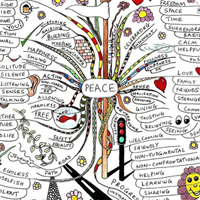

What are you going to do?
You’re going to look at some facts and figures about tourism, and then some of the issues affecting tourism. For example, did you know that not all tourism is about the traveller? In fact what is the difference between a traveller and a tourist?

The tourism industry is now highly regulated. The result seems to be ‘sameness’. When we go to shopping centres around the world, they are all the same and the products on sale are also often the same that we don’t know what country we are in.

There are many different groups of travel, ranging from political travel to economic.
We will look at some types of traveller – are you a backpacker or a flashpacker?
Then we look at eco-tourism – what is it? And are so called ‘eco companies’ really green?
And what about a job in the holiday industry? Would you like that?
We read about the life of a travel writer. Sounds like the perfect job, right?
And we have some videos for you.
A TEDX talk about the future of tourism, and a couple of songs about holidays.

How about you?
What words do you know that have to do with tourism and holidays?
Write at least twenty words in a mind map. Check below for tips on how to create a mind map.
Compare Mindmaps with your classmates. What are the differences?
Do you understand all the words that other students have written down?

Mindmap maken

Woorden bij een onderwerp bedenken en met elkaar verbinden.


So now pack your bags – let’s go!

Need to know

What do you need to know?
At the end of this theme, you should be able to talk about this subject with ease.
But you don't have to be able to do all this perfectly right away! If you take the following lessons you'll find out what you need to know!

Give it a try!
Read the questions.

  • Form groups of three or four.
  • In your group, select as many questions as there are members of your group.
  • Discuss these questions.
  • Select one question you all think is interesting.
  • Present, as a group, the results of your discussion to your classmates.
  • Answer, as good as you can, questions of your classmates.

When listening to other presentations, listen carefully and think of questions or things
you did not understand.​

      Choose from the following questions:
  • What images do you have in mind when you hear the word 'Tourism'?
  • What are good and bad things about tourism?
  • Have you ever been in a difficult situation while travelling? Describe the situation.
  • If you were going on a camping trip for a week, what five things would you bring? Explain why.
  • Do you prefer active or relaxing holidays? Why?


Can do

In this theme you will focus on the following 'can do' statements.

Listening (B1):

  • I can listen to songs and fill in the gaps of the text of the songs.
  • I can generally follow the main points of extended discussion with a classmate.
  • I can catch the main points in the interview about Travellers and Tourists.

Reading (B2)

  • I can rapidly grasp the content and the significance of news, articles and reports.
  • I can read and understand articles in which the writers express specific attitudes and points of view (about differences between backpackers and flashpackers and about the life of a travel writer).
  • I can read and understand articles in which the writers express specific attitudes and points of view about tourism.
  • I can understand in detail texts about backpackers and flashpackers.

Speaking (B1)

  • I can start, maintain and close simple face to face conversation on the topic Tourism, about the differences between a tourist and a traveller.
  • ​I can maintain a conversation or discussion about backpacking but may sometimes be difficult to follow when trying to say exactly what I would like to.
  • I can give or seek personal views in an informal discussion about holiday jobs with a classmate.
  • I can convey information about an aspect of Tourism. I can present my own talk to my class.

Writing (B1)

  • I can write simple connected texts about ecotourism and can express personal views and opinions.
  • I can make a poster with information about travelling (a traveller type).
  • I can write a personal email to friends giving them news about my (disastrous) holiday.
  • In an informal email to a friend I can express feelings such as grief, happiness, interest, regret and sympathy.
  • I can reply in written form to a job advertisement (covering letter and a CV).

To do

This theme: Tourism contains an introduction, four lessons and a finishing touch.
In the schedule below you can see the titles of the sections and an estimate of the time required for each part.

Lesson

Title

Activities

Time *

Introduction

Introduction

Need to know

Can do

To do


0,5 hour

Lesson 1

Fact and figures               

Read and speak about the differences between tourist and traveller.
Write about a disastrous holiday.
Grammar: past simple and verbs.

3 - 4 hours

Lesson 2

Pack your bags!

Read and speak about backpackers and flashpackers. Listen to a song.
Make a list of two other types of traveller.

3 - 4,5 hours

Lesson 3

Mindful tourism         

Read about eco tourism.
Write about your last holiday.
Grammar: past simple

2 - 3 hours

Lesson 4

A working holiday

Read a job advertisement. Speak about it. Listen to a song.
Write about your perfect holiday job.

2 - 3,5 hours

Finishing touch

Projects

Give a presentation about one aspect of tourism.
Listen to a conversation about travellers and tourists.

5 hours

Oefenprogramma

Practise with the 'Oefenprogramma Engels'

Examentraining

Prepare for exams: practise taking past versions.

Evaluation

Answer evaluation questions, what did you learn?


Total


± 20 hours


*hour = lesuur. Eén lesuur komt ongeveer overeen met 2 SLU.

Lessons

Facts and figures

Facts and figures

Introduction

The subject of this lesson is 'Facts and figures'.

  • Form groups of three or four pupils.

Discuss the following questions in your group:

  • Do you know how many people take an international holiday every year?And do you know what that number will be in a few years’ time?
  • Is it better to stay at home on holidays or go somewhere?

In this section, we read an introduction to a report about tourism and you’ll read about these figures. But first, let’s find out – what’s the difference is between a tourist and a traveller!

This lesson contains 7 steps and an evaluation.

Step Activity  
  Introduction Find out what you already know.
Step 1

Speaking

Tick the points about tourism. List with differences between tourist and traveller.
Step 2

Reading-1

Read an article for fun.
Step 3 Reading-2 Read article and true/false sentences about Annual Report of Word Tourism Association. Make notes, compare ideas.
Step 4

Words

Match adjectives with meaning. Exercises with adjectives.
Step 5 Reading-3 Match statements, read article and put topics in order.
Step 6 Grammar Past Simple: Grammar Desk, exercises with regular and irregular verbs.
Step 7 Task Write in 200 words about a disastrous holiday.
  Evaluation Reflecting on what you have learned.


Difficult words? Search these on Cambridge Dictionaries


Step 1 - Speaking

Read the questions below. First read the questions and think about the answers. Then discuss the questions with a classmate.


  • ​What do you think is a good definition of ’tourism’? What does it include? What does it not include?
  • Which of the points 1-4 always apply to you when you are a tourist? Why do they or don't they?
         
  1. You are in a foreign country.
  2. You must be on your own (without company).
  3. You have to see interesting sights, buildings and well-known cities.
  4. Tourism is the same as being on holiday.


  • A tourist is not the same as a traveller. What do you think are the differences between a tourist and a traveller? Make a list and compare with the fun article in sept 2 Reading.
    What points (differences) did you have in common with the text?

Possible Answers

Step 2 - Reading

You are going to read the following text, entitled: 'Signs you're A Traveller, Not A Tourist'.
Reading the text is for pleasure, but it will probably help you (with the next Steps).

Enjoy!

Signs you're A Traveller, Not A Tourist

It may seem like splitting hairs, but there are major differences between being a traveller and being a tourist.
Being a traveller is sort of like being a part of a Newtonian law: A traveller in motion stays in motion, yada yada yada.
While being a tourist is sort of like intentionally plopping yourself down somewhere to say you went there. Fancy yourself a traveller? See if the below rings true first.

You dream about your next trip during your morning commute. Solo travel is your thing. You wouldn't be caught dead doing this. Like EVER. You love it so much; you made it your job.

Homesickness happens, we know.
But you don't make it a point to head to the nearest McDonald's / Starbucks / Pizza Hut every chance you get.
You understand that not all money looks like American dollars.
As such, you don't refer to foreign currency as "play money." It's real. Very real.
You have maps stashed on your walls / in your wallet / underwear drawer from favourite places.
Your Facebook cover photo is a destination you love / just got back from. Your phone has the weather and time zone of your favourite spots just because you like to know.
You know how to say "hello / goodbye and thank you" in many a language. You name cities by airport codes, aka CDG, LHR, ORD. Your passport is your favourite personal item. Instagram shots of your friend's holidays on Mexican beaches just isn't really travelling, in your book.

You rationalize trips as "well, that's a month's worth of electricity" or "I can't watch 'Homeland' this season" so you can afford your adventures. Your New Year's resolutions always include places you want to visit in the coming year.
Friends come to you for packing tips. You've never gone anywhere “just to check it off the list.” You know how to get through security in the least amount of time.
This is you: a traveller. NOT a tourist!

Source: www.huffingtonpost.com


Step 3 - Reading

World Tourism Organization Annual Report
The World Tourism Organization (UNWTO) is the United Nations agency. The UNWTO is responsible for the promotion of 'good tourism': responsible, sustainable and for everybody.

First read these sentences.
Decide if you think the sentences are true (T) or false (F).
Think about your answer. You can compare with a classmate? Do you have the same or different ideas?

  1. If there is a major international incident, people choose not to travel.
  2. Over 1 billion tourists take an international trip every year.
    Do you think that is true? Where are they from?
  3. Tourism supplies other industries.
  4. Tourism contributes a lot of money to a country’s economy – for both developed and
    emerging economies.

World Tourism Association Annual Report

You are going to read a challenging text!
It's The Introduction to the World Tourism Association Annual Report 2014.
But to help you, first take a look at the vocabulary list.

Vocabulary

Now read the text.

The top headlines of 2014 painted a challenging landscape. From sluggish economic growth and conflicts to the Ebola virus outbreak in West Africa – to all appearances, such circumstances were hardly favourable for tourism.
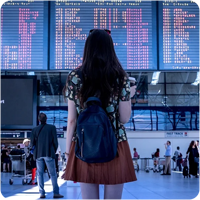
Yet in spite of the many challenges the world faced in 2014, international tourism continued to propel ahead.

At the year´s close, the number of tourists travelling internationally grew by 4.4%, reaching a new milestone of 1,135 million, and capping a five-year consecutive increase since the global economic crisis of 2009.
Once again, these results have surpassed UNWTO´s long-term projection of 3.8% growth for the period 2010 to 2020, well on track to reach the projected 1.8 billion international tourists by the year 2030.
With over 1.1 billion tourists taking an international trip every year, tourism continues to be an unstoppable force and a key driver of the global economic recovery. Yet tourism´s record growth is not merely absolute numbers. Tourism´s continued progress and expansion represents an effective solution for many of the world´s greatest challenges.
Indeed, few sectors are as strategically positioned as tourism to contribute decisively to job creation, poverty alleviation, environmental protection and multicultural peace and understanding.

Tourism´s increasing relevance on the development agenda comes at a critical turning point as we shift from the Millennium Development Goals (MDGs) into the Sustainable Development Goals (SDGs), the new blueprint for global development. During this crucial time, sustainable tourism will be counted on to fulfil its role as an important player in achieving the ambitious goals of sustainable development, green growth and a more resilient global economy.
Global challenges call for global solutions. Our commitment remains in advancing UNWTO´s mandate to promote tourism as a driver of economic growth, inclusive development and environmental sustainability and a global solution for a better
future for the planet and its people.
Taleb Rifai, Secretary-General

Source: World Tourism Association (UNWTO) Annual Report 2014

Step 4 - Words

Do the exercise.

In the next exercise choose the best adjective to complete the sentence

Step 5 - Reading

First do the exercise.

Now skim this article.
Read heading, pictures, captions.
Read introduction and conclusion.
Read first and last sentences of paragraphs.

Some of the Major Current Issues Confronting Tourism
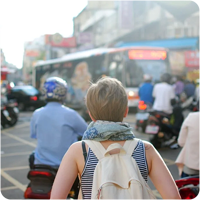
July 2006

Few people would question that tourism and travel can be highly volatile industries. A great deal of the industry is dependent on the leisure traveler. However, tourism is composed not only of leisure travelers but also other groups such as business travelers, and these non-leisure travelers often act and spend in the same way as leisure travelers. Tourism and travel professionals know that their industry is exposed to political, health, and economic undulations. Often it is heard that these ups and downs are outside of tourism and travel professionals’ control. While to some extent industry leaders are forced to react to circumstances outside of their control, an awareness of current challenges can help these leaders to prepare for eventual challenges and to seek ways in which to lessen the negative impact of exigent circumstances. Below is a list of some of the current challenges facing the tourism and travel industry?

  • Tourism is a highly taxed industry. Few people, outside of the tourism and travel industry, realize just how many taxes travelers pay. Look at the percentage of taxes paid on an airline ticket, a hotel room, or a rental car. In some locales (be that local a country, city, state or province) almost 40% of the commodity’s cost comes from add-on taxes. When government officials claim that they must provide additional protection services to non-residents they often fail to take into account just how much money non-residents add to a local economy not only through purchases but also through the payment of taxes.
  • Global standardisation has produced less unique locales. The globalized marketplace means that often the same products are available throughout the world. If part of the reason for travel is to learn about or have the opportunity to explore the unique and different, then the sameness factor is a major tourism challenge. For example, shopping malls around the world often seem to offer the same products and many travelers find hotels to be so standardized that they almost forget in what country the hotel is located.
  • Tourism and travel are highly dependent on the cost of fuel. The recent rise in the price of fuel such as gasoline has a major impact on the entire industry. Summer is the high season for travel and with the cost of gasoline on the rise; many travelers may have to adjust their spending (or vacation length) in order to pay for additional fuel charges. Those locales that are taking this challenge into account and seeking creative solutions will be the ones best prepared to overcome this challenge.
  • The wireless communications world means that one can be there without being there. The new world of telecommunication can offer many advantages to both the traveler and to the travel industry. However, it also means that leisure travelers no longer are simply on vacation. Instead they expect to be connected to business and family at all times. In a like manner, when word-of-mouth combines with telecommunication, then publicity, news stories and events are spread instantaneously throughout the world. The telecommunications revolution also means that business meetings may be conducted on-line or via satellite rather than face to face and may eliminate the need for many business trips. Finally, the telecommunications revolution means that virtual reality often replaces classical reality. No longer can just one city lay claim to an attraction when other cities can reproduce the same attraction in a virtual state.
  • Security is a major challenge to the tourism and travel industry. The tourism and travel industry should have received a major wake-up call on September 11, 2001. Unfortunately many industry leaders simply provided lip-service to security issues rather than confronting the problem. Too many tourism offices or convention and visitors bureaus have no (or almost no) contact with their local police departments. Too many police departments have no officers trained in TOPs (tourism oriented policing/protection services). Too few city councils or local governments have provides their security agencies (e.g., policy departments) with the economic and manpower resources to protect the visitor and tourism facilities. Almost no community has done a tourism security assessment of its industry’s personnel and sites. Unless the visitor’s security becomes a primary focus of concern, many tourism and travel destinations may face great economic losses in the future.
  • Safety is another challenge facing the tourism industry. The current population is aging perhaps like no other one in history. As the baby boom generation (those born between 1946-1960) increasingly approaches its 6th decade of life, many of its members are refusing to slow down. Although the baby-boomers bodies are aging, travel and tourism officials are seeing many of these people practicing all sorts of physical activities, from motorcycling to skiing. This “refusal” to sit back and grow old means that tourism officials will be facing all sorts of safety issues. Mobile medical units may be needed, others will need special diets and readily available pharmacies open 24 hours a day and 7 days a week.
  • Closely related to safety issues are health issues such as pandemics that can easily cause tourism panics. Not only can a drop in water quality (purity) become a major tourism issue, but also the industry must face the reality of pandemics and/or pandemic scares. The SARS “scare” ought to have reminded the travel industry that a few media stories can wreak havoc on the tourism industry’s viability. In a like manner, a nervous public may connect a health event with a potential act of terrorism. The anthrax episodes in Washington, DC are an example of how a nervous public may cease to visit a locale due to health related safety issues.
  • Political conditions will continue to be a challenge for the tourism industry. On the international front, tourism will continue to have to deal with an ever more complicated and confusing political reality. For example, despite governments claiming that they support tourism, visa restrictions have become more complicated. Furthermore, no nation seems to be immune from street demonstrations, politically motivated riots, acts of terrorism, wars or bureaucratic red tape. These circumstances not only give negative publicity to the host locale, but also make travel more difficult and less appealing.
  • Travel stress brought about by poor travel conditions. Few today would disagree that while still romantic, travel is no longer stress-free. Not only is air travel increasingly difficult but other forms of transportation are no longer hassle free. All forms of the travel and tourism industry have placed greater restrictions on what they offer and many have raised prices. Along with these restrictions, many parts of the industry suffer from either limited personnel or poor customer service. So far these stresses have not caused a decrease in travel, but the potential for such a turndown is very present.

Source: www.tourismandmore.com


Do the second exercise.

Step 6 - Grammar

If you want to be able to do the assignments correctly you will need to know more about some grammar items.

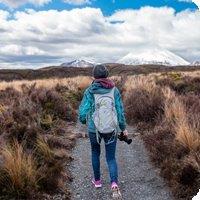
Let's look at the Past Simple.

At first an exercise with regular verbs.
Fill in the correct form of the verb in brackets. 
Then do exercise 2: did/didn't

Take a look at the Grammar Desk about Past Simple (also called simple past).

Past simple


Do exercise 2.
Fill in the correct form.

A friend of yours went to Indonesia on holiday. You ask him some questions.
Create questions with 'did' or ‘was’ with the next words in this exercise.
Use the irregular verbs.
Example: (where/go) ................ Where did you go?

Put the words in order to make questions.

Step 7 - Task

Writing an email

You are going to write an email to your friend about a disastrous holiday that you went on.
Here are some photos that you took. Write your email in about 200 words.
In your email you tell and express your feelings about your disastrous holiday.
Read the tips to write a good email. You hand in your email to your teacher.

How to write a good informal email

  • Your email includes an opening and closing formula.
    (e.g. opening: Dear William, e.g. closing: Best wishes)
  • Your email includes an introductory paragraph.
    (e.g. How are you doing? Did you hear about.....?
  • Your email includes a closing paragraph. You start saying goodbye and you can ask for a reply to our email.
  • An informal email includes pleasantries (e.g. I hope you had a nice holiday...)
  • Your ideas are expressed in a clear and well-organized way.
  • There are few or no errors in grammar and spelling.
  • Email contains closing (Best wishes, Take care, Regards...)


Evaluation

Fill in the schedule and answer the questions below.

Activity (being learned) simple difficult known​ new
Step 1 - Speaking        
Step 2 - Reading-1        
Step 3 - Reading-2        
Step 4 - Words        
Step 5 - Reading-3        
Step 6 - Grammar        
Step 7 - Task        


What have you learned in this lesson?
Answer the following questions:

  • What was the most interesting part of this lesson? Why?
  • What was the easiest part of this lesson?
  • What did you already know?
  • What was the most difficult part?

Pack your bags

Pack your bags

Introduction

The subject of this lesson is 'Pack your bags'.​
In this section we’re going to look at some recent concepts in travel and tourism.

Due to a wealthier society, people seem no longer willing to ‘rough’ it.
Out with the backpackers and in with flashpackers:

Which are you? Do you need your creature comforts?
Let’s find out what kind of traveller you are with a quick quiz.

Quick quiz

This lesson contains 5 steps and an evaluation.
Work them through step by step.

Step

Activity


Introduction

Find out what you already know.

Step 1

Reading

Read a text and do two exercices about backpackers and flashpackers.

Step 2

Words

Match collocations and complete sentences with these.

Step 3

Speaking

Answer three questions, make notes and compare these with a classmate.

Step 4

Song

Listen to a song and fill in the words in the song text.

Step 5

Task

Look at activities for celebration friends day.
Discuss advantages and disadvantages.


Evaluation

Make a list of two other types of traveller.


Difficult words? Search these on Cambridge Dictionaries

Step 1 - Reading

In the introduction you have answered the questions of the quiz.
So now that you have an idea, let’s find out more about flash packers.

You’re going to read an article, and in the exercise you should decide if the sentences are true, false or the information is not given in the article.

You are going to read this article.

Are you a backpacker or a 'flashpacker'?

Research shows adventure seekers now prefer that little bit of extra comfort. 75% now admit extra luxuries make them more like 'flashpackers'. Wine tasting and boutique hotels have been added to backpacking.

Modern day backpackers are professionals that have new expectations. Backpacking around the globe on a budget has evolved into 'flashpacking' as working professionals live it up on holiday, suggests new research.
A poll of 1,000 working professionals aged from 35 to 54 found that more than three-quarters (78 per cent) would define their travelling style as that of a 'flashpacker' - an adventure traveller that desires style and comfort.

With improvements in the state of the UK economy during 2014 and forecasts seemingly showing further progress into 2015, those working professionals that have advanced up the career ladder are now wanting to enjoy their hard-earned cash by travelling abroad in style. The majority of those who took part in the survey commissioned by The Flash Pack group travel company noted that they felt they had grown out of the 'backpacker' way of life - denouncing noisy dormitories and cheap eats for trendy boutique hotels, wine tasting and authentic 'foodie' experiences.

Travel experts say the changes are reflective of a backpacking generation that has grown up championing responsible tourism, supporting local business and authentic travel to the backdrop of a technological revolution. Research has suggested adventure seekers now prefer added comforts when they go backpacking. Radha Vyas, co-founder of The Flash Pack, said: 'We are seeing more and more people opting for a smarter, experience-led and more stylish travel option.

'Flashpacking is not just a travel trend, but more significantly it's a travel lifestyle that takes all the bits you loved about backpacking in your twenties and gives it a grown-up, luxurious edge. Those that assimilate themselves with this trend are the modern day backpackers with new priorities' She said when contrasted against the other 22 per cent that defined their travel style as that of a backpacker, it highlights an important evolution in attitude within this age range. Miss Vyas added: 'For those busy working professionals that travelled in their 20s as a backpacker, they want their travel with that same flavour of adventure but with added style and culture.

'However, these professional travellers face logistical issues such as a potential lack of travelling companions and restricted travel time due to annual leave that make it a lot more difficult to squeeze an authentic travel experience as compared to the freedom of twenty-something on a gap year. 'The Flash Pack is designed with these restrictions of the working professional in mind. For example, our 'three week gapper' packs a gap-year style experience into a realistic time frame, eliminating the necessity of taking a sabbatical, career break or even quitting work altogether.'

Source: www.dailymail.co.uk
By John Hutchinson for Mailonline


Difficult words? Search these on Cambridge Dictionaries


Do the following exercise about backpackers and flashpackers.
Choose between True, False or No information.

Do the exercise backpacker of flashpacker.

Step 2 - Words

Collocations

Do exercises 1 and 2.

Now complete the sentences using the collocations from above.

Step 3 - Speaking

Read these questions and take notes.
Then compare your ideas with your classmate.

  1. Do you think you would prefer backpacking or flash packing?
    State your reasons.
  2. What do you think are the most important items you should bring for a backpacking trip? Mention at least five things.
  3. Is it better to go backpacking alone or with friends? Why?
  4. Who would you choose to go backpacking with? What interests should your travel companion have? What character traits would annoy you? Give examples.
  5. In which country would you most like to go backpacking? What attracts you in this country? What do you expect to see and do there? What aspects of the culture do you find appealing? 
  6. In which country would you least like to go backpacking? Why? 
  7. What positive effect does travelling have on people in general? And on you? 

Step 4 - Song

'Summer Holiday'
Watch the video and listen to the song 'Summer Holiday' from Cliff Richard.
Do the fill in the gap exercise.

Then you will read about the song; "songfacts".
Write a summary of this text.

First listen to the song.

Do the exercise.

Songfacts

In 1961 Cliff Richard starred in his first major musical film, The Young Ones. The soundtrack, co-written by members of Richard's backing group The Shadows, spawned several hits, including the title track.

The Shadows rhythm guitarist Bruce Welch and drummer Brian Bennett wrote this sing-along song for Cliff Richard's next movie, Summer Holiday. Welch recalled to The Daily Mail's Weekend magazine:

"We were in pantomime in Stockton-on-Tees when we got a synopsis of the next movie that we had to try and write some songs for. It said, 'Four or five guys hire a London bus and drive through Europe meeting girls on a summer holiday.' That was it.

'Our drummer Brian Bennett was in the orchestra pit. I sang, 'We're all going on a summer holiday, no more working for a week or two.'" Brian wrote, 'We're going where the sun shines brightly. We're going where the sea is blue.' It took us about half an hour. We wrote songs that changed society. It was amazing."

Cliff Richard sings the song in the movie while driving a London Transport double-decker bus that has been converted into a holiday caravan.

The Summer Holiday soundtrack topped the UK albums charts for 14 weeks despite being released in the winter. All three singles released from the album reached #1 on the UK charts; this song, the double A-side single "Bachelor Boy" and "The Next Time," plus "Foot Tapper" (by The Shadows).

This was one of six songs Cliff Richard sang at the 1996 Wimbledon Championships when rain stopped the tennis. He recalled to The Daily Telegraph that he started singing "Summer Holiday" as a joke and ended up being backed by past tennis stars Virginia Wade, Martina Navratilova, Hana Mandlíková, Pam Shriver, Liz Smylie, Gigi Fernández and Conchita Martínez, who were all in the Royal Box.

Dutch duo MC Miker G & Deejay Sven interpolated the chorus of "Summer Holiday" during their 1986 hit single "Holiday Rap."
Bron: songfacts.com


Write a summary in your own words of these 'song facts' (about 100 words).
Why was the song written? Was it hard to write the song? Was it successful?


Step 5 - Task

In the previous steps you have learned about two types of travellers:
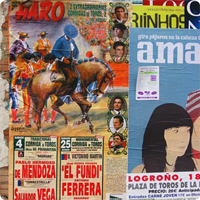
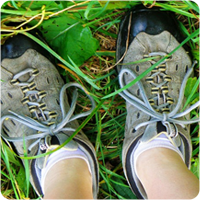
backpackers and flashpackers.

Are there other ‘types’ of traveller? Make a list.
Then complete the following table for two types of traveller.
Note: They can be real or invented!

TIP: Maybe this site may help to think of two new types of travellers: www.traveldoctor.co.uk

Name:

..........

..........

Age:


Financial:


Travel time:


Accommodation:


Room type:


Food:


Travels:


Hikes in:


Photography:


Travel bag:


Preferred travel destination:


Poster

Now use your notes to write a poster about one of your traveller types for a travel agency.
This poster should include:

  • Destination / countries
  • Accommodation and room type
  • Way of travelling
  • To boost interest, add a line that tells potential travellers why they should choose to travel that way!
  • Illustrate your poster

For tips how to make a poster check the Toolbox 'Poster maken'.

Poster maken

Op een informatieve poster kun je laten zien wat de belangrijkste delen van de lesstof zijn. Ook kun je weergeven hoe bepaalde delen zich tot elkaar verhouden.


Evaluation

Fill in the schedule and answer the questions below.

Activity easy difficult known​ new
Step 1 - Reading        
Step 2 - Words        
Step 3 - Speaking        
Step 4 - Song        
Step 5 - Task        


What have you learnt in this double period?
Answer the following questions:

  • What was the easiest part of this lesson?
  • What did you already know?
  • What was the most difficult part?
  • What was new to you in this lesson?
  • What do you have to ask your teacher?


Ecotourism

Ecotourism

Introduction

The subject of this lesson is 'Ecotourism'.
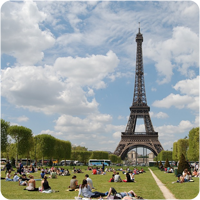
One of the issues that face Tourism is the environment. The projection is that by the year 2030 there will be 1.8 billion people taking international holidays. And everyone wants to go to the ‘famous ‘ places like the Eiffel tower, London Bridge but they all want individual experiences. This all has an environmental cost.
So one solution that is quite trendy at the moment is eco­tourism. Let’s find out about it, and whether it really is ecological.

What ten words can you think of that have to do with the theme 'Ecotourism'?
Write them down.


This lesson contains 4 steps and an evaluation. Work them through step by step.

Step

Activity


Introduction

Find out what you already know.

Step 1

Reading

Read an article about Eco Tourism.
Answer the questions about the text.

Step 2

Words

Two exercises with phrasal verbs.

Step 3

Grammar

Time expression en simple past tense and present perfect exercises.

Step 4

Task

Write about your holiday in simple past tense.


Evaluation

Reflecting on what you have learned.


Difficult words? Search these on Cambridge Dictionaries


Step 1 - Reading

One of the issues that faces Tourism is the environment. As we have already seen, the projection is that by the year 2030 there will be 1.8 billion people taking international holidays. And everyone wants to go to the ‘famous ‘ places like the Eiffel tower, London Bridge but they all want individual experiences. This all has an environmental cost. So one solution that is quite trendy at the moment is ecotourism. Let’s find out about it, and whether it really is ecological.

First read the questions.

  1. What is green washing?
  2. Why can big hotel chains never really be eco- friendly, according to the author?
  3. What is ‘carbon emissions offset' and how can you pay for it?
  4. What is the best way to reduce your carbon footprint?
  5. Why is the author cynical about companies’ commitments to local cultures?
  6. How does the author distinguish between eco- tourism and sustainable tourism?
  7. To what extent is the author hopeful at the end of the article?

Now read the following article about Eco-Tourism.

Is Eco-Tourism Really Eco-Friendly?

January 12, 2015 / By NomadicMatt

There is a trend in travel that has picked up a lot of steam over the last few years. That trend is called Eco-Tourism. As the environment has become more important to people over the last decade – and especially so in the last couple of years – companies around the world are trying to cash in on people’s willingness to spend lots of money in the name of environmental protection. Much of it is greenwashing though, or insincere and over-hyped attempts to be viewed as “green.” The travel industry has not been immune to this trend and many companies now tout their environmental credentials in an effort to lure customers and create a positive image.
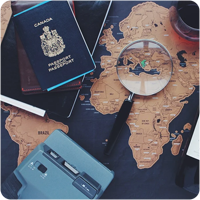
You have to wonder though, just how environmentally friendly is eco-tourism? Eco-tourism is defined as:

“connecting conservation, communities, and sustainable travel. This means that those who implement and participate in responsible tourism activities should follow the following eco-tourism principles: minimize impact, build environmental and cultural awareness and respect, provide positive experiences for both visitors and hosts, provide direct financial benefits for conservation, provide financial benefits and empowerment for local people, and raise sensitivity to host countries’ political, environmental, and social climate.”

But how many companies really live up to that? How much of it is really greenwashing? If I had to put a number on it, and I am going to, I’d say at least 70% of it is simply greenwashing. The Marriott or other resorts might talk about their commitment to reducing waste by using recycled toilet paper and low flow shower heads, but they have huge mega-hotels. The nature of their hotels means they will never be truly environmentally friendly, unless they rebuild the place from scratch. And most of their customers wouldn’t put up with higher prices to help offset the capital costs of upgrading to be eco-friendly. You can offset your carbon emissions with Qantas but, if you really want to cut down on your footprint, you wouldn’t fly. And if you look at the most environmentally friendly hotels and tours, they are also the most expensive. Apparently, eco-tourism is just for the rich.

Companies tout how they are going green to save the environment, but they only make incremental changes designed to make us feel good. Few companies make the capital investment to truly change their business model, especially those in the tourism industry. It’s easier to change toilet paper than change how you design your future hotels. I doubt many cruises have 100% grey water systems.

And the commitment to local cultures? With the exception of a few tour operators, rarely do you see companies trying to help the local communities in any significant way. They operate big tours with underpaid local staff and export lots of money to headquarters instead of keeping it in the local economy. Ask most of the porters on the Inca Trail how they are treated and you won’t find a favourable response. Just because they hire local staff doesn’t mean they are “giving back” to the community to help it grow.

Eco-tours market themselves as a low impact, environmental, and community friendly way to see the world. See the Amazon or Patagonia without making a big environmental impact. See Antarctica without making an impact. Tourists come, find out about a bit about the local culture, and then leave, content with the knowledge they “helped” the environment. But the reality is that big companies bring you in, make you feel good about yourself, and take all the profit back home.

I see promise and hope in sustainable tourism. To me this is different than eco-tourism. Eco-tourism to me is about not damaging the environment and providing a little education, but sustainable tourism is about living and growing with the environment and the local cultures. You don’t find this with the big companies. They may change a light bulb and reduce waste, but would you really consider that sustainable?

Sustainable tourism requires new thinking, and you find this mostly with small scale operators. These operators change their business structure so as to have as minimal an impact on the environment as possible. They buy local goods, use local services, treat their employees well, use few resources, and try hard to help rebuild the environment and educate tourists.

This is a much more promising side to the eco-tourism trend. By participating in local initiatives that better the environment instead of just a feel good, greenwashed tour, you contribute more substantially to protecting the environment. I believe the eco-tourism trend is here to stay and that is for sure a good thing. However, in order for it to have a much greater impact, there needs to be a focus not only on “using less toilet paper” but also on sustainable, local initiatives that help businesses grow with and heal the environment.

Source: http://www.nomadicmatt.com/travel-blogs/eco-tourism-really-eco-friendly/


Difficult words? Search these on Cambridge Dictionaries


Answer the questions.

Step 2 - Words

Phrasal verbs
Phrasal verbs consist of a verb plus a preposition.
The preposition can change the meaning of the verb completely, e.g.:

  • look up – consult a reference book (look a word up in a dictionary)
  • look for – seek (look for her ring)
  • look forward – anticipate with pleasure (look forward to meeting someone)

Here you find two exercises with phrasal verbs.

Do the first exercise.

Do the second exercise.

Step 3 - Grammar

Let's look at the Simple Past and Present perfect- time expressions.


Simple past

Present perfect


Note
Dutch speakers may find the simple past confusing because in Dutch, actions or situation from the past
are often described with a present perfect.
In English, you don’t use the present perfect for something that happened in the past if you say when it happened.

Do the three exercises.

Step 4 - Task

In step 1 you have read an article about ecotourism: responsible travel that conserves the environment and improves the well-being of local people. So it minimizes the impact brought about by tourism on the environment.
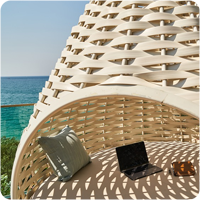
Write about your last holiday. How 'eco' was your holiday?

  • Where did you go?
  • How did you get there? How did you travel?
  • What did you do? Were these activities sustainable do you think? Why or why not?
  • Did you spend money locally (for example at local markets)? Where/ how did you spend money locally?
  • Was your accommodation sustainable? (For example by reducing waste/energy or certified by an organization like EarthCheck or LEED).

Check that you use the simple past and present perfect tense correctly and include lots of time expressions.
Write no more than 180 words.

Evaluation

Fill in the schedule and answer the questions below.

Activity

Activity

Needs improvement

Satisfactory, good

Excellent

Step 1 - Reading

I can read an article about Eco Tourism and answer questions.


Step 2 - Words

I can understand and use the words.


Step 3 - Grammar

I can understand and use the grammar simple past and present perfect.


Step 4 - Task

I can write about my last holiday; how eco was it?


What have you learnt in this period?
Answer the following questions:

  • What part did you like most about this lesson?
  • What do you find most difficult?
  • What would you do differently next time?
  • What do you have to ask your teacher?


A working holiday

A working holiday

Introduction

We’ve looked at several aspects of the tourist industry and lots of issues.
The subject of this lesson is 'A working holiday'.

  • Form groups of three or four pupils.

Discuss the following questions in your group:

  • What about a job in tourism that you love so much you can’t imagine a better job?
  • What about a job where you have to go on holiday?

This lesson contains 4 steps and an evaluation. Work them through step by step.

Step

Activity


Introduction

Find out what you already know.

Step 1

Speaking

Read job advertisement and choose right person.

Step 2

Reading

Tick the topics and read the text.

Step 3

Song

Listen to the song and fill in the gaps.

Step 4

Task 1

Write a covering letter to apply for a holiday job.

Step 4

Task 2

Write your CV


Evaluation

Reflecting on what you have learned.


Difficult words? Search these on Cambridge Dictionaries


Step 1 - Speaking

Some people have great jobs. These are jobs that everyone wishes they could do.
At least, that’s what we think. Answer the questions below with a classmate.

  • How does this sound to you: to be on holiday to do your job? Sounds good?
    Well, maybe it’s not as great as it seems?
  • Look at this job. Would you like to apply for this job? Why? Discuss with your classmate. You both give three reasons.


Read about three people who want to apply.

  • Who do you think would be best? Why?
Jose
Jose knows everything there is to know about Spain - including all the Spanish islands.
He can tell you why the plaza is so important in Spanish life, and how the siesta originated.
He has excellent communication skills.
He has an Instagram account with over 10K followers.


Stephanie
She has taught English as a foreign language in many countries including Japan, Brazil, Nepal and Namibia.
She loves to travel but isn’t so keen on teaching.
During her teaching years, she kept a blog with amazing write ups of the places she visited.
She would like a job that includes travelling but she doesn’t want to be in an office.
 
Marieke
She has worked in the travel industry for the past five years. She has visited lots of countries – including South America and Asia.
She speaks three languages including Bahasa Indonesian.
She loves matching holidays to people. She has a blog with some great reviews from satisfied customers.

Step 2 - Reading

You’re going to read an article about someone who became a travel writer.
These topics will be mentioned in the text.

  • Social media
  • An accident
  • Note taking
  • A TV show
  • Rejection

Now read the article.

The world at your feet: The life of a travel writer
By Claudia Infusino

Globe-trotting, note-jotting Robin Esrock opens up about what it really means to be a travel writer.

In The Beginning…

In 2004, Robin Esrock was riding his scooter to work as he did every day, when a car went through a stop sign, rode straight into Esrock and broke his kneecap. Horrible and traumatic, right? Well, not for Esrock. He asserts it was the best thing that ever happened to him.

Eight months after the accident and almost completely healed, he received a $20,000 insurance settlement. With a degree in journalism from Rhodes University already under his belt, along with a handful of other careers—from being in a band to creating websites— Esrock decided to put his new, small fortune towards an open-ended ticket to travel around the world.

Esrock took the whole year off to visit 24 countries and ­five continents. During that time, he blogged every week and took pictures, mainly to share with his family and friends.

“But that led to a column in the newspaper,” Esrock says, “and when I got back, I’d realized that I’d somehow become a travel writer.” He started receiving offers to go on more trips, and a year later he was published in 12 major newspapers around the world.

Think you have what it takes?

To most, travel writing sounds like a dream job. The thought of lying on a beautiful island and being paid to write about it seems easy and attractive enough. Well, that’s not entirely true. Esrock explains that ­first and foremost, you have to love to travel—and that doesn’t really mean business class and ­five-star hotels.

“You’re doing long flights at crazy times,” Esrock says, “and you have to work when you’re jet lagged. You’re staying in cheap hotels, visiting people, taking notes and thinking how you’re going to craft the story.”

One of the skill sets you need to develop as a travel writer is being able to observe and remember what’s going on around you, because when it comes time to write or pitch a story, you’ll have to ­ an angle that nobody else has done. For Esrock, travelling with a notebook and digital camera is all he needs; with those in hand, you can drop him off anywhere and he’ll ­find a story.

Of course, like most jobs there are also downfalls. “Stability is a big thing,” Esrock says. “You just don’t earn enough money, generally, to buy a nice place or nice cars—I’ve been driving an old beat-up car for the last 10 years!” Luckily for him, fancy cars aren’t all that important, but maintaining personal relationships is tricky. “You’re constantly in and out, and it’s challenging, not only romantically, but also with your friends.”

Aside from those challenges, Esrock knows that one of the hardest parts of the job is rejection. “It’s dif­ficult to constantly deal with about a 90% rejection rate,” he admits. “It’s dif­ficult because it’s still hard not to take it personally.”

So how does one survive rejection in such a competitive industry? Esrock says that “for young writers out there that want to get into journalism or travel writing, you have to learn the art of persistence, not giving up, and realizing that rejection just takes you one step closer to success.”

Taking it to the small screen

According to Esrock, travel writing is a lifestyle, not a living. With that idea, he came up with a concept for a TV show based on the contrast between living it up in the most amazing destinations around the world, and the pressure that he’s under as a writer.

“I brought in Julia Diamon, a travel writer from Toronto, and the two of us got a TV show with OLN [Outdoor Life Network],” Esrock says. The show is called World Travels, and so far they’ve ­filmed in 26 countries and will be shooting a third season this year. It’s recently been picked up by National Geographic’s Nat Geo Adventure channel worldwide.

“I really enjoy it because it’s a powerful medium to be able to share what’s going on,” he says. “I’ll continue to balance television and writing because TV can show, but writing can feel, and they are complementary if it’s done right.”

Advice from a pro

With such vast online social media available today, Esrock encourages anyone interested in travel writing to simply travel and write. “With blogs and Facebook,” Esrock says, “there are so many ways now to share your experiences with everyone—you don’t have to be writing for a newspaper or magazine, just get out there and travel!”

That seems easier said than done, because travelling can be very expensive, but you don’t need a lot of money. There are student programs, exchange programs, swaps, and even wwoofing (WWOOF is the World-Wide Opportunities on Organic Farms organization, where you can volunteer to work on organic farms. There are over 600 locations to do this in Canada alone).

“Anything you can do to broaden your experience before you go to university or before you start working is only going to help you, because it’s an education—it’s life education.”

Source: http://faze.ca/world-feet-life-travel-writer/


Do the exercise.

At the end of the text, Esrock writes:
“Anything you can do to broaden your experience before you go to university or before you start working is only going to help you, because it’s an education—it’s life education.”

Make a list with your partner. What other things besides travel can help you gain a ‘life education’. Say why.

Step 3 - Song

'Holiday'
You are going to listen to the song 'Holiday' from Madonna.

Listen and do the exercise.

Step 4 - Task 1

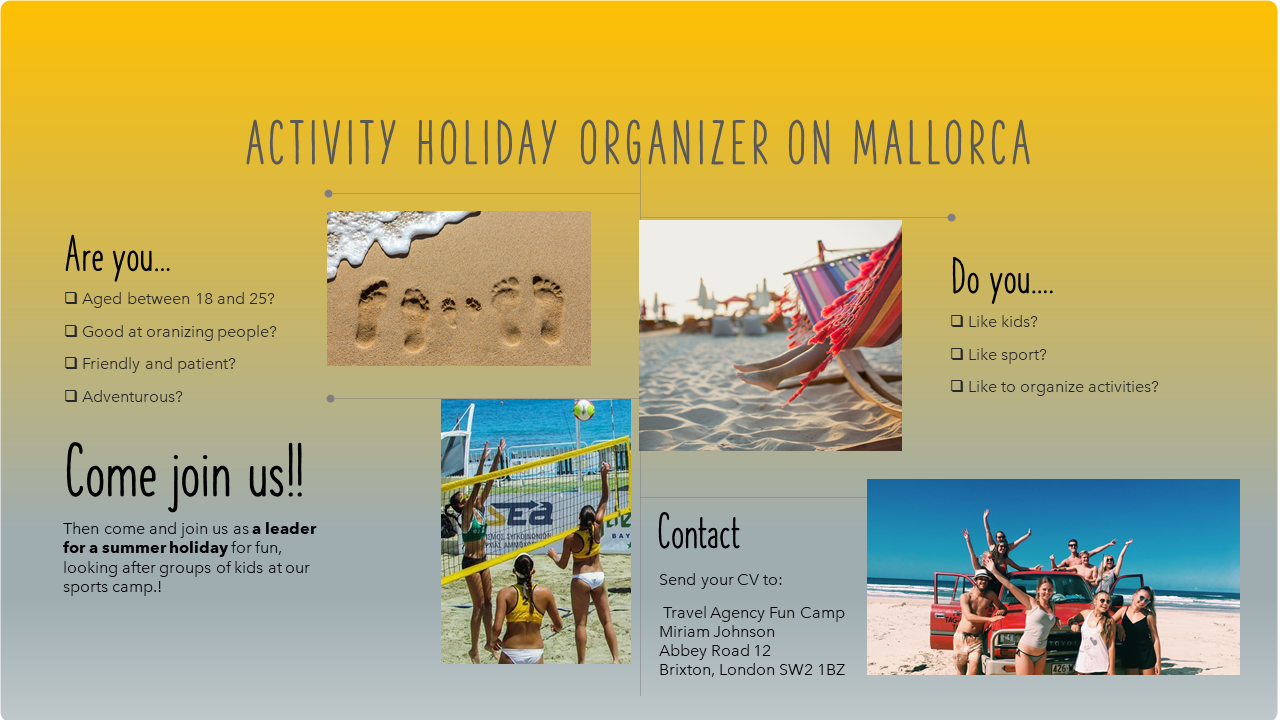
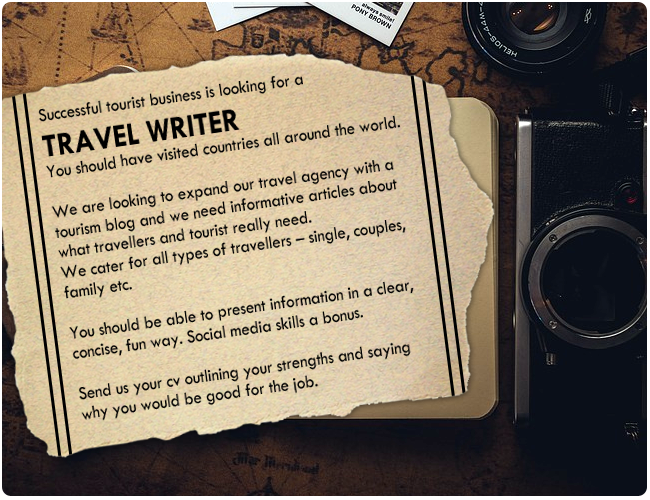
You have decided to apply for the job advertised below.

You have a good CV, but now you need a covering letter.
Write a covering letter!

How to write a good covering letter
  1. First, think of reasons why you are uniquely qualified for this job!
  2. Start by listing your name and address.
  3. Include the date of the day you are sending the letter.
  4. List the recipients name and address.
  5. Open with an introduction like Dear...
  6. Write a catchy introduction paragraph. First impressions matter, especially when it comes to your job search!
    You include the position you are applying for and your enthusiasm why you are applying for that job.
  7. Write a brief overview of your background, skills and personal qualities. Why are you the perfect person for the job?
  8. In the last paragraph you explain why you are a good fit for the company.
  9. Close with a conclusion like: I look forward to hearing from you.
  10. End with a formal closing line (Kind regards / Sincerely) and your signature.


Step 4 - Task 2

Project B: Writing your CV (Curriculum Vitae)


You have decided to apply for the job advertised below.
In Task 1 of this lesson you have written a covering letter.

Now you are going to write your CV. You can use a template like this:
templates CV

How to write a good CV
  1. Start with a CV Header with Contact Information (name/address/email/telephone)
  2. Education and qualifications
  3. Work Experience
  4. Skills (for example computer skills/ foreign language skills)
  5. Additional Sections

Make your CV brief and relevant.

Evaluation

Fill in the schedule and answer the questions below.

Activity

Activity

Needs improvement

Satisfactory, good

Satisfactory, good

Step 1 - Speaking

I can have a discussion with a classmate. Why apply for a job or not?


Step 2 - Reading

I can read an article about the life of a travel writer.


Step 3 - Song

I can listen to the song and fill in the gaps in the song text.


Step 4 - Task 1

I can write a covering letter to apply for a holiday job.


Step 4 - Task 2

I can write a CV.


What have you learnt in this double period?
Answer the following questions:

  • What was the easiest part of this lesson?
  • What did you already know?
  • What was the most difficult part?
  • What was new to you in this lesson?
  • What do you have to ask your teacher?


Finishing touch

Project: A presentation

A short presentation about Tourism
You are going to give a presentation about one aspect of tourism.
Here are some ideas to choose from but you can choose another idea of your own.

  • Different types of travellers
  • Eco-tourism
  • Packing for the vacation
  • Air travel – everything you need to know
  • On holiday or at work: career paths in the tourist industry
  • Travel tips if you’re visiting.... [your destination]

There is a lot of information online about what makes a good presentation and talk.
You need to find out about what makes it good.
Here is a site to visit. You can also look for your own.

You can also look here to view some good talks.

Process

With your partner, make a list of 10 tips for a great presentation.
Watch this presentation about the Future of Tourism.


Is it a great presentation? Why (not)?
Give examples, explain why/why not.
Discuss these with your classmate.
Compare your answers with the example answers below. Did you also find these answers?

  • Confused beginning. He appeared to have the wrong slides (or not) it wasn’t very funny.
  • He included many irrelevant personal stories (how is tramping relevant to the future of tourism?).
  • His points weren’t immediately obvious.
  • He was a bit rude to his audience (comment about Dutch and boiled vegetables).
  • He didn’t really sound authoritative although he is an authority.
  • Overall it wasn’t an engaging presentation.

Your presentation

Now you are going to prepare and then present your own talk.
  • Look at your list of things to do, and things not to do.​​
  • Practice your talk with your classmate.
  • Give your presentation to your class.
  • It should not take longer than three minutes.
  • Your talk should include a maximum of ten slides.
  • Final check: have you thought of everything?!

Look at these rubrics: See how your presentation will be judged.


Good

Sufficient

Unsufficient

Points

Organization

Information is presented in a logical sequence.

Information is mostly presented in a logical sequence.

Information is not presented in a logical sequence.

2 points

Slides

Effective use of slides that clearly illustrate the points being made.

Good use of slides that mostly illustrated the points being made.

Poor use of slides (too many/too few?) that did not contribute to the presentation.

2 points

Content

Interesting, clear information.

Information is mostly interesting. Some was already known.

There was not much that was of interest in this presentation.

2 points

Speaker style

Speaks clearly and at an understandable pace. Maintains eye contact with audience. Well-rehearsed.

Mostly speaks clearly and a good pace. Mostly keeps eye contact. Has rehearsed a bit.

Mostly unintelligible. Does not maintain eye contact. Has not rehearsed.

2 points

Language

The vocabulary use is very good and the sentence structure is good.

The vocabulary use is fairly good and the sentence structure is good.

The vocabulary use is not very good, neither is the sentence structure.

2 points


Project B: Listening

Listening

In the lesson Facts and figures you have read a text, entitled:
'Signs you're A Traveller, Not A Tourists'.

Now you are going to listen to a conversation about Travellers and Tourists.

What do you think?

Do you agree with the speakers?
What do you think ’tourism’ is?
What does it include? What does it not include?
Write down the answers in your notebook.

Oefenprogramma Engels

France versus England
If your school participates in VO-content, you can practice with the English practice program 'Oefenprogramma Engels'.


Here you find a part of this program.
This section fits in well with this theme.
Sign in with your 'School Entree account'!

France versus England


On www.oefenprogrammaengels.nl you can of course also practice with other reading, listening or viewing assignments!

Examentraining

On this page you will find Examenkracht exam questions of previous years.
The questions will correspond as much as possible to the exercise you have just finished.

While answering, use as much of what you have learned earlier. If you cannot answer the question right now, try again later. When you have answered a question, you can check and indicate the score yourself.

If you want your results to be saved, you will have to log in on ExamenKracht.

HAVO 2021-TV1

HAVO 2021-TV1 Vragen 1 en 2
HAVO 2021-TV1 Vragen 8-12

HAVO 2019-TV2

HAVO 2019-TV2 Vraag 1

HAVO 2017-TV1

HAVO 2017-TV1 Vraag 28

HAVO 2016-TV1

HAVO 2016-TV1 Vraag 38


More practice?
Go to Examenkracht where you will find the newest exams.

What did you learn?

At the end of each lesson you answered evaluation questions.
Use these answers to answer the following questions:

  • What new things did you learn?
  • Which assignment was for you the best one to learn from?
  • Did you finish your lessons on time?
  • What would you do differently next time?

Can do statements

Take a look at the Can do statements in the introduction - 'Can do'.
Are you able to do what you have to do? Choose your answer:

Can do statements

I have not completed half of the Can do statements.

I have completed most of the Can do statements, but not all of them.

I have completed all the Can do statements.


Finishing touch Project A

  • How was your presentation? Were you well-prepared? Were you clear in your presentation?
  • Was the 'rubric' at the end helpful for you? ('How your presentation will be judged')
  • Could you indicate yourself, how did it go?
  • What did I learn from this experience that will help me in the future?

  • Het arrangement Tourism h45 is gemaakt met Wikiwijs van Kennisnet. Wikiwijs is hét onderwijsplatform waar je leermiddelen zoekt, maakt en deelt.

    Auteur
    VO-content
    Laatst gewijzigd
    2025-11-28 11:53:35
    Licentie

    Dit lesmateriaal is gepubliceerd onder de Creative Commons Naamsvermelding-GelijkDelen 4.0 Internationale licentie. Dit houdt in dat je onder de voorwaarde van naamsvermelding en publicatie onder dezelfde licentie vrij bent om:

    • het werk te delen - te kopiëren, te verspreiden en door te geven via elk medium of bestandsformaat
    • het werk te bewerken - te remixen, te veranderen en afgeleide werken te maken
    • voor alle doeleinden, inclusief commerciële doeleinden.

    Meer informatie over de CC Naamsvermelding-GelijkDelen 4.0 Internationale licentie.

    Het thema 'Tourism' is ontwikkeld door auteurs en medewerkers van StudioVO.

    Fair Use
    In de Stercollecties van StudioVO wordt gebruik gemaakt van beeld- en filmmateriaal dat beschikbaar is op internet. Bij het gebruik zijn we uitgegaan van fair use.
    Meer informatie: Fair use

    Mocht u vragen/opmerkingen hebben, neem dan contact op via de
    helpdesk VO-content.

    Aanvullende informatie over dit lesmateriaal

    Van dit lesmateriaal is de volgende aanvullende informatie beschikbaar:

    Toelichting
    Dit thema valt onder de arrangeerbare leerlijn van de Stercollectie voor Engels voor havo, leerjaar 4 en 5. Dit is thema: 'Tourism'. Dit thema omvat de volgende volgende onderwerpen: - Fact and figures - Pack your bags! - Ecotourism - A working holiday
    Leerniveau
    HAVO 4; HAVO 5;
    Leerinhoud en doelen
    Engels;
    Eindgebruiker
    leerling/student
    Moeilijkheidsgraad
    gemiddeld
    Studiebelasting
    20 uur 0 minuten
    Trefwoorden
    a working holiday, arrangeerbaar, ecotourism, engels, fact and figures, h45, pack your bags!, past simple en verbs, stercollectie, tourism

    Gebruikte Wikiwijs Arrangementen

    VO-content - Gereedschapskist. (2019).

    Gereedschapskist activerende werkvormen

    https://maken.wikiwijs.nl/105906/Gereedschapskist_activerende_werkvormen

    VO-content Engels. (2020).

    A working holiday h45

    https://maken.wikiwijs.nl/98832/A_working_holiday_h45

    VO-content Engels. (2020).

    Ecotourism h45

    https://maken.wikiwijs.nl/98831/Ecotourism_h45

    VO-content Engels. (2020).

    Facts and figures h45

    https://maken.wikiwijs.nl/98829/Facts_and_figures_h45

    VO-content Engels. (2020).

    Pack your bags h45

    https://maken.wikiwijs.nl/98830/Pack_your_bags_h45

  • Downloaden

    Het volledige arrangement is in de onderstaande formaten te downloaden.

    Metadata

    LTI

    Leeromgevingen die gebruik maken van LTI kunnen Wikiwijs arrangementen en toetsen afspelen en resultaten terugkoppelen. Hiervoor moet de leeromgeving wel bij Wikiwijs aangemeld zijn. Wil je gebruik maken van de LTI koppeling? Meld je aan via info@wikiwijs.nl met het verzoek om een LTI koppeling aan te gaan.

    Maak je al gebruik van LTI? Gebruik dan de onderstaande Launch URL’s.

    Arrangement

    IMSCC package

    Wil je de Launch URL’s niet los kopiëren, maar in één keer downloaden? Download dan de IMSCC package.

    Voor developers

    Wikiwijs lesmateriaal kan worden gebruikt in een externe leeromgeving. Er kunnen koppelingen worden gemaakt en het lesmateriaal kan op verschillende manieren worden geëxporteerd. Meer informatie hierover kun je vinden op onze Developers Wiki.