



CLIL - fine arts - ART

CLIL - fine arts - ART

About this theme

About this theme

In this theme, you will practice giving a short explanation of subject-related vocabulary, or jargon. The lesson plans and lesson activities provided are meant to give you a context and background for your explanation and to inspire you in your own teaching. In the activities that follow, you will not be asked to actually teach the entire CLIL lesson. Instead, you will focus on selecting key subject-related concepts and practice explaining them to children in a way they can understand.


Learning objectives

You will give a clear, simple and coherent explanation of key CLIL concepts in child-friendly English. You will make the instruction interactive and check for understanding by asking questions and/or using small tasks. You will use strategies such as examples, visuals and/or modelling to support child understanding. Your English must be correctly pronounced, accurate, easy to follow and of an appropriate level for the child in a real or simulated classroom situation.


What do you already know?

Think about your own experience as a learner. What did you learn during the art lessons? Did you enjoy them? What made them fun, or frightening? What did the teacher say or do to help you succeed in the lesson? What do you wish had been done better? Take a moment to reflect on your own experiences.


Success criteria

  • Language: The instruction is in English, at an appropriate level for the learners.
  • Vocabulary: the selected key words reflect the main CLIL concepts from the lesson activity.
  • Accuracy: vocabulary and concepts are correctly explained and applied.
  • Fluency: sentences are grammatically simple, and the student speaks at a pace appropriate for the learner.
  • Interaction: the learner is encouraged to participate in the instruction and the teacher checks that the learner understands the new material and vocabulary.
  • Coherence: instruction has a logical order and clear structure.
  • Phonology: pronunciation is correct and understandable.
  • Strategies: visual support and modelling are part of the instruction.

Note: these criteria will remain the same for each CLIL activity.


Let's talk about 'Teacher talk': how to make your instruction easy to follow for all learners

There are three basic dimensions to assess language complexity (WIDA, 2020). A good CLIL instruction keeps these three dimensions in mind, so that the level of language and information best fits that of the learners.

  • Discourse dimension: The quantity and variety of text, including the amount and structure of speech, the density of information, and the organization and cohesion of ideas. In other words, keep your instruction well-structured. also, the more ideas you present, the heavier the cognitive load, so make careful choices about what you will present.
  • Sentence dimension: The types, array, and use of language structures (grammatical complexity), including the variety of grammatical structures, and matching the language forms to its purpose. In other words, more complex grammar adds to the cognitive load, so use short sentences with simple grammar whenever possible.
  • Word/ Phrase dimension: The specificity of word or phrase choice, including general, specific and technical language, words with multiple meanings, and collocations. In other words, use words that children already know and take time to introduce new vocabulary. Make a good language analysis ahead of time so you know what words may present challenges to your learners.

*Source: WIDA (2020). WIDA English Language Development Standards Framework, 2020 Edition: Kindergarten - Grade 12. University of Wisconsin. https://wida.wisc.edu/sites/default/files/resource/WIDA-ELD-Standards-Framework-2020.pdf


Different kinds of language (WIDA, 2020):

  • Everyday language: Language used to represent ideas in non-technical ways, known to some as Basic Interpersonal Communicative Skills (BICS).
  • Cross-disciplinary language: Common academic language used across content area contexts (CALP).
  • Technical language: Specialized language related to a content area, known to some as Cognitive Academic Language Proficiency (CALP).

When you design a CLIL instruction, it's important to understand that the learner's command of the vocabulary may differ per sort of language. Everyday language is used more often than technical language, so when you introduce new technical terms (e.g., vertebrates, circumference, harmony, pattern), provide lots of visual support and scaffolding so your learners can understand the material better.


This video helps explain the difference between BICS and CALP. It's important to understand what these types of language are and how you can keep this in mind when you design your CLIL lesson and language.

*Source: WIDA (2020). WIDA English Language Development Standards Framework, 2020 Edition: Kindergarten - Grade 12. University of Wisconsin. https://wida.wisc.edu/sites/default/files/resource/WIDA-ELD-Standards-Framework-2020.pdf


Lower primary classes

Getting started: what is your class like?


When you teach, it's important to match your language to just above the level of your children. If you have a lower primary class, think about your children. What is their level of English like? Do they speak in short phrases, or with single words? Do they understand short, simple sentences?
If you do not have a lower primary class, use the description below.


CLIL for the younger child (4 - 6 years old):

In this activity, you will select three or four key CLIL concepts of the provided lesson activity. You will practice explaining these to younger children, keeping in mind that they speak in short chunks of one to two words. Vocabulary must be simple and you need to use lots of visual support and modelling. Keep your explanation short, to no more than 2 or 3 minutes.

Introduction

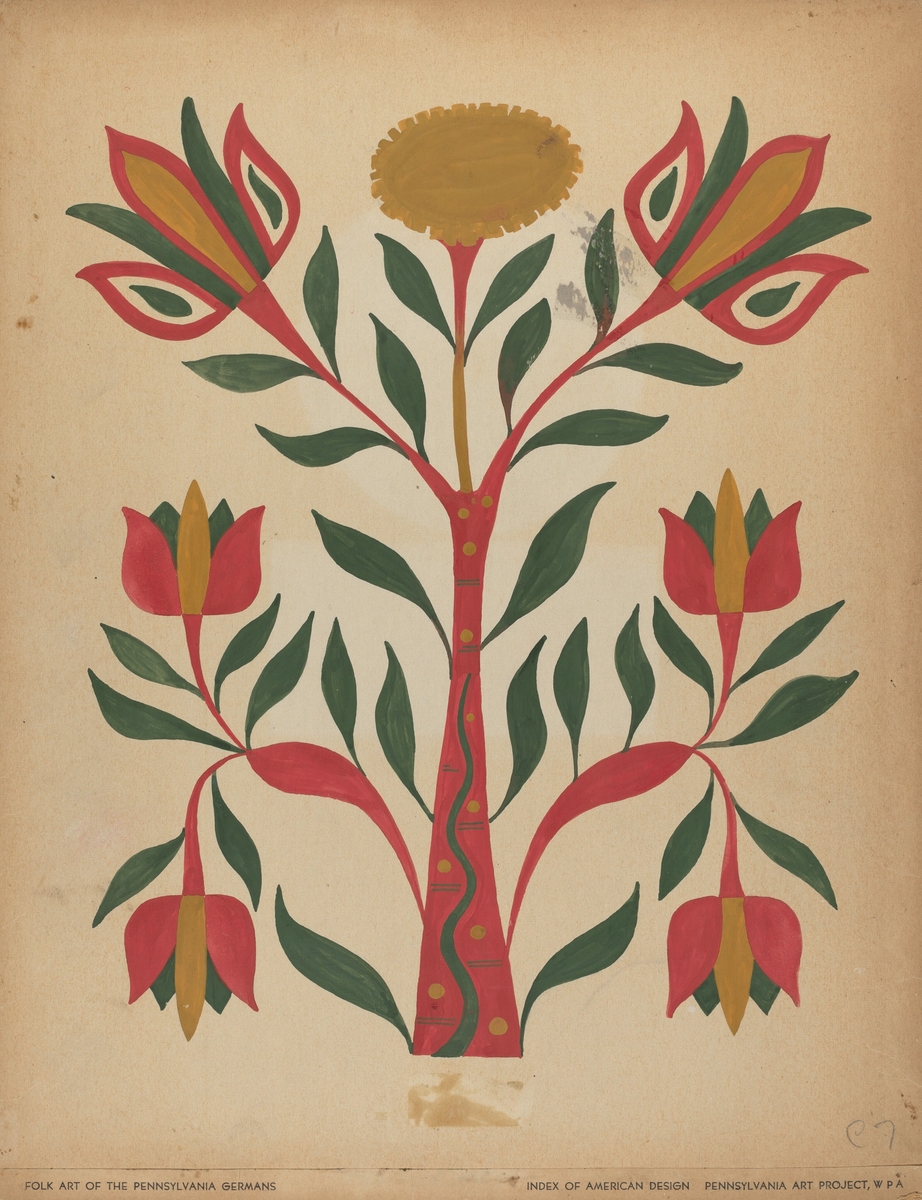
Imagine you are teaching kindergarteners. You want to teach them an art lesson, where they learn about different textures. You come across these two ideas. Which will you choose?


You come across these two ideas.  Which will you choose? Choose one of these for this lesson activity, either one is fine.


Vocabulary

What words will you need? Thinking about subject-related vocabulary

When you teach a CLIL lesson, it's important to carefully choose the key words. Key words are the words that are most important for the lesson.

For instance, both of the given lesson ideas are about 'texture'. What is 'texture'?  How can you explain 'texture' to young learners? Think about this.

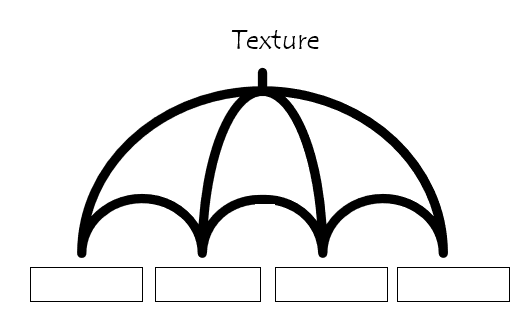
There are other words that belong to the main idea of 'texture', for instance different kinds of textures. What are they? And... how would you explain these to young learners?  Think about this and make a 'word umbrella', shown below.

Word umbrella: the key concept is on top, the key words that belong to it hang underneath.


Below is a document with different kinds of words in it, all related to your subject. Look it through. Can you find words related to your lesson idea? Add them to your word umbrella.

If you want to download this booklet for yourself, click here: https://img1.wsimg.com/blobby/go/12115240-cd7e-48c5-b5f9-4e06253adc7a/downloads/ABCs%20of%20Art_Posters_Elements%20of%20Design_11x17_C.pdf?ver=1757710927355

Listening task

Listening task:


In this video, five different kinds of texture are explained. Which are these? Write them down.

The video closes with an activity. Go find these five different textures in your own surroundings.

Bonus: find all eight textures described in the ABCs of art booklet.


Time to speak!

Speaking task 1


Work with a partner.  Think about how to explain the concept of 'texture' and the key types of texture to young learners. How can you help them understand these new words?

The concept of 'textures' lends itself well for a feely box. What is a feely box and how do you make one? Watch this video and find out.

Tip: you can use any box or even a bag.

Work with a classmate. Take turns explaining different textures. Use modelling and props.

For instance:

  • (feel the table) It is smooth. It has a smooth texture.
  • (feel the brick wall) It is hard. It is rough.  It has a hard, rough texture.
  • (feel a pillow) It is soft. It has a soft texture.

Think back to discourse, sentence, and word/phrase dimensions of your explanation.

  • discourse: the structure of your explanation. Was it short and easy to follow?
  • sentence: Did you use short, grammatically simple sentences?
  • word/phrase: Did you use the target language? Did you explain the key words correctly?


Speaking task 2: language of classification

When you model the concept of texture, remember to use the language of classification. That means, pay attention to what is similar, what is the same, and what is different.

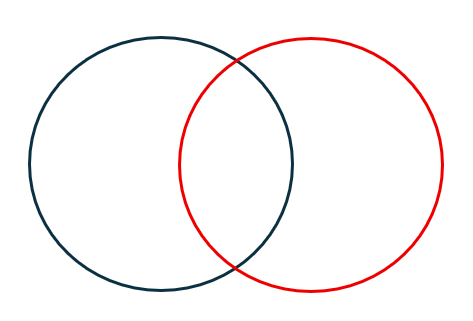
A Venn diagram can help classify objects with same and different textures.

When you classify things, you might use these ideas:

  • This is (soft / hard / rough / smooth...)
  • It feels (soft / hard / rough / smooth...)
  • This is soft. That is also soft. They feel the same.
  • This is soft. That is hard.  They feel different.


For instance:

  • (point to a table) It is hard. It is smooth.
  • (feel the brick wall) It feels rough. The bricks feel rough.
  • (feel the table and the bricks) The table feels hard. The bricks feel hard. They feel the same.
  • (feel the table and the bricks) The table feels smooth. The bricks feel rough. They feel different.


Work with a partner.

  • Take turns describing different objects. Focus on the textures.
  • Find objects with similar textures. Describe them.
  • Find objects with different textures. Describe them.


Think back to discourse, sentence, and word/phrase dimensions of your explanation.

  • discourse: the structure of your explanation. Was it short and easy to follow?
  • sentence: Did you use short, grammatically simple sentences?
  • word/phrase: Did you use the target language? Did you explain the key words correctly?


Speaking task 3: explaining concepts


Now, you will practice a very short explanation with a beginning, middle and end.

Work with a classmate. You will take turns being a 'teacher' and being a 'learner'.

Choose one or two key concepts to explain. Follow these steps:


  • Greet your 'learner'.
  • Name what you will be learning about.
  • Explain the main concept (texture).
  • Explain one or two examples of texture. Use modelling and props.
  • Round off your explanation.

Do this two or three times each, until you feel fluent.


Speaking task 4: putting it all together


Now, you will practice the entire explanation.

Work in small groups of 3 or 4. Take turns giving your explanation, as though you were teaching young learners. Give each other feedback.


Follow these steps:

  • Welcome your learner.
  • Name what you will learn about.
  • Explain the main concept (texture).
  • Explain 3 or 4 examples of texture.
  • Encourage your learners to interact with the new vocabulary. Get them to repeat the new words after you.
  • Check for understanding (ex: Is this smooth or rough? Is this soft or hard?)
  • Round off your explanation.

Note: you do not have to do the entire lesson.


Think back to discourse, sentence, and word/phrase dimensions of your explanation.

  • discourse: the structure of your explanation. Was it short and easy to follow?
  • sentence: Did you use short, grammatically simple sentences?
  • word/phrase: Did you use the target language? Did you explain the key words correctly?


Know it? Show it!

Success criteria

  • Language: The instruction is in English, at an appropriate level for the learners.
  • Vocabulary: the selected key words reflect the main CLIL concepts from the lesson activity.
  • Accuracy: vocabulary and concepts are correctly explained and applied.
  • Fluency: sentences are grammatically simple, and the student speaks at a pace appropriate for the learner.
  • Interaction: the learner is encouraged to participate in the instruction and the teacher checks that the learner understands the new material and vocabulary.
  • Coherence: instruction has a logical order and clear structure.
  • Phonology: pronunciation is correct and understandable.
  • Strategies: visual support and modelling are part of the instruction.

Note: these criteria will remain the same for each CLIL activity.


Middle primary classes

Getting started: what is your class like?


When you teach, it's important to match your language to just above the level of your children. If you have a middle primary class, think about your children. What is their level of English like? Do they speak in short sesntences, or in short phrases? Do they understand simple sentences or short instructions?
If you do not have a lower primary class, use the description below.


CLIL for the intermediate child (7 - 9 years old):

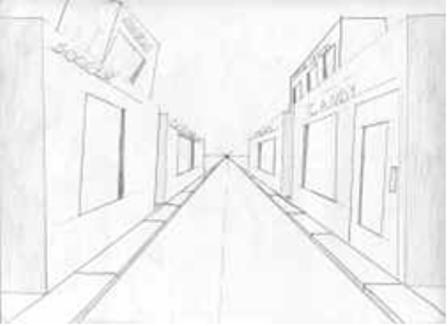
You want to teach a CLIL lesson on art and how to draw a road using perspective drawing. You have found one lesson plan online, but it is not quite suitable for your group yet. You will probably only focus on the 1-point perspective drawing.

In this activity, you will select three or four key CLIL concepts of the provided lesson activity. You will practice explaining these to intermediate children, keeping in mind that they speak in short, simple sentences. Vocabulary must be simple and you need to use lots of visual support and modelling. Keep your explanation short, to no more than 3 or 4 minutes.

Introduction

Imagine you are teaching middle schoolers.  You want to teach them how to draw a street using one-point perspective.


You come across this lesson idea:

If you want to download the entire document, you can do that here: https://thrivecollective.org/wp-content/uploads/2020/05/Perspective-Elijah-Minton.pdf

Vocabulary

What words will you need? Thinking about subject-related vocabulary

When you teach a CLIL lesson, it's important to carefully choose the key words. Key words are the words that are most important for the lesson.

You look around for more information, and find this website:

Your pupils have already learned about various objects in a neighbouhood (e.g. building, tree, shop, window). Now, you need to decide what the new concepts and words are that you want to focus on.

Read the lesson activity above and write down five to seven words with their explanation, which you think your pupils will need in order to understand perspective drawing.

Listening task

Oefening: One-point perspective

Start

Now you know important vocabulary such as horizon line, vanishing point, and lines. 

What other words are relevant for your pupils? In this video, you see an explanation for drawing one-point perspective drawings. Watch the video and write down words that you can use to explain perspective:

What steps did this teacher take?


Can you argue why ...?

How do you talk about art with your children? It’s important to be able to talk about their work in an objective fashion. Don’t say “It’s beautiful!” Children will work to meet your expectations, and when you say this, they understand that they don’t have to work any harder. They’ve met your expectations. Instead, say what you see: “I see you’ve used lots of red and blue. Do you like these colors? …. Why?” Or refer to your instruction: “We learned about using different shapes in our drawing. What shapes did you use here?” Do give concrete compliments, for example “Wow, your use of shading makes the ball look really round!”, “That is a very curvy line!”, or “You used very bright colors in your drawing. That makes it stand out!” Here are some posters with basic art-related vocabulary. What words might you use, in teaching an art lesson? Which words are new for you? Which ones did you already know? Choose some words to focus on and use them in your teaching.

  • sample sentences here

Use sentences like:

  • sample sentences here


Time to speak!

Speaking task 1: practicing core vocabulary

Now go back to the prior exercises. Think about how to explain these words to children. How can you help them understand what they mean? Choose some words and explain them to a classmate, who pretends to be your pupil. Feel free to draw on a whiteboard/digital board to support your explanation and ask your pupils to copy you and draw along.

For instance:

  • (draw a horizon line) On your paper, draw a horizon line.
  • (put a vanishing point in the middle) Put a vanishing point on your horizon line.

Take turns explaining each word.


Speaking task 2: language of description

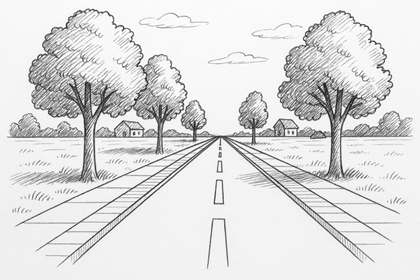
As you draw some example buildings and trees, explain the change in size. Use language of description, to talk about what something looks like.

For instance:

  • can see… (e.g., “I can see a long road.”)
  • There is / There are… (e.g., “There are trees on both sides.”)
  • In the foreground… (e.g., “In the foreground, there is a big tree.”)
  • In the background… (e.g., “In the background, the road looks very small.”)
  • On the left / On the right… (e.g., “On the left, there are houses.”)
  • The road goes towards… (e.g., “The road goes towards the vanishing point.”)


  • The lines meet at the vanishing point.
  • Objects look smaller as they go further away.
  • The horizon line is in the middle of the picture.


  • Straight, long, narrow, wide
  • Near, far, distant
  • Big, small, thin


Work with a partner.

  • Take turns describing the picture. Focus on the perspective.
  • Find objects that are closer or further away


Think back to discourse, sentence, and word/phrase dimensions of your explanation.

  • discourse: the structure of your explanation. Was it short and easy to follow?
  • sentence: Did you use short, grammatically simple sentences?
  • word/phrase: Did you use the target language? Did you explain the key words correctly?


Speaking task 3: explaining the key concepts

Now, you will practice a very short explanation with a beginning, middle and end.

Work with a classmate. You will take turns being a 'teacher' and being a 'learner'.

Choose one or two key concepts to explain. Follow these steps:

  • Greet your 'learner'.
  • Name what you will be learning about, for instance that perspective drawing makes a picture look more real.
  • Explain the main concept (perspective).
  • Explain one part of drawing in perspective. Use modelling and props.
  • Round off your explanation.

Do this two or three times each, until you feel fluent.


Speaking task 4: Putting it all together

Finally, you will practice the entire explanation.

Imagine your students are going to finish their drawings and then explain what they have done using the CLIL words.

Work in small groups. Take turns giving your full explanation, as though you are teaching young learners. Give each other feedback.

Include these steps:

  • Open the explanation
  • Explain three or four CLIL words, including the words from the earlier exercises’
  • Encourage the learners to interact and use the new words (Repeat after me…)
  • Check for understanding (Is this smaller or bigger?)
  • Round off your explanation and start moving towards your lesson activity

Note: you do not have to do the lesson!


Think back to discourse, sentence, and word/phrase dimensions of your explanation.

  • discourse: the structure of your explanation. Was it short and easy to follow?
  • sentence: Did you use short, grammatically simple sentences?
  • word/phrase: Did you use the target language? Did you explain the key words correctly?

Know it? Show it!

Success criteria

  • Language: The instruction is in English, at an appropriate level for the learners.
  • Vocabulary: the selected key words reflect the main CLIL concepts from the lesson activity.
  • Accuracy: vocabulary and concepts are correctly explained and applied.
  • Fluency: sentences are grammatically simple, and the student speaks at a pace appropriate for the learner.
  • Interaction: the learner is encouraged to participate in the instruction and the teacher checks that the learner understands the new material and vocabulary.
  • Coherence: instruction has a logical order and clear structure.
  • Phonology: pronunciation is correct and understandable.
  • Strategies: visual support and modelling are part of the instruction.

Note: these criteria will remain the same for each CLIL activity.


Upper primary classes

Getting started: what is your class like?

When you teach, it's important to match your language to just above the level of your children. If you have an upper primary class, think about your children. What is their level of English like? Do they speak in full sentences? Can they understand longer instructions? Is their vocabulary well-developed? If you do not have an upper primary class of your own, please use the description below.


CLIL for the intermediate child (7 - 9 years old):

You want to teach a CLIL lesson where the children can talk about art, using the seven basic elements of design. You found some texts about the elements of design online, and you need to figure out if these texts actually name and explain these elements in a way children can understand. 

In this activity, you you will select three or four key CLIL concepts of the provided lesson activity. You will practice explaining these to intermediate children, keeping in mind that they speak in short and simple sentences. Vocabulary must be correctly explained and you need to use visual support and modelling. Keep your explanation short, to no more than three to five minutes.

The lesson plans

Here are two texts. The seven elements of art are hidden inside! Can you find them?

Choose one text and read it through.

Find and underline each of the seven elements.

TIP: If you need help, check out this website: https://artincontext.org/elements-of-art/

Think: do you think this explanation is clear for your learners? If not, what would you change? Make notes.

Vocabulary

What words will you need? Thinking about subject-related vocabulary

When you teach a CLIL lesson, it's important to carefully choose the key words. Key words are the words that are most important for the lesson.

For instance, both of the given texts are about 'elements of art'. What are 'elements'?  How can you explain 'elements of art' to your learners? Think about this.

There are other words that belong to the main idea of 'elements of art', for instance different kinds of elements. What are they? And... how would you explain these to your learners?  Think about this. 


Download the document below and fill in the table.


There is a booklet with more examples of the elements of art. If you want to download this booklet for yourself, click here: https://img1.wsimg.com/blobby/go/12115240-cd7e-48c5-b5f9-4e06253adc7a/downloads/ABCs%20of%20Art_Posters_Elements%20of%20Design_11x17_C.pdf?ver=1757710927355

Listen and read

Listening task

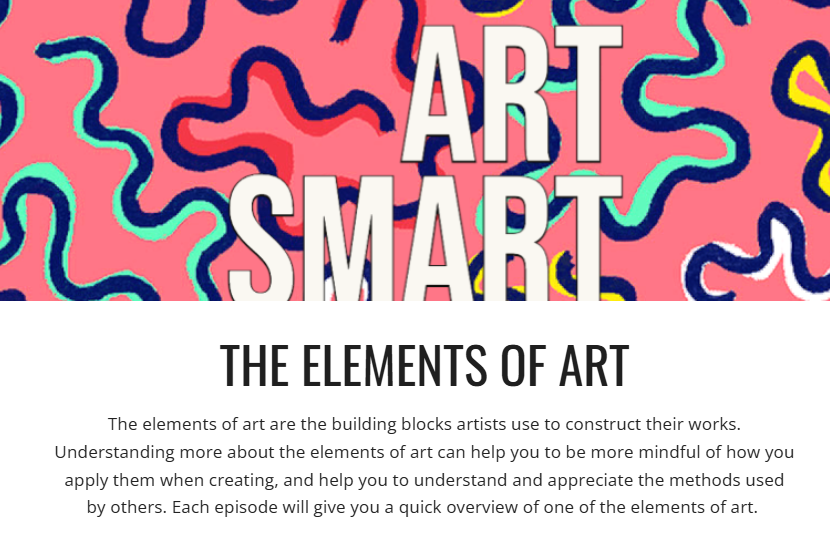
Listen to a podcast about one or more of the elements. What other words are relevant for your pupils to understand what that element is and means? Note your findings in the graphic organizer.

Here is the link to the podcast: https://www.artsmartpodcast.com/elements-of-art

Bonus: find a painting that cleary illustrates each element you learned about.

Tip: WikiArt.org - Visual Art Encyclopedia

Time to speak!

Speaking task 1: practice your explanation

In a small group

  1. Find paintings that clearly illustrate each of the seven elements of art. (tip: WikiArt.org - Visual Art Encyclopedia)
  2. Take turns describing each element, using these paintings.
  3. Keep taking turns until you feel comfortable explaining the concepts.

For instance:

  • (point to the painting) This is a line. It is straight/ curved/ thick/ thin.
  • (point to the painting) This is colour. It is bright/ dark/ warm/ cool.
  • (point to the painting) This is value. Here, it is dark. Here, it is light.

Think back to discourse, sentence, and word/phrase dimensions of your explanation.

  • discourse: the structure of your explanation. Was it short and easy to follow?
  • sentence: Did you use short, grammatically simple sentences?
  • word/phrase: Did you use the target language? Did you explain the key words correctly?


Speaking task 2: language of opinion

In this activity, you will practice giving your opinion about a painting.

Select one of the paintings you found earlier, in Listening Task 1 or Speaking Task 1.

Think about why you like or dislike that painting. Are the lines too close together, or is the space not filled evenly? Perhaps you like the colours and the way they contrast, or the shading of the shapes (the values) show the form really realistically.

Make notes of what you want to say about the painting. Think of how  you would describe it, using each of the elements.

With a classmate

  1. Talk about the painting.
  2. Take turns creating sentences, using the elements of art.

For instance:

  • I like this painting because the lines are wiggly, and that makes me  happy.
  • I don't like this painting because the colours are too bright.
  • I think...
  • In my opinion...


Speaking task 3: explaining key concepts

In this activity, you will practice explaining the elements of art in an interactive fashion. Your explanation will have a beginning, a middle, and an end.  

Work with a classmate. You will take turns being a 'teacher' and being a 'learner'.

Choose one or two key concepts to explain. Follow these steps:

  • Greet your 'learner'.
  • Name what you will be learning about.
  • Explain the main concept (elements of aart).
  • Explain one or two elements of art. Use modelling and props.
  • Round off your explanation.

Do this two or three times each, until you feel fluent.


Speaking task 4: putting it all together

Now, you will practice the entire explanation.

Work in small groups of 3 or 4. Take turns giving your explanation, as though you were teaching young learners. Give each other feedback.


Follow these steps:

  • Welcome your learner.
  • Name what you will learn about.
  • Explain the main concept (elements of art).
  • Explain 3 or 4 elements of art.
  • Encourage your learners to interact with the new vocabulary. Get them to repeat the new words after you.
  • Check for understanding (ex: Is this a line or a shape? Is this a colour or a form?)
  • Round off your explanation.

Note: you do not have to do the entire lesson.


Think back to discourse, sentence, and word/phrase dimensions of your explanation.

  • discourse: the structure of your explanation. Was it short and easy to follow?
  • sentence: Did you use short, grammatically simple sentences?
  • word/phrase: Did you use the target language? Did you explain the key words correctly?


Know it? Show it!

Success criteria

  • Language: The instruction is in English, at an appropriate level for the learners.
  • Vocabulary: the selected key words reflect the main CLIL concepts from the lesson activity.
  • Accuracy: vocabulary and concepts are correctly explained and applied.
  • Fluency: sentences are grammatically simple, and the student speaks at a pace appropriate for the learner.
  • Interaction: the learner is encouraged to participate in the instruction and the teacher checks that the learner understands the new material and vocabulary.
  • Coherence: instruction has a logical order and clear structure.
  • Phonology: pronunciation is correct and understandable.
  • Strategies: visual support and modelling are part of the instruction.

Note: these criteria will remain the same for each CLIL activity.


Back to home page

Home page

Welcome to Speak UP! English for educators


08:30 Silent reading
09:00 STEM (CLIL)
10:30 Play time
11:00 Social skills training (CLIL)
16:00 Online planning session (international activity)

Are you ready? Click on any subject to begin.

Subjects in white are ready for use.

Subjects in green will be ready in the coming years.

'CLIL' is a theme to help teachers learn how to give CLIL instruction.

User manual

Feedback on this theme
Please give feedback on this CLIL unit. Thank you!

Teacher's page

Downloadables

Here, you can find any material that teachers might need during the lessons, including assessment rubrics e.d.

Self-assessment checklists

  1.  

Lower Primary Classes

  1. no downloadables needed

Middle Primary Classes

  1. no downloadables needed

Upper Primary Classes

  1. Starry Night and the Mona Lisa
  2. Starry Night
  3. Elements of art (graphic organizer)


  • Het arrangement CLIL - fine arts - ART is gemaakt met Wikiwijs van Kennisnet. Wikiwijs is hét onderwijsplatform waar je leermiddelen zoekt, maakt en deelt.

    Laatst gewijzigd
    19-12-2025 18:02:44
    Licentie

    Dit lesmateriaal is gepubliceerd onder de Creative Commons Naamsvermelding-GelijkDelen 4.0 Internationale licentie. Dit houdt in dat je onder de voorwaarde van naamsvermelding en publicatie onder dezelfde licentie vrij bent om:

    • het werk te delen - te kopiëren, te verspreiden en door te geven via elk medium of bestandsformaat
    • het werk te bewerken - te remixen, te veranderen en afgeleide werken te maken
    • voor alle doeleinden, inclusief commerciële doeleinden.

    Meer informatie over de CC Naamsvermelding-GelijkDelen 4.0 Internationale licentie.

    Aanvullende informatie over dit lesmateriaal

    Van dit lesmateriaal is de volgende aanvullende informatie beschikbaar:

    Toelichting
    This is the template for the CLIL fine arts - Art lessons
    Leerniveau
    HBO - Bachelor;
    Leerinhoud en doelen
    Engelse taal en cultuur;
    Eindgebruiker
    leerling/student
    Moeilijkheidsgraad
    gemiddeld
    Studiebelasting
    7 uur 0 minuten
    Trefwoorden
    cefr, classroom english, clil, english, iol, pabo, teacher english

    Bronnen

    Bron Type
    Feedback on this theme
    https://forms.gle/qV3edq142ivq3i1M7
    Link

    Gebruikte Wikiwijs Arrangementen

    Speak UP! English for Educators. (z.d.).

    CLIL - template - subject-related content

    https://maken.wikiwijs.nl/221105/CLIL___template___subject_related_content

    Speak UP! English for Educators. (2025).

    home page

    https://maken.wikiwijs.nl/218768/home_page

  • Downloaden

    Het volledige arrangement is in de onderstaande formaten te downloaden.

    Metadata

    LTI

    Leeromgevingen die gebruik maken van LTI kunnen Wikiwijs arrangementen en toetsen afspelen en resultaten terugkoppelen. Hiervoor moet de leeromgeving wel bij Wikiwijs aangemeld zijn. Wil je gebruik maken van de LTI koppeling? Meld je aan via info@wikiwijs.nl met het verzoek om een LTI koppeling aan te gaan.

    Maak je al gebruik van LTI? Gebruik dan de onderstaande Launch URL’s.

    Arrangement

    Oefeningen en toetsen

    One-point perspective

    IMSCC package

    Wil je de Launch URL’s niet los kopiëren, maar in één keer downloaden? Download dan de IMSCC package.

    QTI

    Oefeningen en toetsen van dit arrangement kun je ook downloaden als QTI. Dit bestaat uit een ZIP bestand dat alle informatie bevat over de specifieke oefening of toets; volgorde van de vragen, afbeeldingen, te behalen punten, etc. Omgevingen met een QTI player kunnen QTI afspelen.

    Versie 2.1 (NL)

    Versie 3.0 bèta

    Voor developers

    Wikiwijs lesmateriaal kan worden gebruikt in een externe leeromgeving. Er kunnen koppelingen worden gemaakt en het lesmateriaal kan op verschillende manieren worden geëxporteerd. Meer informatie hierover kun je vinden op onze Developers Wiki.