Environment h45

Environment h45

Environment

Introduction

Environment
In this theme we are looking at The Environment. We know, you’ve done it a thousand times and we get that. But nothing seems to be changing.
So we have to keep talking about it until change happens.
For example, whilst we all continue to use plastic bags or drink coffee from a machine that uses capsules, the environment is still being harmed.

There are people who still think that the environment is fine and that climate change is a hoax or a conspiracy theory.
But we present the environment and climate change as something that is fact not fiction.
We look at some aspects that you may not have considered yet. But if you are not sure, you will have a chance to change your mind as you work your way through the theme, but also to present your thoughts and opinions at the end.

Have fun!

Need to know

What do you need to know?
At the end of this theme, you should be able to talk about Environment with ease.
But you don't have to be able to do all this perfectly right away! If you take the following lessons you'll find out what you need to know!

  • Read the questions.
  • Select with a classmate three questions.
  • Discuss these questions about 10 minutes.


Choose from the following questions

  • Do you worry about the environment? Why / why not?
  • How important is the natural environment to you in your daily life? Are you environmentally friendly?
  • What stories have you read or heard recently about the environment?
  • What do you think of environmental groups like Greenpeace? Would you give money to environmental causes?
  • What are some local environmental problems you have noticed?
  • Which countries cause the most pollution?

Can do

In this theme you will focus on the following 'can do' statements.

Listening (B1)

  • I can follow clearly articulated speech regarding environmental issues.
  • I can catch the main points in a presentation about climate change.

Reading (B2)

  • I can read and understand an article about the Great Barrier Reef in which the writers express specific attitudes and points of view.
  • I can understand in detail a text about bird migration (if I sometimes can check with a dictionary).
  • I can read a speech about the declining elephant numbers and can recognize characteristics of a speech in the text.
  • I can read an article about the waste of food and grasp the most important points. I can write a summary of this text.

Speaking (B1)

  • I can start, maintain and close simple face to face conversation on the conservation status of animals.
  • I can have a face to face conversation with a classmate on the waste of food and give my point of view and plans how halving food waste.
  • I can maintain a conversation or discussion about aspects affected by a rise in temperature. But I may sometimes be difficult to follow when trying to say exactly what I would like to.
  • I can have a debate on how to protect the environment. I can refute the opposing team in my rebuttal.
  • I can give or seek personal views and opinions in a discussion about world heritage lists and the Great Barrier Reef.

Writing (B1)

  • I can write a report with my points of view about an environmental problem.
  • I can write a speech about an animal that is in danger of extinction and can express my personal feelings about it.
  • I can write a letter and can express personal views and opinions about alternatives for plastic bags.

To do

The theme Environment contains an introduction, four lessons and a finishing touch.
In the schedule below, you can see the titles of the sections and an estimate of the time required for each part.

Lesson

Title

Activities

Time (hours)*

Introduction

Introduction

Need to know

Can do

To do


0,5 hour

Lesson 1

Global temperature

Speak, listen and write about climate change.
Grammar: use of wish

3-4 hours

Lesson 2

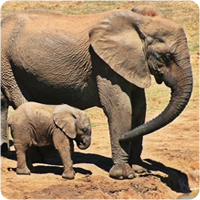
Elephant numbers

Read and speak about the status of animals.
Speak about an animal that is in danger of extinction.

3-4 hours

Lesson 3

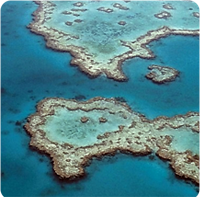
Great Barrier Reef

Read and discuss about the Great Barrier Reef. Write an essay about plastic.
Grammar: the future perfect

3-4 hours

Lesson 4

Supermarkets in France

Speak and read about food waste. Listen to a radio show about environmental issues.

2-3 hours

Finishing touch

Projects


Oefenprogramma Engels'


Examentraining


Evaluatie

Have a debate on the motion: people who do not actively do things to protect the environment should be punished.


Practise with the 'Oefenprogramma Engels'


Prepare for exams: practise taking past versions.


Answer evaluation questions, what did you learn?


3 hours


Total


16 hours


*hour = lesuur. Eén lesuur komt ongeveer overeen met 2 SLU.

Lessons

Global temperature

Global temperature

Introduction

Introduction - Global temperature

In this next lesson, we look at climate change.
You are going to think about some facts about the climate. Some people do not believe they are facts – perhaps you too are a climate sceptic? We then move on to hear about how these huge conclusions are made from a big data climate scientist. 

  • Form groups of three or four pupils.

Discuss in your group what you know about climate change.

This lesson contains 6 steps and an evaluation. Work them through step by step.

Step

Activity


Introduction

Find out what you already know.

Step 1

Listening and reading

Name three certainties about climate change. Associate numbers about climate change with facts. Answer questions about this subject. Watch a video about climate change by numbers. Read the transcript, note 3 points.

Step 2

Reading

Tick sentences about bird migration, read a text about this subject. Do the exercise and discuss three reasons with a classmate.

Step 3

Words

Match the words with their definition. Complete sentences with words from the match exercise.

Step 4

Grammar

About the use of wish, Read the theory and rewrite sentences with I wish ...

Step 5

Speaking

Think of other consequences of a rise in temperature. Which is the most significant?

Step 6

Task

Write a report in 200-250 words.


Evaluation

Reflecting on what you have learned.


Difficult words? Search these on Cambridge Dictionaries


Step 1 - Listening and reading

Listening & Speaking
Let’s think about some of the facts.
What facts or certainties do you know about climate change?
Make a note of at least four and share them with your partner.

  • People say that the planet is getting warmer.
  • The sea is rising.
  • ....
  • ....

Read the questions and watch the video.

  1. What do the numbers 620 and 40 refer to?
  2. What does Rachel Pike study?
  3. What is it and why is it so important?
  4. Where is the SMOG chamber?
  5. Complete the sentence:
    Our models have ..... of thousands of grid boxes calculating ..... of variables each, on ..... timescales.
  6. What did she recently do in Malaysia?
  7. What does she say about the aircraft that she was in?
  8. How does the body of knowledge build up?


Read the transcript.

0:16 I'd like to talk to you today about the scale of the scientific effort that goes into making the headlines you see in the paper. Headlines that look like this when they have to do with climate change, and headlines that look like this when they have to do with air quality or smog. They are both two branches of the same field of atmospheric science.

0:32 Recently the headlines looked like this when the Intergovernmental Panel on Climate Change, or IPCC, put out their report on the state of understanding of the atmospheric system. That report was written by 620 scientists from 40 countries. They wrote almost a thousand pages on the topic. And all of those pages were reviewed by another 400-plus scientists and reviewers, from 113 countries. It's a big community. It's such a big community, in fact, that our annual gathering is the largest scientific meeting in the world.

0:58 Over 15,000 scientists go to San Francisco every year for that. And every one of those scientists is in a research group, and every research group studies a wide variety of topics. For us at Cambridge, it's as varied as the El Niño oscillation, which affects weather and climate, to the assimilation of satellite data, to emissions from crops that produce biofuels, which is what I happen to study.

1:16 And in each one of these research areas, of which there are even more, there are PhD students, like me, and we study incredibly narrow topics, things as narrow as a few processes or a few molecules. And one of the molecules I study is called isoprene, which is here. It's a small organic molecule. You've probably never heard of it. The weight of a paper clip is approximately equal to 900 zeta-illion -- 10 to the 21st -- molecules of isoprene.

1:38 But despite its very small weight, enough of it is emitted into the atmosphere every year to equal the weight of all the people on the planet. It's a huge amount of stuff. It's equal to the weight of methane. And because it's so much stuff, it's really important for the atmospheric system.

1:51 Because it's important to the atmospheric system, we go to all lengths to study this thing. We blow it up and look at the pieces. This is the EUPHORE Smog Chamber in Spain. Atmospheric explosions, or full combustion, takes about 15,000 times longer than what happens in your car. But still, we look at the pieces.

2:07 We run enormous models on supercomputers; this is what I happen to do. Our models have hundreds of thousands of grid boxes calculating hundreds of variables each, on minute timescales. And it takes weeks to perform our integrations. And we perform dozens of integrations in order to understand what's happening.

2:22 We also fly all over the world looking for this thing. I recently joined a field campaign in Malaysia. There are others. We found a global atmospheric watchtower there, in the middle of the rainforest, and hung hundreds of thousands of dollars worth of scientific equipment off this tower, to look for isoprene, and of course, other things while we were there. This is the tower in the middle of the rainforest, from above. And this is the tower from below.

2:42 And on part of that field campaign we even brought an aircraft with us. And this plane, the model, BA146, which was run by FAAM, normally flies 120 to 130 people. So maybe you took a similar aircraft to get here today. But we didn't just fly it. We were flying at 100 meters above the top of the canopy to measure this molecule -- incredibly dangerous stuff.

3:00 We have to fly at a special incline in order to make the measurements. We hire military and test pilots to do the manoeuvring. We have to get special flight clearance. And as you come around the banks in these valleys, the forces can get up to two Gs. And the scientists have to be completely harnessed in order to make measurements while they're on board. So, as you can imagine, the inside of this aircraft doesn't look like any plane you would take on vacation. It's a flying laboratory that we took to make measurements in the region of this molecule.

3:24 We do all of this to understand the chemistry of one molecule. And when one student like me has some sort of inclination or understanding about that molecule, they write one scientific paper on the subject. And out of that field campaign we'll probably get a few dozen papers on a few dozen processes or molecules.

3:38 And as a body of knowledge builds up, it will form one subsection, or one sub-subsection of an assessment like the IPCC, although we have others. And each one of the 11 chapters of the IPCC has six to ten subsections. So you can imagine the scale of the effort. In each one of those assessments that we write, we always tag on a summary, and the summary is written for a non-scientific audience. And we hand that summary to journalists and policy makers, in order to make headlines like these. Thank you very much. (Applause)


Do the exercise.

Exercise
Were you surprised by any of the information Rachel Pike spoke about? What did you not know?
Note down three points, and say why you were surprised.
Use phrases like this:
 

  • I had no idea......
    Example:
    I had no idea that military pilots flew the planes. It must be because it’s really hard to fly so low.
  • What surprised me most was .....
  • Isn't it incredible to think .....
  • I'm amazed that .....

How interesting do you think her job is? Give three reasons.


Step 2 - Reading

Reading
If you believe that climate change is real, then you’ll know that it affects plant and animal
life too as well as the weather.

Did you know that it also affects bird migration?
Read on to find out.


Difficult words? Search these on Cambridge Dictionaries


Read the text.

Even Small Changes In Global Temperatures Can Have Disastrous Consequences For Birds
Higher temperatures could be a death sentence for migratory species, a new study finds.
12/29/2016 03:49 pm ET
Lydia O’Connor
Reporter, The Huffington Post

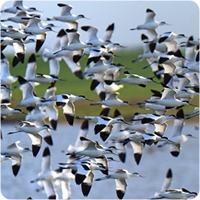
A new study showing how climate change threatens the migration patterns crucial to many birds’ survival is a reminder of how sensitive wildlife is to even the slightest uptick in temperatures. In a study of 413 species across five continents, researchers with the University of Edinburgh found that, on average, migratory birds are arriving at their summer breeding grounds about one day earlier for each degree Celsius that global temperatures rise. That may not sound like much, but the consequences can be severe.
The study, published Wednesday in the Journal of Animal Ecology, is not the first to note the ties between climate change and avian migration. But it’s the most extensive analysis of its kind, its authors say, and pulls from observations made as far back as 265 years ago, including those of 19th-century naturalist Henry David Thoreau. While rising temperatures were found to prompt early migration in birds across the board, the study found that short-distance migrants are arriving at their destinations significantly earlier than long-distance migrants.
Those changes throw off a delicate balance in the ecosystem and could have serious effects. If migratory birds arrive at their breeding grounds too early ― or too late, relative to those arriving even earlier ― there’s a potential for “mismatch of trophic interactions,” the study explains, meaning the birds may miss out on peak resource availability or face stronger competition for breeding sites or mates. This would affect the timing of their offspring hatching, putting the baby birds’ survival at risk, too.
Of course, none of this would occur in a vacuum. The endangerment or extinction of one species can have reverberations up and down the food chain, creating a dangerous ripple effect across entire ecosystems. The study comes just days before the end of what will likely prove the hottest year on record thus far. While NASA and the National Oceanic and Atmospheric Administration are expected to release their findings next month, Dr. Gavin Schmidt, director of NASA’s Goddard Institute for Space Studies, tweeted in October that the record was probably already “locked in.”

With data now available through September, the 2016 annual record (~1.25ºC above late 19th C) seems locked in. President-elect Donald Trump has raised much alarm over wind turbines, a renewable energy tool that could prove crucial to the ongoing effort to reduce carbon dioxide emissions. Trump has argued that turbines kill birds that collide with them. This may be true: Studies estimate that every year, turbines are responsible for somewhere between 140,000 and 368,000 bird deaths worldwide. But these numbers pale in comparison to the potential consequences of climate change. The Audubon Society has found that climate change threatens more than half of all bird species in North America alone.

Source: http://www.huffingtonpost.com/


Do the exercise.


Exercise

The final sentence is:
The Audubon Society has found that climate change threatens more than half of all bird species in North America alone.

Glossary: The Audubon Society is a non-profit environmental organisation dedicated to conserving and restoring natural ecosystems focusing on birds and other wildlife.

How surprised are you by this?
Discuss with your partner, giving at least three reasons for your thoughts.

Step 3 - Words

Words

Do the exercises.

Step 4 - Grammar

Grammar
Let's look at .....wish.

  • I wish that global warming didn’t affect every aspect of the environment so dramatically.

We use 'wish' to regret something, a situation that is not as we would like it to be.
We use the past after 'wish', although the meaning may not be the past.

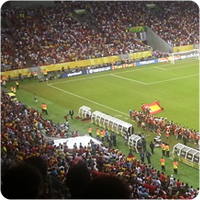
  • I wish there weren’t so many people at this football stadium.
    There are a lot of people (present) and I regret that there are.

We might follow this with and if-clause stating how we would like the situation to be:

  • If I had stayed at home, I would have been able to see the game better.

Step 5 - Speaking

Speaking
Bird migration is just one aspect that is affected by a rise in temperature.
What other changes can you list?
You have 30 seconds to list as many as you can.

Which do you consider to be the most significant?
You will have to define significant (in terms of danger).

Discuss these questions with your partner.

Answers

Step 6 - Task

Task: Writing an email (a report)
You are going to write a report about an environmental problem.
You have received this email:

Dear students,

My name is Jo Jackson and I have just inherited some money. I would like to donate it to an environmental cause. I thought it would be interesting to hear your view points as to the most important environmental issues of the day.
Please write a report about a burning issue and explain why I should donate my money to your cause.
Thank you
JJ


Read about how to write a report. A report outlines a problem or a situation.
You usually receive guidelines as to what you need to include in your report.
A report is not usually personal, but is about a situation or an event.
Use third person/passive and not ‘I’.
You might be asked to give advantages and disadvantages to a situation and you may also be asked to make suggestions.

Here are some points to help you:

  1. Start by stating the purpose of the report.
  2. Include the points. (This will probably be a few paragraphs.)
  3. Conclude.
  4. Use an impersonal, semi-formal style.
  5. You should use headings, and have an intro and conclusion.
  6. Use clear layout with headings.
  7. Include a final sentence summarizing your report.​

Write in 200-250 words.

Evaluation

Fill in the schedule and answer the questions below.

Lesson

Activity

Needs improvement

Satisfactory, good

Excellent

Step 1 - Listening and reading

I can listen and read about climate change and answer questions.


Step 2 - Reading

I can read and understand a text about bird migration.


Step 3 - Words

I can understand and use the words.


Step 4 - Grammar

I can understand and use the grammar.


Step 5 - Speaking

I can speak about aspects that are affected by a rise of temperature.


Step 6 - Task

I can write a report about an environmental problem.


What have you learned in this lesson?
Answer the following questions:

  • What was the easiest part of this lesson?
  • What did you already know?
  • What was the most difficult part?
  • What was new to you in this lesson?
  • What do you have to ask your teacher?


Elephant numbers

Elephant numbers

Introduction

Introduction - Declining elephant numbers
In this next lesson, we look at the status of animals.

We are going to look at the decline of animal species. Whilst many animal species are endangered, a regulatory body assigns more precise conservation statutes to them. For example, some species are in danger of extinction or threatened whilst others are in a ‘critical’ category.
This means that they are all threatened but at different levels. We look at some animals in these categories and then we move on to the involvement of famous people, or celebrities to help save these animals.
Does the involvement of these famous people make a difference?


This lesson contains 4 steps and an evaluation.
Work them through step by step.

Step

Activity


Introduction

Find out what you already know.

Step 1

Speaking

Read about conservation status of animals. Tick aspects. Do an exercise about the conversation status. Discuss questions with a classmate.

Step 2

Reading

Decide if sentences are true or false. Read an article about Declining Elephant Numbers. Read the speech of Prince William. Answer questions. Study the checklist for giving a speech.

Step 3

Words

Complete the table with verb, noun, adjective or adverb form of a word. Complete the text using correct form of words.

Step 4

Task

Choose an animal and research some information about it. Make use of the five 5 points.


Evaluation

Reflecting on what you have learned.


Difficult words? Search these on Cambridge Dictionaries

Step 1 - Speaking

Speaking
Let’s consider conservation status of animals.
Write down the aspects that you think contribute to it.

  • Number remaining
  • Overall increase or decrease of population
  • Breeding success rates
  • Diet
  • Known threats

Species populations are loosely grouped into six major categories.
The four categories of endangered species are:

  • vulnerable
  • endangered
  • critically endangered
  • extinct in the wild


Population

Geographic Range

Population Size

Population Restrictions

Extinction Probability


Extent of Occurence

Area of Occupancy


Least Concern

A species that has a widespread an abundant population

Near Threatened

A species that is likely to qualify for a threatened category in the near future

Vulnerable Species

30-50% population decline

< 20,000 km2

< 2,000 km2

< 10,000 mature individuals

< 1,000 mature individuals or an area of occupancy of < 20 km2

at least 10% within 100 years

Endangered Species

50-70% population decline

< 5,000 km2

< 500 km2

< 2,500 mature individuals

< 250 mature individuals

at least 20% within 20 years or 5 generations

Critically Endangered


≥80-90% population decline

< 100 km2

< 10 km2

< 250 mature individuals

< 10 mature individuals

at least 50% within 10 years or 3 generations

Extinct in the Wild

Only survives in cultivation (plants), in captivity (animals), or as a population well outside its established range.

Extinct

No remaining individuals of the species.


Look at the animals in this exercise.
What do you think their conservation status is?

Discuss these questions with your classmate:

  • How useful is it to classify animals in this way?
  • What are the advantages and disadvantages?


Answers

Step 2 - Reading

Reading
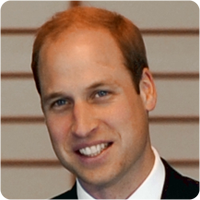
You are going to read a speech given by the Duke of Cambridge as one of the Royal Patrons of the
environmental organisation, Tusk.
Tusk is a British conservation charity.
He gave a keynote speech at the Time for Change charity event. 
He spoke about declining elephant numbers in Africa.

Before you read, decide if these sentences are true or false.

  1. Elephant numbers have generally decreased.
  2. Poaching is just one of the reasons for the decline.
  3. The ivory trade is legal in some countries.
  4. Volunteering is a good way to help the elephant crisis.

Read the article and check your answers.

by Denise Haggerty
On Sept 22, 2016, Prince William gave a keynote speech on the declining elephant numbers at the Time for Change charity event. The event was broadcast live in Johannesburg and Tokyo ahead of the Convention on International Trade in Endangered Species of Wild Fauna and Flora (CITES) and was organized by Tusk, a British conservation charity with Prince William as Royal Patron. In his keynote address, Prince William delivered a sobering message about declining elephant numbers in Africa.
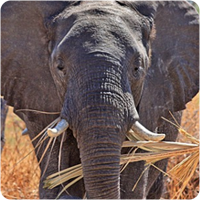
According to the final report from the 2016 Great Elephant Census (GEC), there was a 30 per cent decline (144,000) in savannah elephant numbers between 2007 and 2014. Prince William stated he was “not prepared to be part of a generation that lets these iconic species disappear from the wild.” He further stated that by the time his daughter turns 25, there will no longer be wild elephants roaming the African savannah—if the current rate of poaching continues.

According to the GEC survey, the current rate of decline in the savannah elephant species is eight per cent per year. This is primarily due to poaching for ivory, but other factors include habitat loss and human-elephant conflict. Large proportions of elephants live outside protected areas, encroaching on small farming communities;
farmers often kill elephants to protect their land and crops from damage. Survey results also indicated that a high number of savannah elephant carcasses were found in protected areas, suggesting a greater need for security as poachers are breaching conservation zones.

Prince William urged members of CITES to not be complacent, to not let materialistic greed “win against our moral duty to protect threatened species and vulnerable communities,” and to unite by declaring the ivory trade “a symbol of destruction, not of luxury.” According to GEC statistics, there are only 352,271 savannah elephants left in Africa. Saving the remaining elephants requires the global community to apply increased pressure on governments to crack down on the ivory trade and illegal poaching, to preserve habitat, and to educate communities beyond the continent. Consumers need to understand that purchasing ivory threatens the future of the savannah elephant species, as they are killed for their tusks. Despite a global trade ban on ivory since 1989, countries such as China and Japan perpetuate both the legal and illegal trade of ivory domestically and internationally. The crisis surpasses individual consumers buying ivory trinkets.

The declining elephant numbers are bleak and governments are not acting quickly enough to reclassify the savannah elephant to Appendix I—the highest threat level assigned by the International Union for Conservation of Nature and Natural Resources (IUCN). This would effectively end commercial trade. Fortunately, there are ways for individuals to help protect these majestic and threatened creatures: volunteering with a conservation organization in Africa, hosting a fundraiser, learning more about the elephant crisis, not purchasing ivory products, or pursuing a career in wildlife conservation. Donating money to charities is also a good place to start.


Now you are going to read the full transcript of Prince William’s speech.
Answer the questions in your own words.

Good afternoon, ladies and gentlemen.

I am delighted we are joined by those of you in Tokyo and Johannesburg as we prepare for a pivotal moment in the fight against illegal wildlife trade. I am particularly grateful to TUSK for providing this unique platform, and to ISPS Handa Foundation and Tusk’s other sponsors for making such an ambitious occasion possible. To John Scanlon and Dr Handa, thank you for sharing your thoughts on an issue I particularly feel passionate about.
Today’s event, on the eve of the CITES conference in Johannesburg, is timely and its global nature reflects the global scale of this challenge. Earlier this month the Great Elephant Census was published. And it confirmed what many of us have feared for some time – one of our planet's most treasured species is on course for extinction at the hands of poachers and traffickers.

When I was born, there were 1 million elephants roaming Africa. By the time my daughter Charlotte was born last year, the numbers of savannah elephants had crashed to just 350,000. And at the current pace of illegal poaching, when Charlotte turns 25 the African elephant will be gone from the wild. And the risk is not just to elephants. Today is World Rhino Day. A species that, due to demand for its horn, is being killed at a rate of nearly three animals a day. Rhinos face extinction in our lifetimes as we struggle to correct lies about the supposed benefits of using its horn as a drug. However, this crisis is not just about animals – this crisis is also about people. It is some of the world's poorest people who will suffer when their natural resources are stripped from them illegally and brutally. It is families in the world's most vulnerable regions who suffer when two rangers are killed every week on the frontline of this fight. It is fragile democratic systems in many nations that are at risk from the scourge of violence and corruption that the illegal wildlife trade fuels. Ladies and gentlemen, I am not
prepared to be part of a generation that lets these iconic species disappear from the wild.

I am not prepared to explain to our children why we lost this battle when we had the tools to win it – and I know that none of you in Tokyo, Johannesburg or here in London want this either. I fear we will not know what we have lost until it has gone. But there is hope – we can do something. There is huge momentum building from governments, businesses, conservationists, and the public to take the steps required to stop the killing.

Three and a half years ago I spoke on the eve of the last CITES conference and I urged Parties to redouble their efforts to tackle illegal wildlife trade. As we stand on the eve of another CITES gathering there is much to celebrate: - The London Conference in 2014, which showed that Governments were taking this seriously; - The Elephant Protection Initiative, now with 14 member countries; - China and America's leadership when last year they were the first to announce domestic bans on ivory trade; - the recovery in Giant Panda numbers in China - one example of how concerted action can deliver results; - The Transportation industry led by Lord Hague acting with resolve through the Buckingham Palace Declaration to tackle their role in this issue; - And last week, the overwhelming vote at the IUCN World Conservation Congress calling on all countries to close their domestic ivory markets. These are all significant steps, but progress is fragile and we cannot be complacent. As leaders gather for CITES, and later at the third Illegal Wildlife Trade conference in Vietnam in November which I will be attending, we have the chance to seize a huge opportunity.

We have the opportunity to end, once and for all, the mixed messages we have sent for too long about the value and desirability of wildlife products. We have the chance to say that ivory is a symbol of destruction, not of luxury and not something that anyone needs to buy or sell. We have the chance to say that rhino horn does not cure anything and does not need a legal market. Now is the chance to send an unambiguous message to the world that it is no longer acceptable to buy and sell ivory, rhino horn or other illegal wildlife products. Indeed I would challenge anyone who knows the truth of how these wildlife products are obtained, to justify desiring them. Materialistic greed cannot be allowed to win against our moral duty to protect threatened species and vulnerable communities. This is not just an issue for people on the other side of the world – the British Government announced yesterday that it is looking closely at this issue in respect of our own domestic trade. Wherever we are in the world, we must all play our part. The opportunity that the CITES conference presents to halt the illegal wildlife trade will not come round again for another three years.

I sincerely hope that the Parties are able to unite around an unmistakable message to the world about the crisis in which we find ourselves – in my personal opinion, a tightening and not a loosening of the rules around the international trade in ivory and rhino horn. Mixed messages about the viability of trade in elephant or rhino parts would surely serve only to confuse would be consumers at this crucial time. We cannot undo the mistakes of the past. But we can and must take moral responsibility for the decisions we make today.

Please let us not lose momentum or focus. If we are to succeed, we must do more; we must do it faster; and we must do it better. But most importantly, we must do it together. Thank you.

Source: https://www.royal.uk/


Do the exercise.

Step 3 - Words

Words

Do the exercises.

Step 4 - Task

Writing Task
You have been invited to speak about an animal that is in danger of extinction.
Look at the points to talk about below.
Choose your animal and research some information about it.
Complete the file.

  1. Status
  2. How many are there?
  3. Threats to habitat
  4. Emotions that you can exploit when talking about this animal
  5. Future of the animal?

Write your speech. Use 200-220 words.

Evaluation

Fill in the schedule and answer the questions below.


Activity

Needs improvement

Satisfactory, good

Excellent

Step 1 - Speaking

I can read about conservation status of animals and discuss questions with a classmate.


Step 2 - Reading

I can read an article about declining elephant numbers and answer questions.


Step 3 - Words

I can complete a table with verb, noun, adjective or adverb of a word.


Step 4 - Task

I can research information about an animal and write a speech.


What have you learned in this lesson?
Answer the following questions:

  • What did you already know?

  • What was the most difficult part?

  • What was new to you in this lesson?

  • What do you have to ask your teacher?


Great Barrier Reef

Great Barrier Reef

Introduction

Introduction - The Great Barrier Reef

In this next lesson we look at world heritage wild life sites. There are many around and some of them are natural sites, or rather they are not man made. Unfortunately many have been affected by human activity.

In this lesson we look at The Great Barrier Reef.

  • Form groups of three or four pupils.

Discuss in your group what you know about the Great Barrier Reef.

This lesson contains 5 steps and an evaluation.
Work them through step by step.

Step

Activity


Introduction

Find out what you already know.

Step 1

Speaking

Make a list of world heritage sites. Visit an interactive map. Answer the question.

Step 2

Reading

You read an article about the Great Barrier Reef. Make a list of points you already know. Do the exercise.

Step 3

Speaking

Discuss in small groups questions about The Great Barrier Reef.

Step 4

Grammar

About the future perfect. Read the theory and complete sentences in future perfect.

Step 5

Task

Write a letter in 200-250 words to the local supermarket about the use of plastic bags.


Evaluation

Reflecting on what you have learned.


Difficult words? Search these on Cambridge Dictionaries


Step 1 - Speaking

Speaking
Do you know any world heritage sites?
Make a list of sites as many as you can think of with your partner.

  • One of the world heritage items is for instance 'De Waddenzee'.
    Can you find it on the interactive map?
  • There is also a World Heritage in Danger list.
    What purpose would such a list serve?

Possible answer

Step 2 - Reading

Reading
You are going to read an article about the Great Barrier Reef.

  • Make a list of points that you already know about it.

Read the article quickly – were your points mentioned?
Read in the 'toolbox' tips how to read quickly:

Skimming and scanning

The Great Barrier Reef has suffered the worst coral die-off on record
Updated by Brad Plumer@bradplumerbrad@vox.com  Nov 30, 2016, 9:50am EST

Coral bleaching at Lizard Island in February 2016. (XL Caitlin Survey)

  1. Earlier this year, the Great Barrier Reef was devastated by the largest mass bleaching event ever seen — as record-warm ocean temperatures turned large swaths of this vibrant 1,400-mile habitat into a ghastly white boneyard. Now scientists have finally tallied up the damage. Data released Monday by Australian researchers shows that an unprecedented fraction of the shallow-water coral in the pristine northern part of the reef has died, with average mortality rates of 67 percent.
  1. The brighter news is that the southern sections fared much better, with just 6 percent of coral dead in the central section and 1 percent dead in the south. “The[se] corals have now regained their vibrant color, and these reefs are in good condition,” said Professor Andrew Baird of the Australian Research Council Centre of Excellence for Coral Reef Studies in a release. Here’s a map showing the damage:
    The scientists note that it could take 10 to 15 years for the worst-hit sections of the reef recover — but the real fear is that, thanks to global warming, another mass bleaching event will come along very soon and make the situation even worse.
  1. Coral reefs are often dubbed the rain forests of the ocean. Anchored by millions of coral polyps — tiny, soft-bodied animals that create elaborate calcium carbonate skeletons that shelter fish — these reefs cover just 0.1 percent of the sea floor but are home to 25 percent of marine fish species.

  1. But coral reefs are also extremely vulnerable to soaring temperatures. In normal times, the living coral polyps form a symbiotic relationship with zooxanthellae, a colorful type of algae that synthesizes sunlight and carbon dioxide to create nutrients for the reef.

  1. It is this that gives the coral its purple and gold colors.

  1. This symbiosis only thrives within a fairly narrow temperature band. If the water in the reef gets too warm, the zooxanthellae's metabolism goes into overdrive and starts producing toxins. The polyps recoil and expel the algae from their tissue, leaving the coral with a ghastly "bleached" appearance. At that point, the coral loses a key source of food and becomes more susceptible to deadly diseases.
    Bleaching doesn't kill the coral right away; if ocean temperatures drop again, the zooxanthellae will come back. But if temperatures stay high for a long period and the bleaching gets really severe, as was the case in the Great Barrier Reef, then a lot of coral polyps will start to die of malnutrition or disease. Once the coral dies off, it can adversely affect the fish that rely on the reefs. The entire ecosystem suffers.
  1. Now, the good news is that coral reefs can recover from these mass die-offs. Now that El Niño is gone, ocean temperatures have fallen around Australia. New polyps are returning and starting to build new skeletal structures to replace the dead coral.
  1. The hitch is that recovery takes time. Lots of time. In places like the Seychelles, where reefs are mostly sheltered from pollution, tourism, and heavy fishing, it has taken at least 15 years for damaged reefs to come back. In areas stressed by human activity, the process can take much longer. What's more, recovery is often uneven. The fast-growing "branching" corals bounce back first. But there are also older, massive corals that are centuries old and provide valuable shelter for bigger fish. When those die off, they don't return overnight.
  1. Now, there are some things that Australia (and other countries) can do to help make reefs more resilient to bleaching. Humans can limit fertilizer and sewage runoff that further damage the coral. We can avoid overfishing key herbivores like the rabbitfish that nurture the reefs by clearing away excessive algae. We can also avoid wreaking havoc on reefs by rerouting boats around them and restricting construction in the coastal areas near them. Australia is on the wrong track here: In 2015, the government approved plans to expand coal exports via ship in the southern part of the Great Barrier Reef.
  1. But ultimately, reducing our carbon-dioxide emissions is the crucial step. Mark Eakin, who runs who runs NOAA's Coral Reef Watch program, told me back in March that we'd likely need to keep total global warming to below 1.5 degrees Celsius for coral reefs to continue thriving. Right now we're on course to blow past 2 degrees Celsius, which could doom recovery efforts. "At 2 degrees Celsius," Eakin said bluntly, "we are likely to lose numerous species of coral, and by the time that happens, well over half of the world's coral reefs will have vanished forever."


Read the article again and do the exercise.

Step 3 - Speaking

Speaking
In small groups, discuss these questions.

  1. What was your reaction to the article about The Great Barrier Reef (step 2)? Why?
  2. How optimistic are you about the Great Barrier Reef regenerating?
  3. Many tourists enjoy activities in and around the Reef.
    To what extent should governments limit, or even ban these?
    Give your reasons.
  4. You and your friend are planning to visit Australia.
    Do you visit the Reef? Why/ why not?

Step 4 - Grammar

Grammar
Let’s look at ... the future tense: future perfect.

Future tense

Exercise

Example:

  • By the time my grandchildren are born, most of the rainforests will have disappeared from the earth.

Do you think that the following are likely to happen?
Write sentences saying when you think they will have happened.

Write sentences with the following words:

  • Electric cars
  • People sunbathing
  • Green issues – more important than any other
  • People destroy earth
  • Alternative energy more valuable than oil
  • End nuclear energy

Step 5 - Task

Task: Write a letter
Make a list of ways that plastic bags can damage the environment.
What alternatives are there? Think of personal, local and government levels.

This is the situation:
On January 1st, 2016, the Netherlands banned the distribution of free plastic bags. But for hygienic reasons and to reduce food waste, the ultra thin plastic bags will continue to be provided to markets and vegetable sections in supermarkets.

You feel strongly about plastic bags and you know that your local supermarket hands them out willingly.

Letter

  • You are going to write them a letter explaining why they should ban plastic bags.
  • You are going to ask three questions about the plastic bag policy.
  • You are going to give three pieces of advice indicating how the supermarket can keep the shoppers happy and the environment clean.


Write your letter in 200-250 words.
Use the future perfect in this letter!


Example

Evaluation

Fill in the schedule and answer the questions below.

Lesson


Needs improvement

Satisfactory, good

Excellent

Step 1 - Speaking

I can speak about world heritage sites (in danger) with a classmate.


Step 2 - Reading

I can read an article about the Great Barrier Reef quickly and in detail.  


Step 3 - Speaking

I can give my opinion on (an article about) the Great Barrier Reef.


Step 4 - Grammar

I understand and can use the future perfect.


Step 5 - Task

I can write a letter to a supermarket, why they should ban the plastic bag.


What have you learned in this lesson?


Supermarkets in France

Supermarkets in France

Introduction

Introduction - Supermarkets in France

We live in a throwaway society. If it doesn’t work, throw it away and buy another one. And food is no different. We are faced with servings on huge plates and no one needs to eat that amount of food. So we don’t finish it and we throw it away. Fruit and vegetables rot in our fridges, what do we do? We throw them away. And yet a large percentage of the world’s population has no food. They are starving. In this section we look at a move that France has made to combat this.  


In this next lesson, we look at dealing with too much Food.

Discuss with a classmate:

Which do you think are the best ways for dealing with too much food?
Give an advantage and a disadvantage for each.

  1. donating the food to charities
  2. eating the food beyond the expiration date
  3. producing less food
  4. composting the food
  5. taking food home from a restaurant in a doggie bag.

This lesson contains 5 steps and an evaluation.
Work them through step by step.

Step

Activity


Introduction

Find out what you already know.

Step 1

Speaking

Makes notes about the food you ate yesterday. Compare and discuss your answers with a classmate.

Step 2

Reading

Read a text and write a summary. Choose the correct words to fill in the gaps in the text. Give advantages and disadvantages for dealing with too much food. Read the complete text.

Step 3

Listening

Listen to the live radioshow and answer questions.

Step 4

Grammar

About past perfect. Complete sentences with the correct form. Read the theory in the Grammar Desk.

Step 5

Task

Make true sentences with a partner about the things you did before you came to this class.


Evaluation

Reflecting on what you have learned.


Difficult words? Search these on Cambridge Dictionaries


Step 1 - Speaking

Speaking

  • Think about the food you ate yesterday. Make a note of every item.
  • Did you eat everything? If no, why not?
    If yes, think of a time recently when you didn’t eat everything and why.
  • What did you do with the food you didn’t eat?
  • Do you eat food that has passed its expiration date? Which foods?
    Why do people choose to throw food out that has passed this date? Give three reasons.

Answer the questions and compare your answers with a classmate.

Step 2 - Reading

Reading
You are going to read about a law that was passed in France.

It's now illegal for supermarkets to waste food in France

By Willa Frej

Hooray, more bread and cheese for all!
France’s Parliament took definitive .....[1]..... to prevent food waste on Wednesday. The country’s Senate unanimously voted to ban large food stores from throwing away food that’s approaching .....[2]..... expiration date.
The National Assembly, France’s other legislative chamber, had unanimously voted on the same .....[3]..... in December. Supermarkets must either compost or donate .....[4]..... and nearly expired goods to charity. The law also prohibits stores from .....[5]..... bleach over food items — a tactic some used to prevent homeless people from foraging — and mandates that schools across the country begin to educate students on the fight against food waste. French food banks welcomed the ruling. “We’ll be able to increase the quality and diversity of food we get and distribute,” Jacques Bailet, head of Banques Alimentaires, a network of French food banks, told The Guardian.

The campaign to end food waste began after grassroots .....[6]..... compelled local Councilman Arash Derambarsh to launch a petition promising that “10 million French people would not go hungry.” It gained hundreds of thousands of .....[7]....., Le Monde reported. Supermarkets throw away over 44 pounds of food every day, Derambarsh wrote in the petition. That’s about seven bags of oranges. And a(n) .....[8]..... person wastes 44 to 66 pounds of food every year, the country’s Environment and Energy Management Agency said in October. Another law, which went into effect on New Year’s Day, aims to target food waste in restaurants. Large French restaurants .....[9]..... to offer customers “doggie bags,” or takeaway containers, should they request them.

France is the first country in the world to adopt food waste legislation of this kind. In the U.S., for example, legislation only extends as far as encouraging donations to nonprofit organizations. Derambarsh, who spearheaded the initiative, is now working to get the European Union to implement .....[10]..... measures, Le Monde reported. “This battle is only just beginning,” he said. We now have to fight food waste in restaurants, bakeries, school canteens and company canteens.”

Source: http://www.huffingtonpost.com/


Do the exercise.

Exercise

Read the text again and write a summary of 100 words.

Step 3 - Listening

Listening
Listen to the live radio show, regarding environmental issues, and do the exercise.


Step 4 - Grammar

Grammar
Let’s look at …. past perfect.

Past perfect


We use the past perfect to show something that happened before the main event. In the example above, the voting took place before the main event.
The past perfect underlines the difference in time.
For example:

  • When I arrived at the cinema, the film had already started.

Do the exercise.

Step 5 - Task

Speaking activities
With your partner, see how many true sentences you can make about the things they did before they came to this class to practise with the past perfect grammar.

  • When you got to school, you had already had your breakfast.
    Yes, that’s right.
  • When you had your breakfast, you had already cleaned your teeth.
    No! I cleaned my teeth after breakfast.
  • .....

My go!

Food waste
The Ministry of Agriculture, Nature and Food Quality has been pursuing a policy aimed at reducing food waste since 2009. One of the objectives of the UN Sustainable Development Goals is halving per capita food waste by consumers and supermarkets by 2030 compared to 2015 and minimising food losses in the rest of the chain.
The European Union has subscribed to this objective and the Dutch government also endorses it.

Discuss these questions with your classmate:

  • Do you know what happens to food not sold in supermarkets in the Netherlands?
  • How do grocery stores get rid of expired food?
  • Do you think it will help to simplify food expiration labels?
  • Do you think that selling “ugly” vegetables at discount prices will be a good experiment?
  • Do you think this will help: Stores offer consumers free food magazines that share waste reduction tips.
  • Do you think this will help: Stores offer consumers free recipes to utilize leftovers.


Evaluation

Fill in the schedule and answer the questions below.

Lesson Activity Needs improvement Satisfactory, good Excellent
Step 1 - Speaking I can speak with a classmate about (spoiled) food.      
Step 2 - Reading I can read an article about a law against the waste of food in supermarkets and answer questions.       
Step 3 - Listening I can listen to a live radio show regarding environmental issues and answer questions.       
Step 4 - Grammar I can understand and use the past perfect.       
Step 5 - Task I can make sentences with past perfect and have a discussion about waste of food in supermarkets.       


What have you learned in this lesson?
Answer the following questions:

  • What did you already know?
  • What was the most difficult part?
  • What was new to you in this lesson?
  • What do you have to ask your teacher?

Finishing touch

Project: Environment

Final project - a debate
A debate is a discussion. There is usually a motion, topic or resolution, which is a statement and it is usually worded: This house believes ... .
There are always two sides to the debate. The affirmative group usually speaks first and this is then countered by the negative group. Then the teams have time to prepare their rebuttal and summary. This time the negative group makes their rebuttal and summary first, followed by the affirmative group.

The motion is: This house believes people who do not actively do things to protect the environment should be punished.

  • Your teacher will put you into groups – either agreeing or disagreeing.
  • In your group, research your point: what does ‘actively’ mean? What kinds of punishment – fines? And does this actually work?
  • Organise your points logically making a good case.
  • Check your work and decide which member of your group is going to do most of the talking.
  • Think about the points that the opposing team is likely to make and discuss how you will refute them in your rebuttal.

Suggested timing and procedure:

  • 2 minutes to present your case
  • 2 minutes to prepare your rebuttal and summary
  • 2 minutes for the rebuttal and summary.


Good

Sufficient

Insufficient

Organisation

Information is presented in a logical, attractive sequence.

Information is mostly presented in a logical, attractive sequence.

Information is not presented in a logical, attractive sequence.

Content

Interesting, clear information.

Information is mostly interesting. Some was already known.

There was not much that was of interest in this presentation.

Speaker style

Speaks clearly and at an understandable pace. Maintains eye contact with audience. Well-rehearsed.

Mostly speaks clearly and a good pace. Mostly keeps eye contact. Has rehearsed a bit.

Mostly unintelligible. Does not maintain eye contact. Has not rehearsed.

Language

The vocabulary use is very good and the sentence structure is good.

The vocabulary use is fairly good and the sentence structure is good.

The vocabulary use is not very good, neither is the sentence structure.

Oefenprogramma Engels

Global warming hotheads

If your school participates in VO-content, you can practice with the English practice program 'Oefenprogramma Engels'.

Here you find a part of this program.
This section fits in well with this theme.
Sign in with your 'School Entree account'!

Global warming hotheads


On www.oefenprogrammaengels.nl you can of course also practice with other reading, listening or viewing assignments!

Examentraining

On this page you will find Examenkracht exam questions of previous years.
The questions will correspond as much as possible to the exercise you have just finished.

While answering, use as much of what you have learned earlier. If you cannot answer the question right now, try again later. When you have answered a question, you can check and indicate the score yourself.

If you want your results to be saved, you will have to log in on ExamenKracht.

HAVO 2021-TV1

HAVO 2021-TV1 Vragen 8-12

HAVO 2021-TV3

HAVO 2021-TV3 Vraag 8

HAVO 2019-TV1

HAVO 2019-TV1 Vraag 7
HAVO 2019-TV1 Vraag 8
HAVO 2019-TV1 Vraag 9

HAVO 2019-TV2

HAVO 2019-TV2 Vraag 4


More practice?
Go to Examenkracht where you will find the newest exams.

What did you learn?

Can do statements
Take a look at the Can do statements in the introduction - 'Can do'.
Are you able to do what you have to do?
Did you understand and meet the learning goals (can do statements)?
At the end of each lesson you also answered evaluation questions. 

  • Which assignment was the best one to learn from?
  • How did you get on doing the assignments?
  • What was the most difficult part?
  • Are you able to do what you have to do?
  • What do you have to ask your teacher?

Timing
In the introduction of each period there is an indication of the amount of time you need to do the activity.

  • What do you think of this timing?
  • Het arrangement Environment h45 is gemaakt met Wikiwijs van Kennisnet. Wikiwijs is hét onderwijsplatform waar je leermiddelen zoekt, maakt en deelt.

    Auteur
    VO-content
    Laatst gewijzigd
    2025-11-28 11:46:59
    Licentie

    Dit lesmateriaal is gepubliceerd onder de Creative Commons Naamsvermelding-GelijkDelen 4.0 Internationale licentie. Dit houdt in dat je onder de voorwaarde van naamsvermelding en publicatie onder dezelfde licentie vrij bent om:

    • het werk te delen - te kopiëren, te verspreiden en door te geven via elk medium of bestandsformaat
    • het werk te bewerken - te remixen, te veranderen en afgeleide werken te maken
    • voor alle doeleinden, inclusief commerciële doeleinden.

    Meer informatie over de CC Naamsvermelding-GelijkDelen 4.0 Internationale licentie.

    Het thema 'Environment' (h45) is ontwikkeld door auteurs en medewerkers van StudioVO.

    Fair Use
    In de Stercollecties van StudioVO wordt gebruik gemaakt van beeld- en filmmateriaal dat beschikbaar is op internet. Bij het gebruik zijn we uitgegaan van fair use.
    Meer informatie: Fair use

    Mocht u vragen/opmerkingen hebben, neem dan contact op via de
    helpdesk VO-content.

    Aanvullende informatie over dit lesmateriaal

    Van dit lesmateriaal is de volgende aanvullende informatie beschikbaar:

    Toelichting
    Dit thema valt onder de arrangeerbare leerlijn van de Stercollectie voor Engels voor havo, leerjaar 4 en 5. Dit is thema: 'Environment'. Dit thema omvat de volgende volgende onderwerpen: - Global temperature - Elephant numbers - Great Barrier Reef - Supermarkets in France De grammaticaopdrachten gaan over het gebruik van 'wish' en de 'future perfect'.
    Leerniveau
    HAVO 4; HAVO 5;
    Leerinhoud en doelen
    Engels;
    Eindgebruiker
    leerling/student
    Moeilijkheidsgraad
    gemiddeld
    Studiebelasting
    16 uur 0 minuten
    Trefwoorden
    arrangeerbaar, elephant numbers, engels, environment, global temperature, great barrier reef, h45, stercollectie, supermarkets in france

    Gebruikte Wikiwijs Arrangementen

    VO-content Engels. (2021).

    Declining elephants numbers h45

    https://maken.wikiwijs.nl/104355/Declining_elephants_numbers_h45

    VO-content Engels. (2021).

    Global temperature h45

    https://maken.wikiwijs.nl/104354/Global_temperature_h45

    VO-content Engels. (2021).

    Great barrier reef h45

    https://maken.wikiwijs.nl/104356/Great_barrier_reef_h45

    VO-content Engels. (2021).

    Supermarkets in France h45

    https://maken.wikiwijs.nl/104357/Supermarkets_in_France_h45

  • Downloaden

    Het volledige arrangement is in de onderstaande formaten te downloaden.

    Metadata

    LTI

    Leeromgevingen die gebruik maken van LTI kunnen Wikiwijs arrangementen en toetsen afspelen en resultaten terugkoppelen. Hiervoor moet de leeromgeving wel bij Wikiwijs aangemeld zijn. Wil je gebruik maken van de LTI koppeling? Meld je aan via info@wikiwijs.nl met het verzoek om een LTI koppeling aan te gaan.

    Maak je al gebruik van LTI? Gebruik dan de onderstaande Launch URL’s.

    Arrangement

    IMSCC package

    Wil je de Launch URL’s niet los kopiëren, maar in één keer downloaden? Download dan de IMSCC package.

    Voor developers

    Wikiwijs lesmateriaal kan worden gebruikt in een externe leeromgeving. Er kunnen koppelingen worden gemaakt en het lesmateriaal kan op verschillende manieren worden geëxporteerd. Meer informatie hierover kun je vinden op onze Developers Wiki.