Societies v456

Societies v456

Societies

Introduction

In this theme we are looking at societies.

What are you going to do?
We’re going to look at what society actually means and how it affects us, in other words, why is it important to understand. Different societies have different belief systems and do things in different ways. These differences are not only from a geographical perspective but also through time.

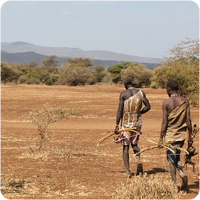
We begin by reading about the Hadza, a hunter gather tribe that lives in Tanzania and how they live their lives as they would have done over 100,000 years ago.

Then we move on to read about how China is planning to ‘watch’ its citizens with a scheme that will impact every aspect of their lives.
If this is successful in China today, could the rest of the world implement it tomorrow?

We then read about how the choices you make in your teen years can affect the rest of your life,
or not? You are told that they are the most important decisions that you have to make, but are they?
And why has society developed in this way?
Finally, we look at groups and the importance that humans place on doing activities together
with like-minded people.

How about you?
What comes to mind when you hear the word 'society'?
You’re going to look at what society actually means and how it affects us, in other words,
why is it important to understand.
Different societies have different belief systems and do things in different ways.
These differences are not only from a geographical perspective but also through time.
So societies in the past were different to societies nowadays. Or weren't they?
This theme is about societies, past and present and your beliefs about societies.

Have fun!

Need to know

What do you need to know?
At the end of this theme, you should be able to talk about Societies with ease.
But you don't have to be able to do all this perfectly right away! If you take the following lessons you'll find out what you need to know!

  • Read the questions.
  • With a classmate, discuss these questions.

Choose from the following questions

  • How would you describe your society? What comes to mind when you hear the word society?
  • Are you proud of your society? Why / why not?
  • What kind of improvements would you like to see in your society?
  • Is society different for rich and poor, men and women, young and old? How?
  • What do you think, are the differences between society today and forty years ago?

Can do

In this theme you will focus on the following 'can do' statements.

Listening (B2):

  • I can understand in detail what is said in a conversation between two students doing the same task.
  • I can understand a video about 'Can you get smarter?' and can answer the questions.

Reading (C1)

  • I can rapidly grasp the content of an article about a government who monitors everything citizens do.
  • I can read quickly and understand the article 'If I ruled the world' and give paragraphs the correct heading. I also can grasp the main points.
  • I can understand in detail a text about people whose society is different to mine.
  • I can read an article about Mensa, dealing with the content and criticism and check my ideas.

Speaking (B2)

  • I can start, maintain and close simple face to face conversation on aspects 'society' includes.
  • I can interact with a degree of fluency in a conversation about which information governments (wants to) know about their citizens.
  • I can take an active part in a conversation or discussion about big tourism. 
  • I can describe the attitude of the interviewer and give my own opinion about 'possessions'.
  • I can give a spoken presentation about a different society. I can do this with the 'wow' factor (impressing my audience).
  • I can give or seek personal views and opinions in a discussion with a classmate about 'great, average and small' people.

Writing (B2)

  • I can write clear, detailed information in an email in which I outline my plans and proposals to protect the Hadza, but also give tourists an insight into their lives.
  • I can write an email to the newspaper editor with my views on an article. I can give reasons in support of this point of view. 
  • I can write a text with information and my personal point of view about Mensa.
  • I can write my CV in summary form.


To do

The theme Societies contains an introduction, four lessons and a finishing touch.
In the schedule below, you can see the titles of the sections and an estimate of the time required for each part.

Lesson

Title

Activity

Time (hours)*

Introduction

Introduction

Need to know

Can do

To do


0,5 hour

Lesson 1

Tanzania

Speak about society. Read about a different society in Tanzania. Write a proposal to make changes you think are best in an email.

3-4 hours

Lesson 2

Digital eyes on citizens

Speak about the information governments know about you. Read about the digital eyes on citizens in China and write an email about it.

3-4 hours

Lesson 3

If I ruled the world

Watch a video about the most spoilt child in Britain. Read and speak about 'If I ruled the world.
Grammar: future continuous

3-4 hours

Lesson 4

International organization

Read and speak about the need to belong to a group, like Mensa.
Grammar: reported speech

2-3 hours

Finishing touch

Projects

You will give a presentation about a different society.

3 hours

Oefenprogramma Engels'

You are going to practise with the 'Oefenprogramma Engels'

Examentraining

You are going to prepare for exams: practise taking past versions.

Evaluatie

You answer evaluation questions, what did you learn?


Total


16 hours


*hour = lesuur. Eén lesuur komt ongeveer overeen met 2 SLU.

Lessons

Tanzania

Tanzania

Introduction

In this next lesson is Tanzania: hunter gatherers.

This lesson contains 5 steps and an evaluation.
Work them through step by step.

Step

Activity


Introduction

Find out what you already know.

Step 1

Speaking

Tick topics about society and compare answers with a classmate. Share your ideas with a classmate about two items you have chosen. Listen to two parts of a conversation and answer questions.

Step 2

Listening

Listen to a conversation of two students about how to choose between different 'items'.

Step 3

Reading

Answer questions about topics. Read the text and answer questions. Discuss other questions with a classmate.

Step 4

Words

Put words in the correct group. Read the text of Step 2 and find the collocations. Complete sentences with the collocations found.

Step 5

Speaking

Discuss questions with a classmate about the Hadza people. Talk about advantages and disadvantages of big tourism.

Step 6

Task

Write an email in 200-250 words to "the wealthy American" about your plans and proposals. Read the tips.


Evaluation

Reflecting on what you have learned.


Difficult words? Search these on Cambridge Dictionaries


Step 1 - Speaking

Let’s think about what society actually means.

Write down the topics that you think that ‘society’ includes.

air travel

buying and selling

bands, tribes, groups with a common interest

the environment

how a group of people eat, and what they eat

what people wear

Compare your answers with your partner, and give reasons for your answers.
Add one more aspect that society includes, and one aspect that society doesn’t include.

Look at the following items. Write down the items that you have.

clothes

phone

food

decor

sense of smell

laptop

passport

internet access

cosmetics


Imagine that you are allowed to keep only two of the above items.
Which two would you choose? Write down your items and reasons.
Share your ideas with your partner.

Now read this extract. 

Given a list of things (including cosmetics, their car, their passport, their phone and their sense of smell) and told they could only save two, 53% of those aged 16-22 and 48% of those aged 23-30 would give up their own sense of smell if it meant they could keep an item of technology (most often their phone or laptop). We all know how important technology is to our people, but a willingness to sacrifice one of their human senses to keep it shows just how intrinsic it has become.

Perhaps it's not all that surprising when you consider that technology represents all the friends you could ever want, all the knowledge you will ever need, and all the entertainment you could desire.
For your people, technology is more than a useful tool or an enabler. It is truly their fifth sense.

Source: https://www.scribd.com/doc


Discuss the next question.

  • Why do you think older people might be shocked at this report?


Answer

Step 2 - Listening

Society has also to do with thinking about your own beliefs and values about possession and ownership.

In this step you are going to listen to a conversation between two students in two parts.

Now listen to Part 1

In a conversation two students doing the same task.

  • Which two items do they choose, and why?

Listen to the conversation and answer this question.

Listen to Part 2 of the conversation.

After listening you are going to answer these questions:

  • Which generation groups are mentioned?  
  • What reason do they give for Baby boomers choosing food and clothes?
  • Another characteristic of modern times is given: what is it?


Now read this extract of the text Technology as a fifth sense.  

Technology as a Fifth Sense

Given a list of things (including cosmetics, their car, their passport, their phone and their sense of smell) and told they could only save two, 53% of those aged 16–22 and 48% of those aged 23–30 would give up their own sense of smell if it meant they could keep an item of technology (most often their phone or laptop).

We all know how important technology is to young people, but a willingness to sacrifice one of their human senses to keep it shows just how intrinsic it has become. Perhaps it’s not all that surprising when you consider that technology represents all the friends you could ever want, all the knowledge you will ever need, and all the entertainment you could desire. For young people, technology is more than a useful tool or an enabler. It is truly their fifth sense.

Step 3 - Reading

You are going to read a text about people whose society is different to yours.
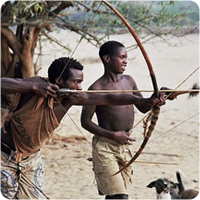
They are 'The Hadza' and they live in Tanzania.

Before you read the article, look at the following topics.

  • Which words apply to your society?
  • Do you know anything about The Hadza? Which words apply to their society?
  Your society The Hadza
nomadic    
hunter gatherers    
sustainable agricultural practices    
hunger    
tourism    
happiness    


Read the article.

Mike Carter August 22, 2015

Mwapo started whistling: a sweet, piercing melody that rose and fell. From somewhere in the distance came a second whistler, the tune the same. Mwapo touched his ear with his finger, pointed towards a line of trees.

Nearby, on a dead tree stump, sat an angry-looking little bird. As we approached, it started whistling. Here was our duettist. “Tik’iliko,” said Mwapo. The bird took flight. We followed, the bird and Mwapo whistling constantly to each other.

Eventually we came to an enormous baobab tree. Mwapo pointed up. There, on a branch, sat the tik’iliko, or honeyguide bird. Next to it, barely visible to the human eye, was the entrance to an African honeybee nest. Mwapo looked happy. Like all Hadza people, he loves honey, and honeyguides love the wax and larvae. Without the bird, man can’t find the nests; without man, the bird can’t get into them. A few days earlier, I could barely have conceived of this symbiotic miracle. But even a short time spent with the remarkable Hadza, Africa’s last true hunter-gatherers, had taught me that their life is one long miracle.

My guide on this journey was Daudi Peterson, 64, US-born but raised in Tanzania. Daudi first met the Hadza when he was 10 years old and a life-long love affair was born. Since 1994, he has been taking anthropologists and tourists to meet them, keeping numbers to between 200-300 a year, split between the Hadza’s various camps. “It is structured tourism, but not staged,” he said. “We simply follow them around in their daily lives and observe. Cultural dignity is key.”

The nomadic Hadza now number around 1,300 people, although of these only 200-300 still live exclusively as hunter-gatherers. Their group structures are egalitarian, without hierarchies. Their “crops” are earth’s natural offerings, foraged; their “livestock” wild animals. “At a time when developed nations are consuming ever more resources,” Daudi said, “what can we relearn about sustainability from the past?  These people live within the limits of the earth, and they take care of the less fortunate.”

Daudi explained that because the earth has always provided the Hadza with abundant food found naturally, they’ve never known the starvation that comes with crop and cattle failure. It was arguably the development of agriculture, he continued, with its fragility; surplus mentality that created settled towns and cities and the inevitable hierarchies and conflicts over resources. “The Hadza share absolutely everything. The concept of ownership is unknown. That is a huge part of their culture,” he said. “Because there is always enough, there is no need to worry about tomorrow. This is a community where everybody’s opinion is equal.”

A group of women were walking out of camp and beckoned us to join them. After a while, some started gathering berries, others the fallen fruit of the baobab (containing six times as much vitamin C as oranges), which they pound with rocks to make flour for porridge. Some stopped by a tree and pointed to a vine going into the ground, the sign of the tubers growing underground that are a staple of the Hadza diet. With sharpened sticks called ts’apale they tapped the earth to locate the tubers and then dug deep until they had amassed a pile. Most animals can’t get to these tubers so they’re always available, and the Hadza only ever take the top 10 per cent so they can grow back. Once an area is exhausted, it is left to regenerate as the camp moves on.

But for a people whose very survival has always relied on symbiosis, it is a relatively new and mutually beneficial relationship — with tourism — that just might prove wrong the pessimistic commentators who predict that the Hadza are ultimately doomed. The fees from visitors ($51 per person per night as a bed tax, $10 a day for each Hadza guide) go into a Hadza bank account. This fund, managed collectively, helps pay for healthcare and for some children to go to boarding schools. A few of these kids have gone on to university, after which they have returned better equipped to fight for Hadza rights. In 2011, perhaps partly in recognition of the Hadza’s value to tourism and their newfound campaigning strengths, the Tanzanian government granted them three strips of protected land, amounting to 23,305 hectares. It is a mere 10 per cent of their original homeland, and neighbouring tribes still encroach, but in a situation that remains on a knife-edge, it is a glimmer of hope.

“It was the Hadza who suggested tourism,” Daudi says. “We said no, it would be too messy, that people would want to change them. But they are too strong to be changed.”  High above were the straight vapour trails of an aircraft and, at the tip, the tiny shape of a plane, like an arrowhead on a shaft. I thought of those people up there, thrusting through space, impatient to arrive somewhere else. I looked at Mwapo and, suddenly fearful for the future of the Hadza and the joyful way of life I had glimpsed, I started to cry.

Source: https://www.ft.com/content/


Do the exercises.

Step 4 - Words

Do the exercises.

Step 5 - Speaking

Read and answer these questions with your partner.

Imagine you are the guide, Daudi. You have received a request from some wealthy Americans who want to learn more about the Hadza. They want to see all aspects of the Hadza, and that might mean ‘staging’ some activities. You know that once this happens, other groups will want to come along. On the other hand, they are willing to pay a lot of money that would help the Hadza with education and health.

What do you do?


Talk to your partner about the advantages and disadvantages of big tourism.
How can you protect the Hadza, and yet still give the tourists an insight into their lives?

Step 6 - Task

In step 5 you have spoken about how can you protect the Hadza, and yet still give the tourists (wealthy Americans) an insight into their lives.

You are going to write an email to the wealthy American in which you outline your plans and proposals.

First read how to write a proposal.

Proposal
A proposal begins by describing the situation. In a proposal you make some suggestions and you have to persuade whoever is reading the proposal to make the changes you think are best.

Here are some points to help you.

  • Start by stating the purpose of the proposal.
  • Say how you think it could be better.
  • Try to convince the reader you are right.
  • Use an impersonal, semi-formal style.
  • You should use headings, and have an intro and conclusion.
  • Use clear layout with headings.
  • Express opinions and make recommendations in the last section of your proposal.
  • Include a final sentence summarizing your opinion.

Write 200-250 words.

Evaluation

Fill in the schedule and answer the questions below.

 

Activity

Needs improvement

​Satisfactory, good

Excellent

Step 1 - Speaking

I can speak about 'society'.


Step 2 - Listening

I can listen to a conversation of two students about how to choose between different 'items'.


Step 3 - Reading

I can read a text about people whose society is different to mine.


Step 4 - Words

I can use and understand the words.


Step 5 - Speaking

I can have a discussion about the advantages and disadvantages of big tourism.


Step 6 - Task

I can write an email about my plans and proposals how wealthy tourists can visit the Hadza.


What have you learned in this lesson?
Answer the following questions:

  • What was the easiest part of this lesson?
  • What was the most interesting part?
  • What was the most difficult part?
  • What was new to you in this lesson?
  • What do you have to ask your teacher?

Digital eyes on citizens

Digital eyes on citizens

Introduction

In this next lesson is Digital eyes on citizens.

We are going to read about how China is planning to ‘watch’ its citizens with a scheme that will impact every aspect of their lives.
If this is successful in China today, could the rest of the world implement it tomorrow?

This lesson contains 4 steps and an evaluation.
Work them through step by step.

Step Activity  
  Introduction Find out what you already know.
Step 1

Speaking

Answer and discuss questions about governments with a classmate.
Step 2 Words Match words to their meanings. Complete a word formation and complete sentences with words from the schedule.
Step 3 Reading Read the article 'China to put digital eyes on its citizens'. Answer questions about the text.
Step 4 Task Send an email to an editor with your views about the article. Make notes, read tips and an example of a response. Write your own response.
  Evaluation Reflecting on what you have learned.


Difficult words? Search these on Cambridge Dictionaries


Step 1 - Speaking

Ask and answer these questions with your partner.

  1. How do governments collect information about their citizens?
  2. What information does your government know about you?
  3. Why do governments want to know information about their citizens?
    How do they use the information?
  4. What kind of information do you not want a government to know about you?
    Why?

Step 2 - Words

Do the exercises.

Step 3 - Reading

You are going to read an article entitled ‘China to put digital eyes on its citizens’.

Proposed system of personal data will record ‘trustworthiness’ rating

by Simon Denyer

Imagine a world where an authoritarian government monitors everything you do, gathers huge amounts of data on almost every interaction you make, and awards you a single score that measures how “trustworthy” you are. In this world, anything from defaulting on a loan to criticising the ruling party, from running a red light to failing to care for your parents properly, could cause you to lose points. And in this world your score becomes the ultimate truth of who you are – determining whether you can borrow money, get your children into the best schools or travel abroad; whether you get a room in a fancy hotel, a seat in a top restaurant – or even just get a date.

This could be China by 2020. It is the scenario contained in China’s ambitious plans to develop a far-reaching social credit system, a plan that the Communist party hopes will build a culture of “sincerity” and a “harmonious socialist society” where “keeping trust is glorious”. A high-level policy document released in September 2016 listed the sanctions that could be imposed on any person or company deemed to have fallen short. The main principle: “If trust is broken in one place, restrictions are imposed everywhere.” A whole range of privileges would be denied, while people and companies breaking social trust would also be subject to expanded daily supervision and random inspections.

The ambition is to collect every bit of information available online about China’s companies and citizens in a single place – and then assign each of them a score based on their political, commercial, social and legal “credit”. The government hasn’t announced exactly how the plan will work – for example, how scores will be compiled and different qualities included. But the idea is that good behaviour will be rewarded and bad behaviour punished, with the Communist party acting as the ultimate judge. This is what China calls “Internet Plus”, but critics call it a 21st-century police state.

At the heart of the social credit system is an attempt to control China’s poorly regulated market economy, to punish companies selling poisoned food or phony medicine, to expose doctors taking bribes and uncover con men preying on the vulnerable. Yet the plans take on an authoritarian aspect: this is not just about regulating the economy, but also about creating a new socialist utopia under the Communist party’s benevolent guidance. The Communist party may be obsessed with control, but it is also sensitive to public opinion, and authorities were forced to backtrack after a pilot project in southern China in 2010 provoked a backlash.

That project, launched in Jiangsu province’s Suining County in 2010, gave citizens points for good behaviour, up to a maximum of 1,000. But a minor violation of traffic rules would cost someone 20 points, and running a red light, driving while drunk or paying a bribe would cost 50. Some of the penalties showed the party’s desire to regulate its citizens’ private lives – participating in anything deemed to be a cult or failing to care for elderly relatives incurred a 50-point penalty. Other penalties reflected the party’s obsession with maintaining public order and crushing any challenge to its authority – causing a “disturbance” that blocks party or government offices meant 50 points off; using the internet to falsely accuse others resulted in a 100-point deduction. Winning a “national honour” – such as being classified as a model citizen or worker – added 100 points to someone’s score. On this basis, citizens were classified into four levels: those given an “A” grade qualified for government support when starting a business and preferential treatment when applying to join the party, government or army; or applying for a promotion. People with “D” grades were excluded from official support or employment.

The Suining government later told state media that it had revised the project, still recording social credit scores but abandoning the A-to-D classifications. Officials declined to be interviewed. At the same time, the central government aims to police the sort of corporate malfeasance that saw tens of thousands of babies hospitalised after consuming adulterated milk and infant formula in 2008, and millions of children given compromised vaccines this year.

Under government-approved pilot projects, eight private companies have set up credit databases that compile a wide range of online, financial and legal information. One of the most popular is Sesame Credit, part of the giant Alibaba e-commerce company that runs the world’s largest online shopping platform. Tens of millions of users with high scores have been able to rent cars and bicycles without leaving deposits, company officials say, and can avoid long lines at hospitals by paying fees after leaving with a few taps on a smartphone.

William Glass, a threat intelligence analyst at cyber security expert FireEye, says a centralised system would be both vulnerable and immensely attractive to hackers. “There is a big market for this stuff, and as soon as this system sets up there is great incentive for cybercriminals and even state-backed actors to go in, whether to steal information or even to alter it,” he said. “This system will be the ground truth of who you are. But considering that all this information is stored digitally, it is certainly not immutable, and people can potentially go in and change it.”

Source: The Guardian Weekly, 18 Nov 2016, Washington Post


Do the exercises.

Read the article quickly and decide if the following sentences are True (T) or False (F).

Step 4 - Task

Writing Task

Read the article 'Proposed system of personal data will record ‘trustworthiness’ rating' (step 3) again.

What is your overall reaction to this article?
Are you shocked? Surprised? Not surprised?

If you have something you want people to hear, you might like to write a letter or email to the editor. Letters or emails to the editor are written by people in the community to comment on issues mentioned in newspapers and online articles.

Though there’s no guaranteed way to get your letter published there are some tips and tricks you can use that will increase your chances. It’s also worth finding out more about what’s in your state or territory and where you can send your letter when it’s done.

You decide to write an email to the newspaper editor with your views on the article 'Proposed system of personal data will record ‘trustworthiness’ rating'.

Think what you are going to say - make some notes, for example:

The article mentions the US collection of credit card data but I think that most countries use data in this
way. I would be interested to know more about the 2010 trial. I was concerned to read your article about data collection in China. But I wonder whether other countries are already doing this? What checks are in place to protect people’s privacy?


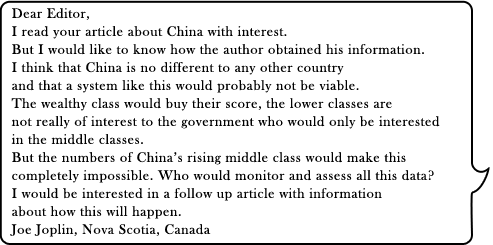
Read this example of a reponse to the article.

Now write your own email response. Use 180-220 words.

​​​Tips

Some top tips
Here are a few tips to help you on your way—but remember, this isn't an exhaustive list, and it's always a good idea to hop online and see if your favourite newspaper has guidelines and tricks for how to write a great letter to the editor!

  • Read the 'letters to the editor' section of your newspaper-of-choice. If you can capture the style of the
    published letters, you'll increase your chances of finding your opinion in print.
  • Do your research. Find out where you need to send your letter, and how you need to send it (fax, e-mail, or snail
    mail).
  • Start your letter with: ‘Dear Editor,’ quote the article that you are writing in response to, and the date it was
    published.
  • Be up front with your comments about the article. Are you supporting the article, or wanting to set the record
    straight?
  • Keep it short. Most newspapers prefer letters to be kept under 200 words. So, focus on one or two of the most
    important points rather than trying to express all your ideas.
  • End with ‘Sincerely, your name.’ You might want to include a line underneath that explains who you are or
    your hometown, e.g. ‘Connie Jones, HSC Student’ Newspapers try to show a range of points of view, so being
    young can work to your advantage!
  • Once you’ve poured your heart out onto paper (or screen), walk away and come back in a different frame of
    mind to edit. Make sure that what you’ve said is easy to follow, to-the-point, well backed up with facts, and uses
    formal language. Get a friend or family member to read your letter and see if they get what you meant.
  • Spell-check your letter and make sure it is double-spaced. Your letter will need to meet the particular
    newspaper’s formatting guidelines. These are usually shown on the letters to the editor page.
  • The guidelines might ask for your personal and contact details. This is because they may contact you to
    check that you, and not someone pretending to be you, wrote the letter. If you don't want your name published,
    tell the editor by adding a note before or after the letter itself. E.g. 'P.S. I would like to remain anonymous so
    please don’t publish my name.'
  • Post, fax or e-mail your letter to the address listed by the newspaper.
    Source: ReachOut Australia

Evaluation

Fill in the schedule and answer the questions below.

Lesson

Activity

Needs improvement

Satisfactory, good

Excellent

Step 1 - Speaking

I can answer and discuss questions about governments.


Step 2 - Words

I can match words to their meanings.


Step 3 - Reading

I can read the article 'China to put digital eyes on its citizens'.


Step 4 - Task

I can send an email to an editor with your views about the article.


What have you learned in this lesson?
Answer the following questions:

  • What was the easiest part of this lesson?
  • What did you already know?
  • What was the most difficult part?
  • What was new to you in this lesson?
  • What do you have to ask your teacher?

If I ruled the world

If I ruled the world

Introduction

This next lesson is about If I ruled the world.

In this next section, we look at choices, and entitlement and possessions. These are all, arguably features of society in the 21st century, for some at least. In the assignment Tanzania hunter-gaterers we have read that the Hazda don’t have the concept of possession, they share everything.
But of course, they don’t really have objects. What about you? Do you have a lot of things? Do you think the possession of objects is a feature of the 21st century? Is it a good thing? Or not?  

This lesson contains 5 steps and an evaluation.
Work them through step by step.


Step

Activity


Introduction

Find out what you already know.

Step 1

Speaking and watching

Answer questions and compare with a classmate. Tick items a spoiled child of 11 years might have. Watch the video and check the answers. Think of six questions and determine the attitude of the interviewer.

Step 2

Reading

Read a text and choose headings for each paragraph. Answer questions about the text in your own words.

Step 3

Speaking

Discuss a number of questions in a small group.

Step 4

Grammar

About the future continuous. Theory and examples and an exercise.

Step 5

Task

Write an essay about 'If YOU ruled the world'. With a number of checks for your own analysis.


Evaluation

Reflecting on what you have learned.


Difficult words? Search these on Cambridge Dictionaries


Step 1 - Speaking and watching

Read the questions and make a note of your answers.

Then compare with your partner.

  • What was the last object your parents gave you?
  • Was it for an occasion or ‘just because’?
  • Are you saving up for anything at the moment? What is it?
    How long will it take you to save up (approximately)?
  • Do your parents give you everything that you want?

You’re going to watch a video about a girl who has been called the most spoilt child in Britain.
Which of the following do you think this 11 year old girl does/has?
Write down.

  • car
  • credit card
  • designer handbag
  • dolls
  • expensive shoes
  • high-lighted hair
  • horse
  • latest gadgets
  • nail extensions
  • pet
  • tanning

The video is a chat show. What questions do you think the interviewer will ask her?
Think of six questions you would ask her. Then watch the video.
Did either of the interviewers ask your questions?

Watch the video and check your answers.

What is the attitude of the interviewer? You can choose more than one.

  • disapproving
  • understanding
  • shocked
  • disbelieving
  • worried
  • your own ideas.

Step 2 - Reading

You are going to read an article entitled ‘If I ruled the world.’

Susan Greenfield / November 17, 2016
Published in December 2016 issue of Prospect Magazine


[1]
If I ruled the world, I would re-introduce the Classics into all schools. I get very angry when people label Greek and Latin as elitist, or dismiss them as simply dead languages. It’s my firm belief that everyone would benefit from studying them, irrespective of the path they choose in life afterwards.

[2]
Unfortunately, nowadays Classics is a minority subject taught mainly in independent schools. It has also been eclipsed, mistakenly I think, by science subjects—as though we had to choose. Personally, I came late to science: I am a neuroscientist now, but I did Classics to entry level at Oxford so I have a foot in both camps.

[3]
Neuroscientists have been able to see parallels in the kind of questions the Greeks were asking. For example, in Euripides’ The Bacchae, Pentheus tries to suppress women who worship the wine god Dionysus because they’re getting out of hand with orgies and so on. But the prophet Tiresias cautions him against it, saying, “no, you need a balance in life, there’s a wine force and a bread force, and you need both those things.” Science tells us that we have something called the prefrontal cortex, the frontal part of the brain, which, when it’s under-functioning, will lead to a sensational “living for the moment” mentality where you reject the sense of self—similar to what the Dionysus worshippers go through—as opposed to most of the time when you’re aware of a past, present and future, and of your own identity. As a neuroscientist I find it very interesting that one can see parallels like that.

[4]
Classical literature touches on large themes such as the great depth of human nature and, for want of a better term, the meaning of life. Even young children could learn a lot from reading this literature. At primary school level, one could read Homer in translation. The Iliad and The Odyssey are wonderful stories: not only are they rich in characters and adventure, but they also bring into play ideas of magic, the supernatural and of destiny, and of the choices you make in life, topics of great relevance at a formative age. Game of Thrones has nothing on Homer—so why not go for the original rather than a knock-off version? It trains your attention span and encourages a breadth of thought that is empowering.

[5]
Writing reflects how you think. Thought is very much marshalled by a robust and confident sense of grammar and structure and language. The Classics can help with this. Latin has a very rigid grammar structure where you have to learn how to decline and conjugate verbs. All that gives you a very good memory, but also gives you a confident feeling for how languages work. You have to remember all your rules all at once: you have to keep in mind how a verb will end, what tense and mood you’ll use. When you’re translating you have to be able to work it out, almost like a detective, by the ends of the words, because the order doesn’t necessarily do it for you.

Imagine a child who, rather than playing video games, has the opportunity to grapple with these kind of challenges and to access these kinds of stories and culture? It’s incalculable what that would do.

Source: www.prospectmagazine.co.uk


Do the exercise.

Step 3 - Speaking

In small groups, discuss these questions.

  1. What choices have your parents made for you so far? (e.g. school to attend)
  2. What choices have you made for yourself?
  3. Do you think you have made good choices? Why? Why not?
  4. Besides school, what other aspects of your life have ‘choice’?
  5. Why is ‘choice’ such an important concept in our society?
  6. Some people say that if you want to be successful at something, you must start young. What’s your opinion? Consider the advantages and the disadvantages.

Answer

Step 4 - Grammar

Let’s look at ... the future continuous.


The future continuous tense is made up of the simple future tense of the verb to be (shall/will be) + a present participle (verb + -ing).

Future continuous

Do the exercise.

Step 5 - Task

Write an essay

You are going to write your own article: 'If I ruled the world'
We call it an essay: a piece of writing that gives the author's own argument.

Writing your essay:

  1. Think of the topic ‘rule the world’.
  2. Brainstorm your own ideas.
    Think of some ideas or rules that you would introduce. Make a list of your ideas.
  3. Look at the ideas that you generated.
    Choose one of your strongest ideas that support your topic.
  4. You have chosen one idea. You must expand your reasons and say why they would be beneficial.
  5. Write your essay in 120-180 words (use the future continuous at least once).

Please note! After writing your essay please do some analysis.

  • The essay has a focus throughout.
  • The essay has a clear introduction, body and conclusion.
  • The essay has no grammatical mistakes.
  • See if your arguments are effective:
    • What claims do you make?
    • Why do they sound good?
    • Is it the logic, the sources, the writing, the structure?
  • What evidence do you present?
  • Why does the evidence sound credible?
  • How do you present facts; are your ideas well explained with facts?

Evaluation

Fill in the schedule and answer the questions below.


Activity

Needs improvement

Satisfactory, good

Excellent

Step 1 - Speaking and watching

I can think of six questions and determine the attitude of the interviewer (chat show about the most spoilt child).


Step 2 - Reading

I can read the text 'If I ruled the world' and choose headings and answer questions.


Step 3 - Speaking

I can have a discussion about the choices I made.


Step 4 - Grammar

I can use the grammar: future continuous.


Step 5 - Task

I can write an essay about 'If I ruled the world'.


What have you learned in this lesson?
Answer the following questions:

  • What was the easiest part of this lesson?
  • What did you already know?
  • What was the most difficult part?
  • What was new to you in this lesson?
  • What do you have to ask your teacher?

International organisation

International organisation

Introduction

This next lesson is about International organizations.

A feature of human societies is the need to belong to a group, or a club. You are going to read about a club that not many people can join, but first, let’s see what clubs and organizations you belong to.  

This lesson contains 5 steps and an evaluation.
Work them through step by step.

Step

Activity


Introduction

Find out what you already know.

Step 1

Speaking

Make a list of clubs and societies you belong/belonged to. Answer the question.

Step 2

Reading

Make notes and read a text about the 'Mensa' club. Fill in words in the gaps of the text.

Step 3

Speaking

Have a discussion about a quote about 'great, average and small' people.

Step 4

Reading

Do a 10-minute work out to find out if you could join the 'Mensa'.

Step 5

Grammar

About reported speech. Read the theory. Rewrite sentences using reported speech. Do an exercise.

Step 6

Task

Write a CV.


Evaluation

Reflecting on what you have learned.


Difficult words? Search these on Cambridge Dictionaries

Step 1 - Speaking

Make a list of all the clubs and societies you belong/have belonged to.

What you should be able to do to join?

Example:

Clubs/societies

be able to do

a football club

you have to be able to kick the ball

....

...


Compare and discuss your answers with your partner.

Step 2 - Reading

You are going to read about the club MENSA.
Do you know anything about it? At first note down your ideas.

Now read the text and check your ideas.
Read the text again and do the exercise; put the correct word in the gap.

Step 3 - Speaking

Look at the sign. This is a quote commonly attributed to Eleanor Roosevelt.
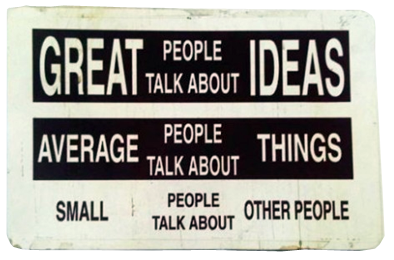

What do you think the message is?

In this article you read reviews, opinions about the message on the sign. Do you agree?
Write down three examples of people you know who are 'great, average and small' and give
some examples of the things that they usually talk about.

Example:

My grandma is a small person because she’s always talking about her neighbours and what they are doing. But then consider why the person has a conversation about other people. She probably spends a long time talking about other people because she doesn’t read newspapers to find out about new ideas. She isn’t interested in new ideas because she says that she has seen everything!


Now you have an idea about the message of the sign.

  • Discussing people here means to talk about a person, typically in a negative, gossipy way.
  • Discussing events means to talk about the events happening around the world.
  • Discussing ideas means to understand the higher level messages behind an event, to understand human behaviour, to look beyond what’s given, and to find solutions to help the world.

Discuss with a classmate about the following questions.

  1. Compare the examples you both wrote down about people you know.
  2. What about you? Are you “great/average or small”?
  3. What do you think are the consequences of being a small person all of your life?
  4. Do you think that this will change with age?
  5. Does everyone have to talk about great ideas?

Step 4 - Reading

Could you join 'Mensa'?
Do this 10 minute work out and find out!

Mensa
You can find out more about Mensa at www.mensa.org
After reading this website, what do you think:
'Is it worth to join Mensa'?

Look at the following answers:

  1. Mensa is perfect for highly intelligent people to have social interaction with other people to share similar thoughts and stimulating discussions.
  2. Mensa is not worthwhile; a person who is rather highly intelligent does not need a Mensa membership to prove it. Why a special 'intellectual society'?

What do you think? More like answer 1 or 2?
Write down short information about Mensa (what is Mensa, what are the activities, how can you join) and your opinion about Mensa (worth joining?) in your notebook (about 150 words).

Step 5 - Grammar

Let's look at ... reported speech.

She added that Mensa’s only criterion was you had to be bright.

We use reported speech (or indirect speech) when we say what someone said in the past: You have to be bright. ➨ You had to be bright.

That
You can use that after the reporting verb. It doesn’t change the meaning.

  • She added you had to be bright. = She added that you had to be bright.


Change the tense!
When we report what someone said, we often put the main verb back one tense.

  • Present simple ➨ past simple
  • Present continuous ➨ past continuous
  • Present perfect ➨ past perfect
  • Will ➨ would
  • Can ➨ could
  • Past simple ➨ past perfect.

Change in pronoun
You might also need to change the pronoun.

  • I’ve visited London many times”, she said.
  • She said she had visited London many times.

Do the exercises.

Step 6 - Task

Writing your CV (Curriculum Vitae)
You have decided to apply for a job. You are going to write your CV.

Discussion
By making a CV you ask yourself: Should I put Mensa on my CV? Or should anyone put Mensa on his/her CV?
Why/why not? Could it be considered a plus or arrogant? What do you think?
Discuss with a classmate.

CV
Now you are going to write your CV.
You can use a template like this and read the tips:
templates CV

How to write a good CV

  1. Start with a CV Header with Contact Information (name/address/email/telephone)
  2. Education and qualifications
  3. Work Experience
  4. Skills (for example computer skills/ foreign language skills / membership Mensa?)
  5. Additional Sections

Make your CV brief and relevant.


Let your classmate check your CV. You will check his/her CV.
Have a look at each other's CV and maybe you can give each other useful tips.
Once you have done this, submit your CV to your teacher.

Evaluation

Copy and fill in the schedule and answer the questions below.


Activity

Needs improvement

​Satisfactory, good

Excellent

Step 1 -
Speaking

I can speak about clubs and societies.


Step 2 - Reading

I can read an article about the 'Mensa club'.


Step 3 -  Speaking

I can speak about 'great, average and small' people.


Step 4 - Reading

I can read and find out about 'join the Menza'.


Step 5 -  Grammar

I can understand and use the grammar about reported speech.


Step 6 - Task

I can write a CV.


What have you learned in this lesson?
Answer the following questions:

  • What was the easiest part of this lesson?
  • What was the most interesting part?
  • What was the most difficult part?
  • What was new to you in this lesson?
  • What do you have to ask your teacher?

Finishing touch

Project: Societies

You will give a spoken presentation introducing the 'wow' factor! What is the 'wow' factor

This is when your audience is impressed.
Perhaps it is your delivery? Or the way you creatively present your slides?
Or perhaps how you move from slide to slide. Or how about a little known fact that makes even the most disinterested member of your class sit up!
No matter what it is, this project needs the wow factor!

You are going to do a presentation about a different society.
Consider the different ways of living, economic system, beliefs and other differences. Compare either with your own society, or you could compare and contrast two different societies. Here are some topics to choose from, but you can choose another idea of your own:

  • The Quechas
  • The Amish
  • The Bajua

- Gather your ideas about your society and make a slideshow to illustrate your points. You should only use a maximum of five slides.
- Practise your presentation. You can use notes but you should not read them out.
Try to include some information that will wow your audience!

- Practise your presentation with your partner. Did your partner go ‘wow’? If not, find out some information that will make them go wow!
- Then give your talk to your class. Your talk should last no longer than three minutes.
If you are working on your own, then you can make a video of yourself doing your presentation.
- Share it with your class and present it.
- Share it on your social media sites.

Look down here and see how your presentation will be judged.


Good

Sufficient

Insufficient

Organisation

Information is presented in a logical, attractive sequence.

Information is mostly presented in a logical, attractive sequence.

Information is not presented in a logical, attractive sequence.

Slides

Effective use of slides that clearly illustrate the points being made.

Good use of slide that mostly illustrated the points being made.

Poor use of slides that did not contribute to the presentation.

Content

Interesting, clear information.

Information is mostly interesting. Some was already known.

There was not much that was of interest in this presentation.

Speaker style

Speaks clearly and at an understandable pace. Maintains eye contact with audience. Well-rehearsed.

Mostly speaks clearly and a good pace. Mostly keeps eye contact. Has rehearsed a bit.

Mostly unintelligible. Does not maintain eye contact. Has not rehearsed.

Language

The vocabulary use is very good and the sentence structure is good. Complex sentences are attempted, but not always correct.

The vocabulary use is fairly good and the sentence structure is good.

The vocabulary use is not very good, neither is the sentence structure.

Oefenprogramma Engels

Oefenprogramma Engels


If your school participates in VO-content, you can practice with the English practice program 'Oefenprogramma Engels'.

Here you find a part of this program.
This section fits in well with this theme.
Sign in with your 'School Entree account'!


Reading: Alone in the crowd

Alone in the crowd


Listening: Can you get smarter?

Can you get smarter?


On www.oefenprogrammaengels.nl you can of course also practice with other reading, listening or viewing assignments!

Examentraining

On this page you will find Examenkracht exam questions of previous years.
The questions will correspond as much as possible to the exercise you have just finished.

While answering, use as much of what you have learned earlier. If you cannot answer the question right now, try again later. When you have answered a question, you can check and indicate the score yourself.

If you want your results to be saved, you will have to log in on ExamenKracht.

VWO 2021-TV1

VWO 2021-TV1 Vragen 14-19

VWO 2021-TV2

VWO 2021-TV2 Vraag 17
VWO 2021-TV2 Vraag 18
VWO 2021-TV2 Vraag 20
VWO 2021-TV2 Vraag 22

VWO 2016-TV2

VWO 2016-TV2 Vragen 10-16


More practice?
Go to Examenkracht where you will find the newest exams.

What did you learn?

Can do statements

Take a look at the Can do statements in the introduction - 'Can do'.
Are you able to do what you have to do?
Did you understand and meet the learning goals (can do statements)?
At the end of each lesson you also answered evaluation questions.

  • Are you able to do what you have to do?
  • What was the most difficult part?
  • What do you have to ask your teacher?

Finishing touch Project

  • Did you do the project? How did it go?
  • Was it easy to find good, reliable information? Did you evaluate the reliability of the source and information you researched?
  • Were you able to present the information in a logical, interesting way?  
  • Was the 'rubric' at the end helpful for you? Could you indicate yourself, how did it go?
  • Het arrangement Societies v456 is gemaakt met Wikiwijs van Kennisnet. Wikiwijs is hét onderwijsplatform waar je leermiddelen zoekt, maakt en deelt.

    Auteur
    VO-content
    Laatst gewijzigd
    28-11-2025 12:13:26
    Licentie

    Dit lesmateriaal is gepubliceerd onder de Creative Commons Naamsvermelding-GelijkDelen 4.0 Internationale licentie. Dit houdt in dat je onder de voorwaarde van naamsvermelding en publicatie onder dezelfde licentie vrij bent om:

    • het werk te delen - te kopiëren, te verspreiden en door te geven via elk medium of bestandsformaat
    • het werk te bewerken - te remixen, te veranderen en afgeleide werken te maken
    • voor alle doeleinden, inclusief commerciële doeleinden.

    Meer informatie over de CC Naamsvermelding-GelijkDelen 4.0 Internationale licentie.

    Het thema 'Societies' (h45) is ontwikkeld door auteurs en medewerkers van StudioVO.

    Fair Use
    In de Stercollecties van StudioVO wordt gebruik gemaakt van beeld- en filmmateriaal dat beschikbaar is op internet. Bij het gebruik zijn we uitgegaan van fair use.
    Meer informatie: Fair use

    Mocht u vragen/opmerkingen hebben, neem dan contact op via de
    helpdesk VO-content.

    Aanvullende informatie over dit lesmateriaal

    Van dit lesmateriaal is de volgende aanvullende informatie beschikbaar:

    Toelichting
    Dit thema valt onder de arrangeerbare leerlijn van de Stercollectie voor Engels voor vwo, leerjaar 4, 5 en 6. Dit is thema: 'Societies'. Dit thema omvat de volgende volgende onderwerpen: - Tanzania - Digital eyes on citizens - If I ruled the world - International organization De grammaticaopdracht gaat over future continuous en reported speech.
    Leerniveau
    VWO 6; VWO 4; VWO 5;
    Leerinhoud en doelen
    Engels;
    Eindgebruiker
    leerling/student
    Moeilijkheidsgraad
    gemiddeld
    Studiebelasting
    16 uur 0 minuten
    Trefwoorden
    arrangeerbaar, digital eyes on citizens, engels, future continuous en reported speech, if i ruled the world, international organization, societies, stercollectie, tanzania, v456

    Gebruikte Wikiwijs Arrangementen

    VO-content Engels. (2021).

    Digital eyes on citizens v456

    https://maken.wikiwijs.nl/174264/Digital_eyes_on_citizens_v456

    VO-content Engels. (2021).

    If I ruled the world v456

    https://maken.wikiwijs.nl/174263/If_I_ruled_the_world_v456

    VO-content Engels. (2021).

    Mensa: international organisation v456

    https://maken.wikiwijs.nl/174262/Mensa__international_organisation_v456

    VO-content Engels. (2021).

    Societies h45

    https://maken.wikiwijs.nl/104348/Societies_h45

    VO-content Engels. (2021).

    Tanzania hunter-gatherers v456

    https://maken.wikiwijs.nl/174265/Tanzania_hunter_gatherers_v456

  • Downloaden

    Het volledige arrangement is in de onderstaande formaten te downloaden.

    Metadata

    LTI

    Leeromgevingen die gebruik maken van LTI kunnen Wikiwijs arrangementen en toetsen afspelen en resultaten terugkoppelen. Hiervoor moet de leeromgeving wel bij Wikiwijs aangemeld zijn. Wil je gebruik maken van de LTI koppeling? Meld je aan via info@wikiwijs.nl met het verzoek om een LTI koppeling aan te gaan.

    Maak je al gebruik van LTI? Gebruik dan de onderstaande Launch URL’s.

    Arrangement

    IMSCC package

    Wil je de Launch URL’s niet los kopiëren, maar in één keer downloaden? Download dan de IMSCC package.

    Voor developers

    Wikiwijs lesmateriaal kan worden gebruikt in een externe leeromgeving. Er kunnen koppelingen worden gemaakt en het lesmateriaal kan op verschillende manieren worden geëxporteerd. Meer informatie hierover kun je vinden op onze Developers Wiki.