"To be" and "to have got" in dagelijks leven

"To be" and "to have got" in dagelijks leven

Startpagina

There are three forms of sentences (zinnen) we can form in English:

  1. Positive sentences
  2. Negations
  3. Questions

Today's lesson will focus on making questions out of positive sentences.

In chapter 2, we discussed how to make a negation.

To refresh your memory, we will start on the page "Looking back".

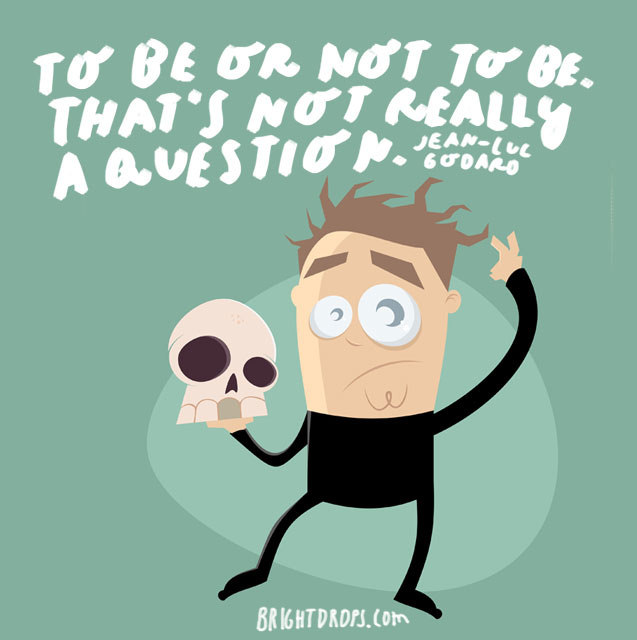
retrieved from https://brightdrops.com/funny-quotes-and-sayings

Material

Looking back: Chapter 2

Looking back at Chapter 2, we have discussed negations.

Have a quick look at the following video to refresh you memory.

In short, negation with "to be":

I am   very tall
I am not very witty


You can also make the negation shorter by saying: "I'm not very witty".

negation with "to have got" looks like this: 

I have got   two brothers.
I have not got two brothers.


You can make the the negation shorter by saying: "I haven't got two brothers". 

Please continue to "Today's Lesson".

Today's Lesson: Chapter 3

For today's lesson we will discuss making questions with "to be" and "to have got".

The video below should help you understand how the questions are formed when using "to be" and "to have got".

Feel free to rewatch the video if you do not understand it yet.

In short, you change the position of the verb:

Question with "to be"

Jack is funny.
Is Jack funny?


Pay attention! Questions with "to have got" are different:

They have got fair hair.
Have they got fair hair?


The place of the word "got" does not change.

When you are ready, continue to the exercises page.

Exercises

You can study the sentences and how they change with this quiz.

The cards go:

  • positive questions
  • positive negations

Good luck!

If you want more information study:

Feel confident? Take the practice test!

Take me to the practice test!

Practice test

Practice test: Questions and Negations

Start

Extra material

Repetition

You are here because you want to practice more with questions and negations in combination with "to be" and "to have got" after doing the practice test.


Questions: 

To form a question with "to be" use this order: 

"to be" + subject + description (adjective like: smart)? 

Is            he            witty? 


To form a question with "to have got" use this order: 

"have/has" + subject + got + description (noun like : jacket)

Has               she          got    braces? 


Negations:

To form a negation with "to be" use this order:

subject + "to be" + not + description (adjective like: smart)?

He             is          not    tall.


To form a negation with "to have got" use this order:

Subject + "have/has" + not + got + description (noun like : jacket)

She               has          not    got    braces?

Extra material

You are here because you passed the practice test. Well done!

On this page, you will find more material on questions and negations with "to be" and "to have got".

So far, we have discussed positive questions and negations. We will now get into negative questions, combining the two!


If you want to turn a question with "to be" into a negative question you can change it like this:

A. Am I very tall?

B. Am I not very tall?

The place of the negation, not, is still the same.

Turning a question with "to have got" into a negative question:

A. Has she got a new skateboard?
B. Has she not got a new skateboard?

As you can see, as with the negation the place of the word not is still the same - right behind our subject "she".

You can also make sentences with "to be" and "to have got" shorter:

"To be": + not after the verb to make a negation.

I am I 'm
You are You 're
He/she is He/she 's
It is It 's
We are We 're
You are You 're
They are They 're


"To have got": be careful! If you make the negation short not becomes a part of have/has!

positive sentence     short sentence
I have got   I ve got
You have got   You ve got
He/she has got   He/she s got
It has got   It s got
We have got   We ve got
You have got   You ve got
They have got   They ve got
               
Negation     short sentence with negation
I have not got►   I haven't got
You have not got►   You haven't got
He/she has not got►   He/she hasn't got
It has not got►   It hasn't got
We have not got►   We haven't got
You have not got►   You haven't got
They have not got►   They haven't got


If you feel confident enough, you can continue to the final test now!

Final test

Words

The list below is a translation of all the words used to explain grammar:

Engels Nederlands
verb werkwoord
subject onderwerp
negation ontkenning
question vraag
formula formule
change veranderen
place plaats/plek
sentence zin
positive bevestigend
not niet
short kort
something iets
someone iemand
conversation gesprek
to be zijn
to have got hebben
  • Het arrangement "To be" and "to have got" in dagelijks leven is gemaakt met Wikiwijs van Kennisnet. Wikiwijs is hét onderwijsplatform waar je leermiddelen zoekt, maakt en deelt.

    Auteur
    ingmar de Vries
    Laatst gewijzigd
    01-03-2019 15:34:41
    Licentie

    Dit lesmateriaal is gepubliceerd onder de Creative Commons Naamsvermelding 4.0 Internationale licentie. Dit houdt in dat je onder de voorwaarde van naamsvermelding vrij bent om:

    • het werk te delen - te kopiëren, te verspreiden en door te geven via elk medium of bestandsformaat
    • het werk te bewerken - te remixen, te veranderen en afgeleide werken te maken
    • voor alle doeleinden, inclusief commerciële doeleinden.

    Meer informatie over de CC Naamsvermelding 4.0 Internationale licentie.

    Aanvullende informatie over dit lesmateriaal

    Van dit lesmateriaal is de volgende aanvullende informatie beschikbaar:

    Eindgebruiker
    leerling/student
    Moeilijkheidsgraad
    gemiddeld
    Studiebelasting
    4 uur 0 minuten
  • Downloaden

    Het volledige arrangement is in de onderstaande formaten te downloaden.

    Metadata

    LTI

    Leeromgevingen die gebruik maken van LTI kunnen Wikiwijs arrangementen en toetsen afspelen en resultaten terugkoppelen. Hiervoor moet de leeromgeving wel bij Wikiwijs aangemeld zijn. Wil je gebruik maken van de LTI koppeling? Meld je aan via info@wikiwijs.nl met het verzoek om een LTI koppeling aan te gaan.

    Maak je al gebruik van LTI? Gebruik dan de onderstaande Launch URL’s.

    Arrangement

    Oefeningen en toetsen

    Questions and Negations

    IMSCC package

    Wil je de Launch URL’s niet los kopiëren, maar in één keer downloaden? Download dan de IMSCC package.

    QTI

    Oefeningen en toetsen van dit arrangement kun je ook downloaden als QTI. Dit bestaat uit een ZIP bestand dat alle informatie bevat over de specifieke oefening of toets; volgorde van de vragen, afbeeldingen, te behalen punten, etc. Omgevingen met een QTI player kunnen QTI afspelen.

    Versie 2.1 (NL)

    Versie 3.0 bèta

    Voor developers

    Wikiwijs lesmateriaal kan worden gebruikt in een externe leeromgeving. Er kunnen koppelingen worden gemaakt en het lesmateriaal kan op verschillende manieren worden geëxporteerd. Meer informatie hierover kun je vinden op onze Developers Wiki.